A Portrait of Rural Dignity
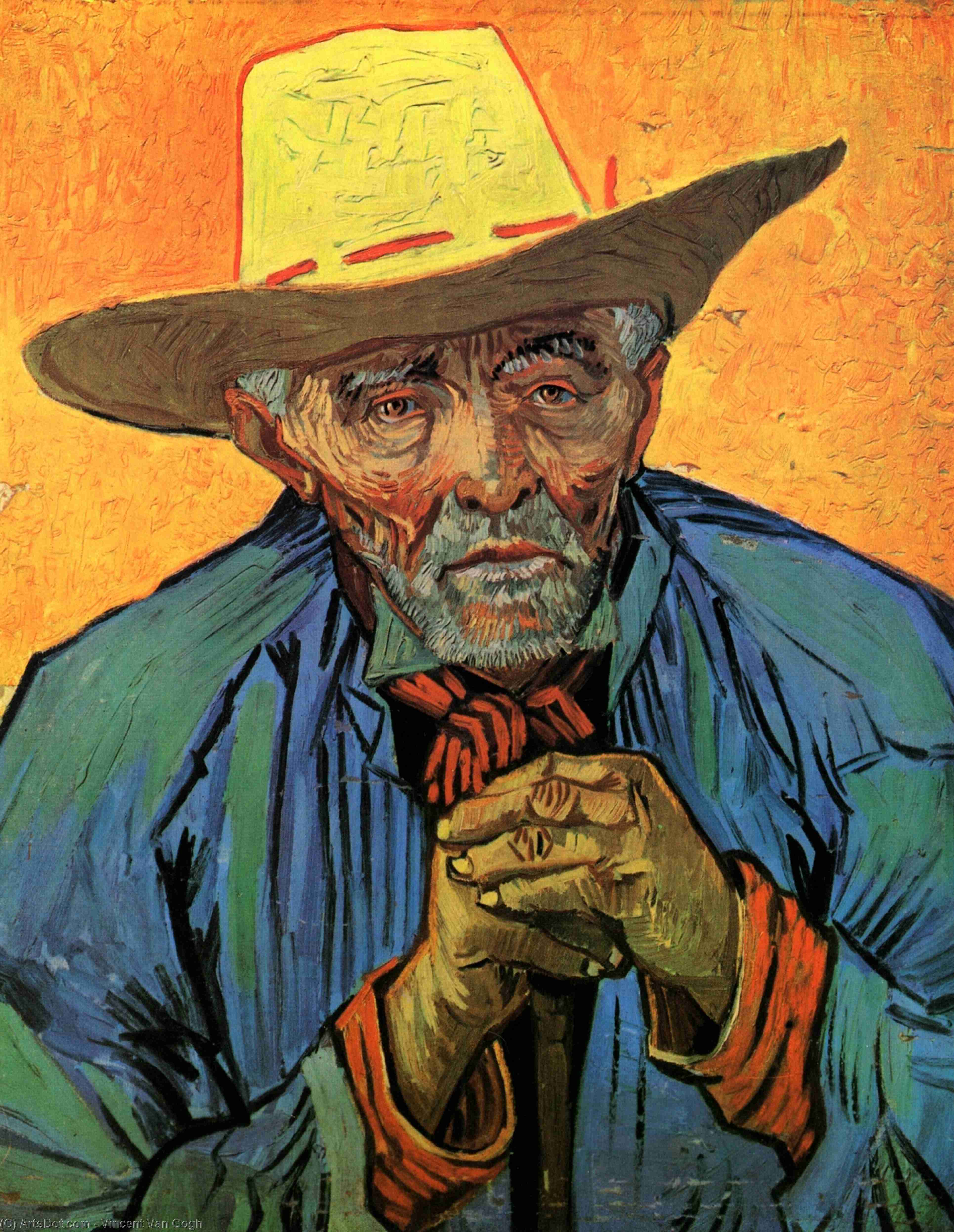
Painted in 1888 during Vincent van Gogh’s prolific Arles period, this striking portrait captures Patience Escalier, a local shepherd, embodying the spirit and resilience of rural Provence. More than just a likeness, it's a powerful study of character, rendered with Van Gogh’s signature expressive brushwork and bold color choices.
Post-Impressionist Mastery
This artwork is a quintessential example of Post-Impressionism, moving beyond the mere depiction of light and form to convey emotional experience. Van Gogh eschews academic realism in favor of subjective expression, utilizing vibrant, often unconventional colors – particularly striking in the nuanced skin tones achieved through ochres, greens, and purples – to evoke mood and personality. The influence of Japanese woodblock prints, popular at the time, is subtly present in the flattened perspective and simplified forms.
Impasto & Emotional Texture
Van Gogh’s masterful use of impasto—the thick application of paint—is central to the painting's impact. The visible brushstrokes aren’t merely a technique; they are integral to conveying Escalier’s weathered face, full white beard, and the very essence of his life lived outdoors. This tactile quality invites viewers into an intimate connection with both the subject and the artist’s process.
Historical Context & Provençal Life
Arriving in Arles in 1888, Van Gogh sought to establish an artistic community inspired by the vibrant light and simple beauty of the southern French countryside. He found compelling subjects amongst the local people, like Patience Escalier, whose portrait offers a glimpse into the lives of those working the land. This period marked a significant shift in Van Gogh’s style, characterized by increased intensity and emotional depth.
Symbolism & Quiet Contemplation
The composition itself speaks volumes. Escalier's direct gaze commands attention, conveying both strength and a quiet dignity born of hardship. The walking stick suggests age and reliance, yet his upright posture and unwavering eyes project resilience. The warm, abstract background – a blend of oranges and yellows reminiscent of the Provençal sunset – doesn’t define a specific location but rather amplifies the emotional resonance of the portrait, hinting at nostalgia or perhaps the fading light of life.
A Timeless Emotional Resonance
“Portrait of Patience Escalier” transcends its subject matter to become a universal meditation on aging, perseverance, and the beauty found in everyday lives. Its enduring appeal lies in Van Gogh’s ability to capture not just *what* he saw, but *how* he felt – an emotional honesty that continues to resonate with audiences today. This piece would be a captivating focal point for any collection or interior, bringing a touch of Provençal warmth and artistic depth to the space.