Vincent van Gogh’s Early Exploration of Realism
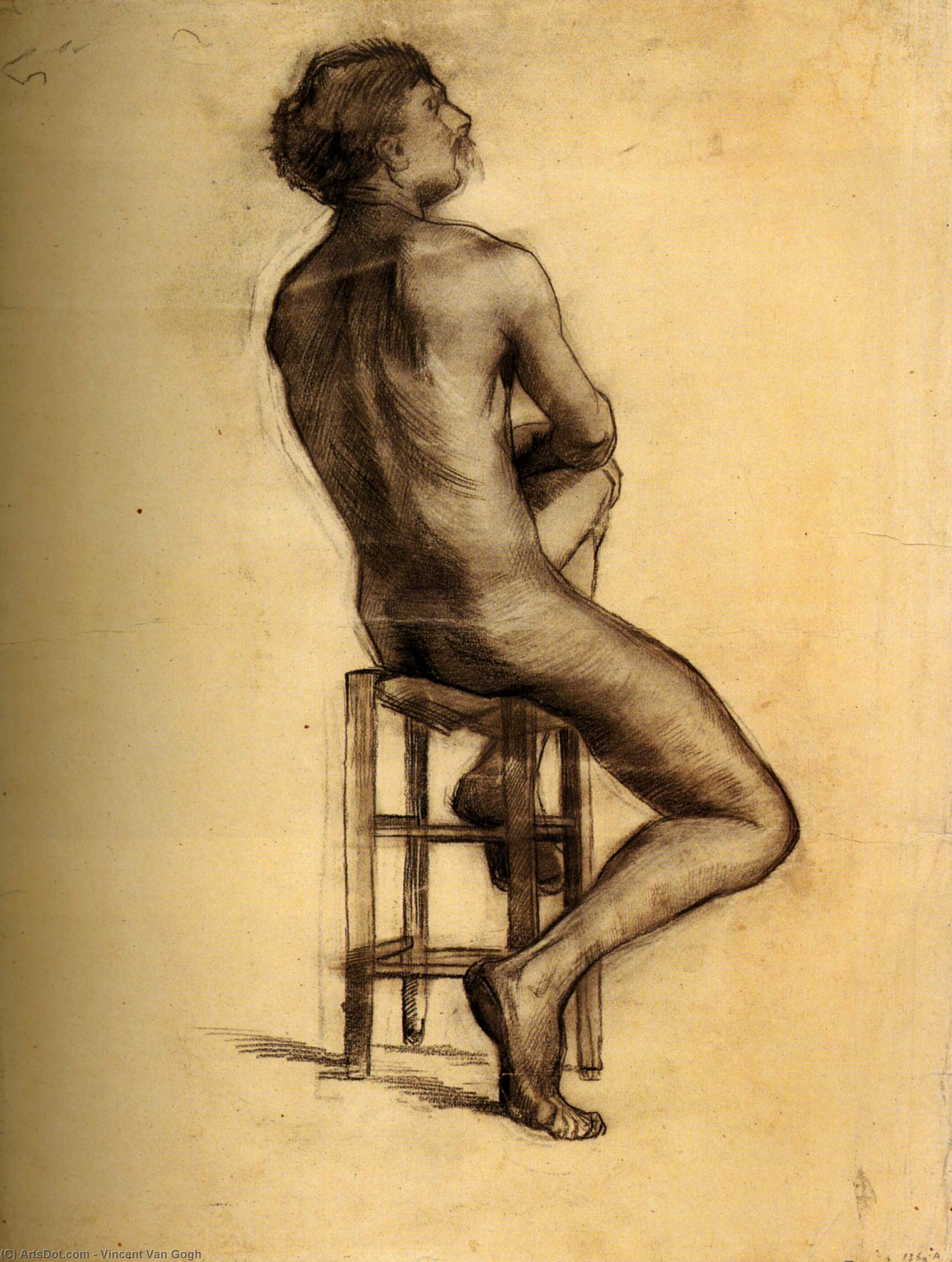
Vincent van Gogh's Seated Male Nude Seen from the Back, created in 1886, stands as a pivotal moment in his artistic development. This pencil drawing exemplifies his nascent engagement with Realism—a stylistic shift away from Impressionistic preoccupation with fleeting light and color—and represents an earnest attempt to capture human anatomy with meticulous detail.
Contextualizing the Artwork: The Rise of Post-Impressionism
The late 1880s witnessed a burgeoning artistic movement known as Post-Impressionism. Artists like Paul Cézanne were pioneering this trend, prioritizing structural integrity and form over purely optical sensations. Van Gogh, keenly attuned to these developments, began experimenting with diverse techniques—including pencil shading and contour lines—to distill the essence of his subjects into expressive representations.
Artistic Technique: Precision and Emotion
Seated Male Nude Seen from the Back showcases Van Gogh’s mastery of pencil drawing. The subject—a male nude positioned on a stool—is rendered with painstaking accuracy, utilizing shading and contour lines to sculpt volume and convey palpable emotion. Notice how the artist skillfully captures the subtle nuances of human form, reflecting his fascination with anatomical studies.
Composition and Balance: Harmony in Simplicity
The drawing’s composition is notable for its understated elegance. The stool occupies a dominant position on the left side of the frame, while the nude figure commands most of the space from the center to the right—creating a balanced visual arrangement that draws attention to the focal point: the clasped hands of the male subject.
Influences and Legacy
Van Gogh’s artistic journey was profoundly shaped by his formative years at the Académie Colarossi in Paris, where he encountered influential figures and movements. His exploration into Realism—inspired by Cézanne's structural approach—demonstrates his unwavering commitment to conveying truthfulness and emotional resonance through meticulously rendered depictions of the human figure. This drawing remains a cornerstone of Van Gogh’s oeuvre, embodying his early stylistic explorations and cementing his enduring legacy as one of art history’s most transformative voices.
ArtsDot.com offers high-quality, handmade oil painting reproductions of famous artworks, including those by Vincent Van Gogh. Visit the website to explore a wide range of artistic masterpieces and learn more about the artists who created them.
Photo Description: The image is a black and white drawing of a man sitting on a stool with his hands clasped in front of him. The man appears to be naked, giving the impression that he might be a statue or a sculpture. The drawing captures the man’s posture and expression, making it an artistic representation of the subject. The stool on which the man is sitting is positioned towards the left side of the image, while the man himself occupies most of the frame from the center to the right side. The overall composition of the drawing creates a sense of depth and balance, with the man’s hands serving as a focal point in the scene.
Size: Unknown
Date: 1886
ARTIST INFORMATION:
==================
Artist: Vincent van Gogh
Birth Year: 1853
Death Year: 1890
Birth City: Zundert
Birth Country: Netherlands
Biography:
Vincent van Gogh: A Life Dedicated to Art
Vincent van Gogh (1853-1890) remains one of history’s most influential figures in Western art. His work is characterized by its beauty, emotion and color, profoundly impacting 20th-century art.
Early Life and Influences
- Born on March 30, 1853, in Zundert, Netherlands, Van Gogh initially pursued various careers before dedicating himself to painting.
- He worked as an art dealer, teacher, and missionary, experiences that deeply influenced his worldview and artistic sensibilities.
- Early influences included the Dutch Masters like Rembrandt and Frans Hals, as well as Japanese woodblock prints – Ukiyo-e – which sparked his interest in bold compositions and flattened perspectives.
Artistic Development
- Van Gogh’s early works, such as The Potato Eaters (1885), reflect a somber palette and focus on the hardships of peasant life.
- His move to Paris in 1886 exposed him to Impressionism and Post-Impressionism, fostering experimentation with new techniques and styles.
Notable Works
- Starry Night (1889): An iconic depiction of the night sky—characterized by swirling brushstrokes and vibrant blues—demonstrates Van Gogh’s expressive approach to landscape painting.
- Sunflowers (Series, 1888-1889): These radiant floral paintings exemplify Van Gogh's masterful use of color and texture, conveying joy and vitality.
## Artistic Style: Impressionistic Roots with Post-Impressionist Expression
Van Gogh’s artistic style evolved throughout his career, blending elements of Impressionism—particularly in his initial landscapes—with the bold expressive gestures of Post-Impressionism. He prioritized conveying emotion and capturing subjective experience rather than merely reproducing visual reality.