Self-Portrait (10) by Vincent van Gogh: A Window into an Artist's Soul
- Artist: Vincent van Gogh
- Date: 1888
- Medium: Oil on canvas
- Dimensions: Unknown
- Current Location: Fogg Art Museum, Cambridge, United States
The Composition and Technique
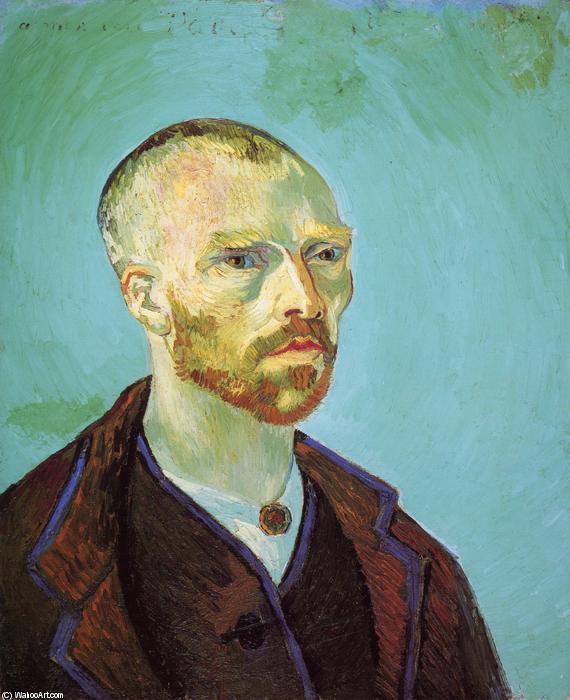
“Self-Portrait (10),” painted in 1888, exemplifies Vincent van Gogh’s distinctive post-impressionist style. The portrait depicts Van Gogh himself against a vibrant green background, showcasing his characteristic use of bold colors and expressive brushstrokes. He is dressed in a blue jacket and adorned with a necklace, details that add to the painting's visual interest. The contrasting colors create a striking effect, immediately drawing the viewer’s attention to his face and expression. Van Gogh’s technique involved applying paint thickly, creating texture and movement on the canvas – a hallmark of his artistic approach.
Symbolism and Emotional Depth
Van Gogh's self-portraits are far more than mere likenesses; they are profound explorations of his inner world. "Self-Portrait (10)" is believed to reflect a period of intense emotional turmoil and creative exploration in Van Gogh’s life. The vibrant colors, while visually appealing, can also be interpreted as representing the intensity of his emotions. His gaze, direct and unwavering, invites introspection and suggests a complex interplay of vulnerability and strength. The necklace he wears may symbolize a desire for connection or perhaps an attempt to project a more refined image.
Historical Context: Portraiture in the Late 19th Century
During the late 19th century, portrait painting was a significant genre within the art world. Artists like Van Gogh and Pierre-Auguste Renoir pushed the boundaries of traditional portraiture, moving beyond simple representations to convey deeper psychological insights. Van Gogh’s work emerged during a period of rapid social and artistic change, as artists began to reject academic conventions in favor of more personal and expressive forms of art. His self-portraits, in particular, reflect this shift towards introspection and emotional honesty.
Legacy and Impact
“Self-Portrait (10)” stands as a testament to Van Gogh’s enduring legacy as one of the most influential artists in history. His innovative use of color, his expressive brushwork, and his unflinching portrayal of human emotion have profoundly impacted generations of artists across various disciplines. The painting continues to resonate with viewers today, offering a glimpse into the mind and soul of a brilliant but troubled artist.