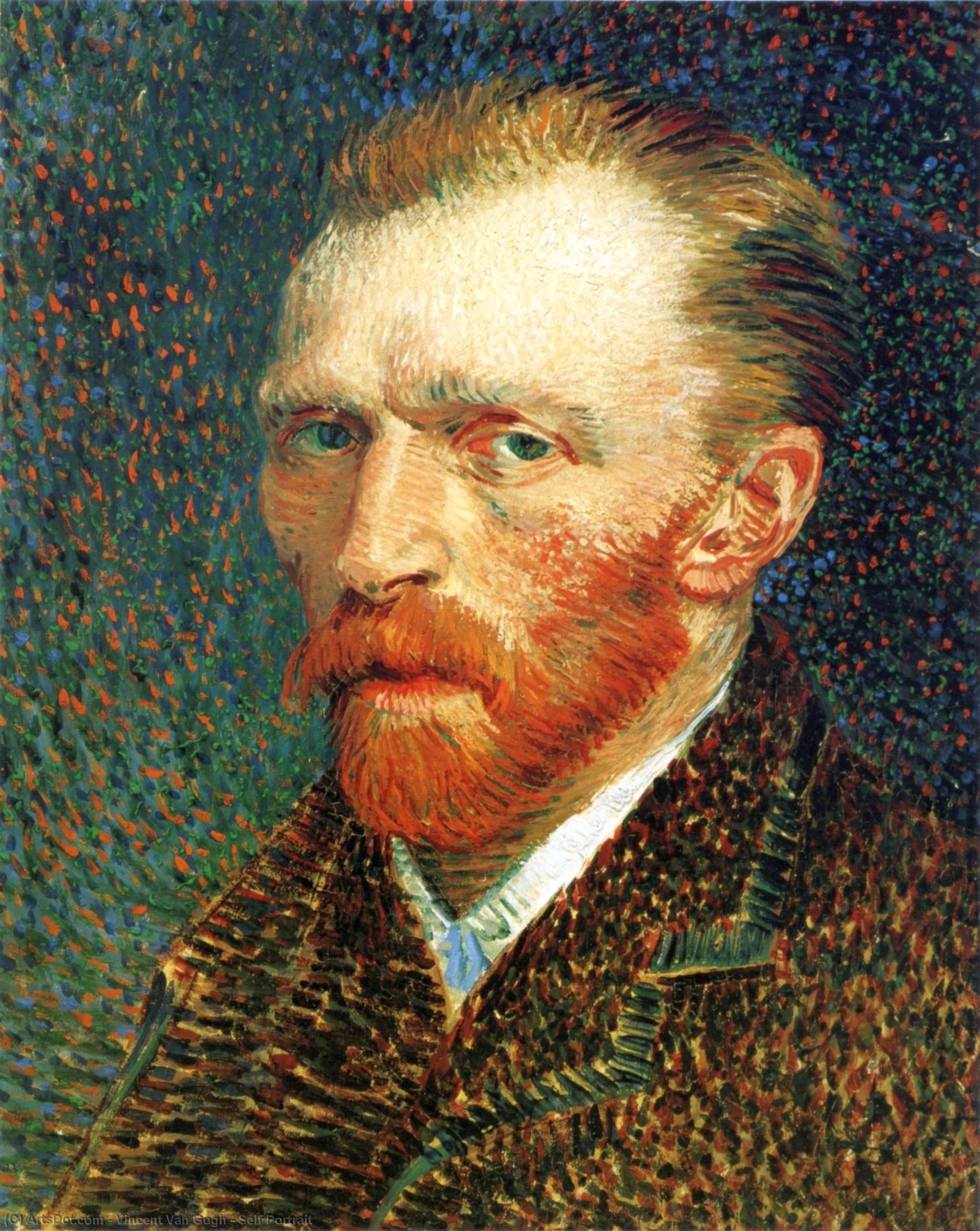
A Window into Van Gogh’s Soul: The 1887 Self-Portrait
Vincent van Gogh's 1887 *Self-Portrait* is more than a likeness; it’s a profound exploration of the artist’s inner world, rendered with the burgeoning intensity that would define his legacy. Painted during his time in Paris, this work showcases a pivotal moment in Van Gogh’s artistic development as he absorbed influences from Impressionism and Japanese woodblock prints while forging his own unique Post-Impressionist style. The painting resides at the prestigious
Art Institute of Chicago, a testament to its enduring significance.
The Parisian Transformation: Style & Technique
This self-portrait exemplifies Van Gogh’s evolving technique. He moves away from the darker, earthier tones of his earlier Dutch period and embraces a brighter palette, experimenting with complementary colors – notably the vibrant reds and greens that animate the background. The application of paint is characteristically bold and impasto; thick, visible brushstrokes create a textured surface teeming with energy. This isn’t about meticulous realism but rather an *expressive* representation of feeling. The directional lines and choppy strokes contribute to a sense of restless movement, mirroring Van Gogh's own emotional state.
A Moment in Time: Historical Context
1887 was a crucial year for Van Gogh. Having recently arrived in Paris to live with his brother Theo, he encountered the avant-garde art scene and began to experiment with new approaches to color and composition. He studied the works of artists like Monet, Degas, and Toulouse-Lautrec, but crucially, he didn’t simply imitate them. Instead, he synthesized these influences into something distinctly *his own*. This self-portrait reflects that period of intense learning and artistic experimentation – a bridge between his earlier work and the masterpieces to come.
Decoding the Gaze: Symbolism & Emotional Impact
Van Gogh frequently used self-portraits as a means of introspection, viewing himself not merely as a subject but as a model for exploring universal human emotions. In this portrait, his direct gaze is both compelling and unsettling. The carefully groomed beard and mustache suggest a deliberate presentation of self, yet the intensity in his eyes hints at underlying turmoil. The vibrant background, while seemingly decorative, can be interpreted as representing the swirling energies within him – a visual metaphor for his passionate nature and inner struggles. There’s a sense of vulnerability combined with fierce determination.
Van Gogh's Enduring Legacy
Vincent van Gogh (1853-1890) remains one of history’s most beloved and influential artists. Though largely unrecognized during his lifetime, his work profoundly impacted 20th-century art movements like Fauvism and German Expressionism. His paintings continue to captivate audiences worldwide with their emotional depth, vibrant colors, and innovative techniques. Owning a reproduction of this *Self-Portrait* is not just acquiring a beautiful image; it’s inviting a piece of artistic history – and a glimpse into the soul of a genius – into your space.
- Artist: Vincent van Gogh
- Title: Self-Portrait
- Medium: Oil on Panel
- Style: Post-Impressionism
- Date: 1887
- Location: Art Institute of Chicago, United States