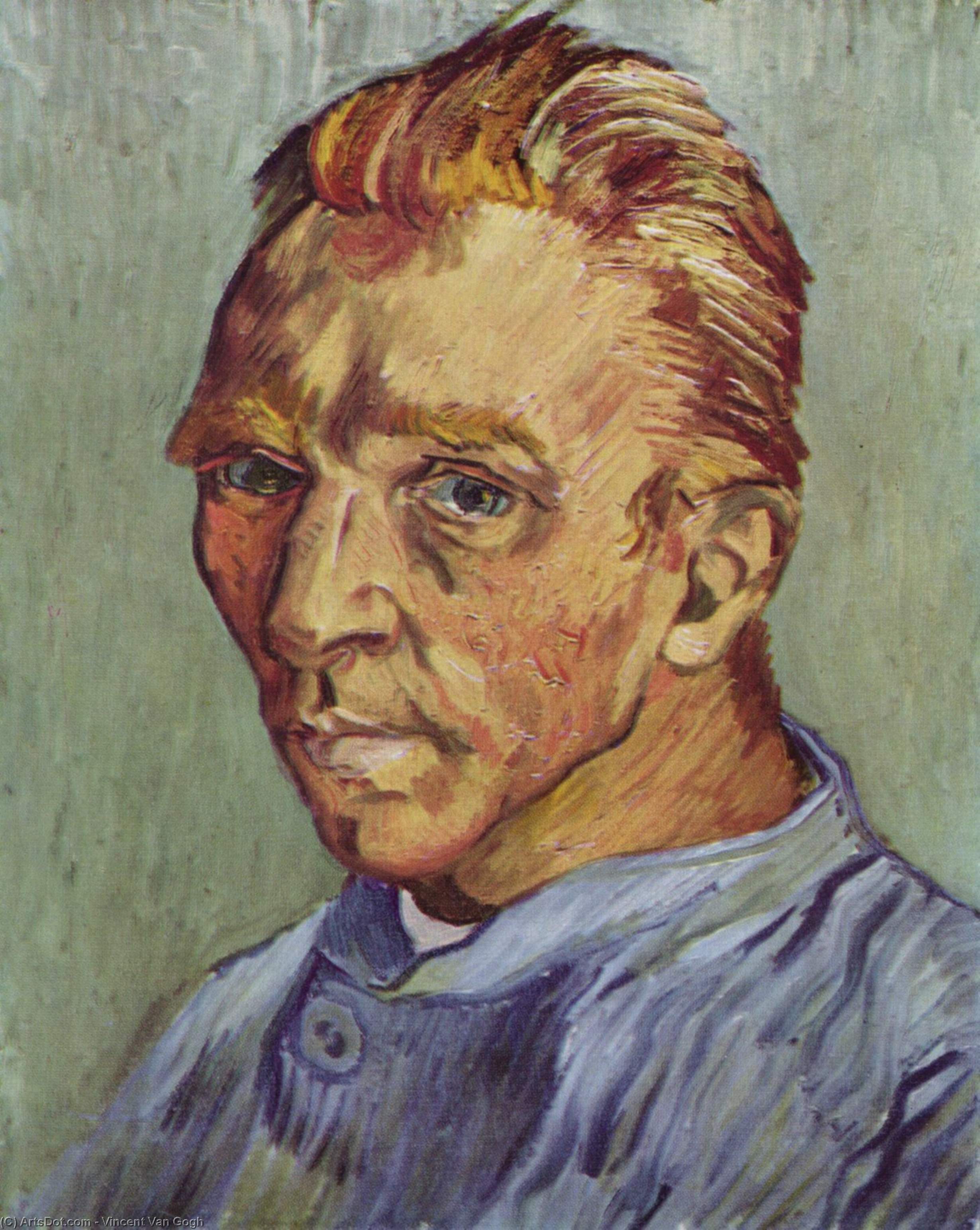
Self-Portrait
Vincent van Gogh’s Self-Portrait, created in 1889, is a captivating piece that offers a glimpse into the artist's inner world. This oil on canvas painting, measuring 40 x 31 cm, is a quintessential example of Post-Impressionism, characterized by bold colors and expressive brushwork.
Artistic Context
Van Gogh’s self-portraits are renowned for their emotional depth and introspection. The artist often depicted himself in various settings and attire, reflecting his changing moods and artistic explorations. This particular Self-Portrait is notable for its simplicity and directness, with the artist wearing a blue shirt with white trim. It embodies the spirit of experimentation prevalent during this period, mirroring the broader movement’s rejection of academic conventions and embrace of subjective experience. The painting speaks volumes about Van Gogh's psychological state—a reflection of his turbulent life and artistic ambitions.
Symbolism and Expression
The wide-eyed stare of Van Gogh in this painting conveys a sense of intensity and focus. His beard and mustache are meticulously detailed, adding to the overall sense of realism. However, beyond mere representation lies profound symbolism. The blue shirt—a dominant hue throughout his oeuvre—represents tranquility and stability, juxtaposed against the agitated brushstrokes that dominate the background. These swirling lines mirror the artist’s inner turmoil, capturing the essence of his emotional landscape. It's a visual manifestation of his struggle for self-expression amidst personal challenges.
Artistic Influences
Van Gogh’s work was influenced by various artistic movements, including Impressionism and Expressionism. He absorbed lessons from artists like Jean-François Millet and Camille Corot, whose landscapes prioritized capturing atmospheric conditions and conveying emotion—principles that would become central to his own style. Yet, Van Gogh forged a path uniquely his own, prioritizing emotional honesty over technical precision. The
Rijksmuseum Vincent Van Gogh in Amsterdam is dedicated to showcasing the artist’s works and provides invaluable insights into his life and creative process. It serves as a cornerstone for understanding the genesis of his artistic vision.
Legacy and Impact
Van Gogh's legacy extends far beyond his own lifetime. His bold use of color and expressive brushwork has inspired generations of artists, including the Fauves and German Expressionists. Today, his paintings are among the most expensive ever sold, with many being housed in prominent museums around the world—a testament to their enduring artistic merit. They continue to resonate with audiences globally, cementing Van Gogh’s place as one of history's most influential figures.
References: