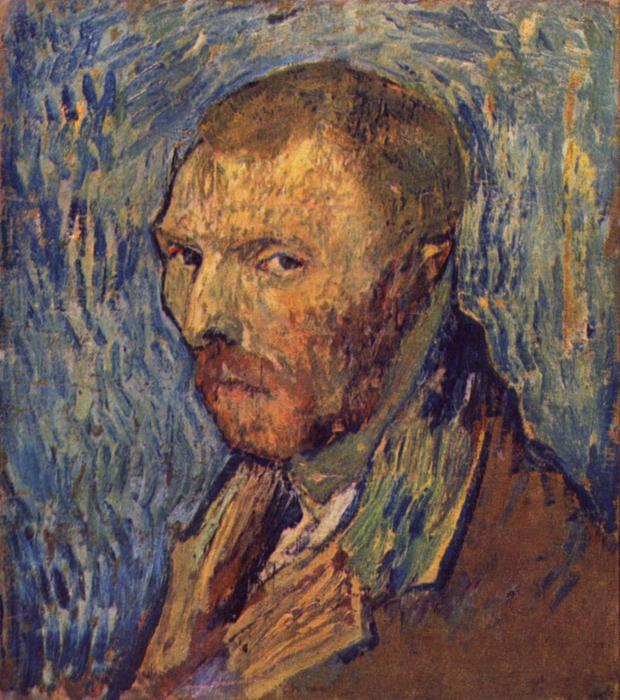
A Window into Van Gogh’s Soul: Exploring Self-Portrait (1889)
Vincent van Gogh's *Self-Portrait* of 1889 is more than just a likeness; it’s a profound exploration of the artist’s inner turmoil and resilience, rendered with his signature expressive brushwork. Painted during his stay at the Saint-Paul-de-Mausole asylum in Saint-Rémy, this artwork offers an intimate glimpse into the mind of one of history's most celebrated – and troubled – artists. Measuring 55 x 45 cm, the oil on canvas showcases Van Gogh’s mastery of color and texture, creating a captivating and emotionally resonant image.
Decoding the Artistic Style & Technique
This self-portrait is a quintessential example of Post-Impressionism, characterized by its subjective interpretation of reality and emphasis on emotional expression. Van Gogh abandons strict realism in favor of bold colors and dynamic brushstrokes. The swirling patterns around his head aren’t merely descriptive; they *feel* like the artist's internal state – restless, agitated, yet strangely beautiful. Notice the impasto technique—the thick application of paint—which gives the surface a tactile quality and enhances the sense of movement. The contrasting blues and oranges create visual tension, drawing the eye to Van Gogh’s face and intensifying the emotional impact.
Historical Context & The Artist's State of Mind
Painted in September 1889, this work was created during a period of intense personal struggle for Van Gogh. Following his infamous ear-severing incident, he voluntarily admitted himself to the asylum. Despite his mental health challenges, he continued to paint prolifically, viewing art as a vital outlet and a means of self-discovery. Some scholars believe this portrait represents a moment of relative calm amidst the storm, while others interpret it as a reflection of ongoing anxiety and vulnerability. The fact that Van Gogh sent this painting to his brother Theo with a note commenting on a perceived calming of his expression suggests a desire for reassurance and a hope for recovery.
Symbolism & Emotional Resonance
The intensity of Van Gogh’s gaze is perhaps the most striking element of the portrait. His eyes, though shadowed, seem to penetrate the viewer's soul, conveying a sense of both introspection and unease. The suit he wears – unusual for his typically more casual attire – suggests an attempt at self-presentation, perhaps a desire to project an image of stability or respectability. The swirling background can be interpreted as symbolic of the chaos within him, while also hinting at the natural world that continued to inspire him even during confinement. The overall effect is one of profound emotional honesty and vulnerability.
Influence & Legacy
Van Gogh’s self-portraits revolutionized portraiture, moving beyond mere physical representation to explore the complexities of human psychology. His bold use of color, expressive brushwork, and willingness to reveal his inner world paved the way for Expressionism and other modern art movements. This particular *Self-Portrait* continues to captivate audiences with its raw emotional power and serves as a testament to Van Gogh’s enduring artistic genius.
Complementary Works & Further Exploration
- The Starry Night (1889): Painted during the same period at Saint-Rémy, this iconic work shares a similar swirling energy and emotional intensity.
- Self-Portrait Without Beard (1889): Another self-portrait from his final months, often debated as potentially being his last completed work. It offers a contrasting image of the artist with a clean-shaven face.
- Wheatfield with Cypresses (1889): A vibrant landscape painted near the asylum, showcasing Van Gogh’s continued connection to nature and his masterful use of color.
Bringing Van Gogh's Vision Home
Experience the power and beauty of *Self-Portrait* in your own space. High-quality reproductions allow you to appreciate the intricate details and emotional depth of this masterpiece, adding a touch of artistic brilliance to any interior. Explore available handmade oil painting reproductions at [https://ArtsDot.com](https://ArtsDot.com).