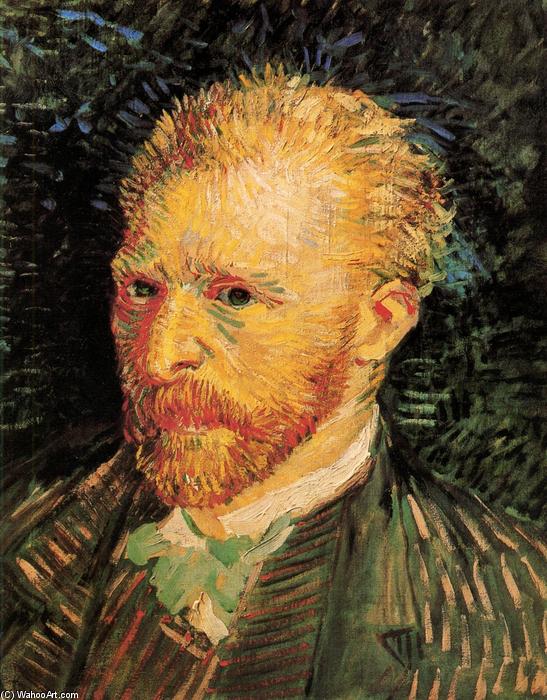
A Window Into the Soul: Vincent van Gogh’s Self-Portrait of 1887
Vincent van Gogh's self-portraits are not merely depictions of a man; they are profound explorations of the human psyche, rendered with an intensity that continues to resonate deeply over a century later. The 1887 iteration, housed within the esteemed collection of the Rijksmuseum in Amsterdam, offers a particularly poignant glimpse into this turbulent and brilliant artist’s inner world. This painting transcends its status as a simple portrait; it is a raw, honest expression of vulnerability, ambition, and an almost unbearable yearning for connection – all captured with his signature impasto technique and vibrant, emotionally charged palette.
The composition itself immediately draws the eye. Van Gogh presents himself in a relatively casual pose, seated before a blurred background that suggests Paris, the city where he was undergoing a transformative period of artistic development. The yellow shirt, a dominant feature of the painting, isn’t just a color choice; it embodies optimism and energy, yet simultaneously hints at an underlying restlessness. His gaze, directed slightly to the side, is not one of outward confidence but rather a contemplative inwardness – as if he's wrestling with his own thoughts and emotions. The prominent beard, meticulously rendered, adds a layer of realism while also subtly emphasizing the weight of experience etched upon his face.
Post-Impressionist Innovation: Color, Texture, and Emotion
This self-portrait firmly establishes Van Gogh within the Post-Impressionist movement, a period marked by a deliberate departure from the objective representation favored by earlier Impressionists. Rather than simply capturing what he saw, Van Gogh sought to convey *how* he felt. His bold use of color is paramount – the yellows and ochres dominate, creating an atmosphere of warmth and vitality, yet are juxtaposed with darker blues and greens that hint at melancholy and introspection. The thick application of paint, or impasto, is equally crucial; each brushstroke is visible, lending a tactile quality to the canvas and amplifying the emotional intensity of the work.
The technique itself speaks volumes about Van Gogh’s process. He wasn't interested in smooth blending; he layered colors directly onto the canvas, building up texture and creating a sense of movement and dynamism. This deliberate roughness mirrors the turmoil within him – a reflection of his struggles with mental health and his relentless pursuit of artistic expression. It is a technique that anticipates the expressive power of later movements like Fauvism and German Expressionism.
Parisian Influence and Artistic Evolution
Created during Van Gogh’s time in Paris, this self-portrait represents a pivotal moment in his artistic evolution. He was deeply influenced by the avant-garde artists surrounding him, particularly Émile Bernard and Paul Gauguin, who encouraged him to experiment with color and form. The Parisian atmosphere – vibrant, bustling, and brimming with new ideas – undoubtedly fueled his creative fire. However, this period also marked a growing sense of isolation and disillusionment for Van Gogh, themes that are subtly conveyed in the painting’s somber undertones.
The blurred background is not merely an aesthetic choice; it symbolizes the artist's detachment from the external world, focusing instead on his internal landscape. It suggests a retreat into introspection, a desire to grapple with his own identity and artistic vision away from the distractions of Parisian society. This self-portrait, therefore, becomes a microcosm of Van Gogh’s entire journey – a testament to both his brilliance and his profound struggles.
A Legacy of Emotional Intensity
Van Gogh's self-portraits are more than just portraits; they are windows into the soul of one of art history’s most compelling figures. They stand as enduring symbols of artistic passion, vulnerability, and the relentless pursuit of creative expression. The 1887 Self-Portrait remains a powerful example of this legacy, inviting viewers to contemplate the complexities of human emotion and the transformative power of art. Its raw honesty and vibrant energy continue to captivate audiences today, solidifying Van Gogh’s place as an icon of artistic genius.