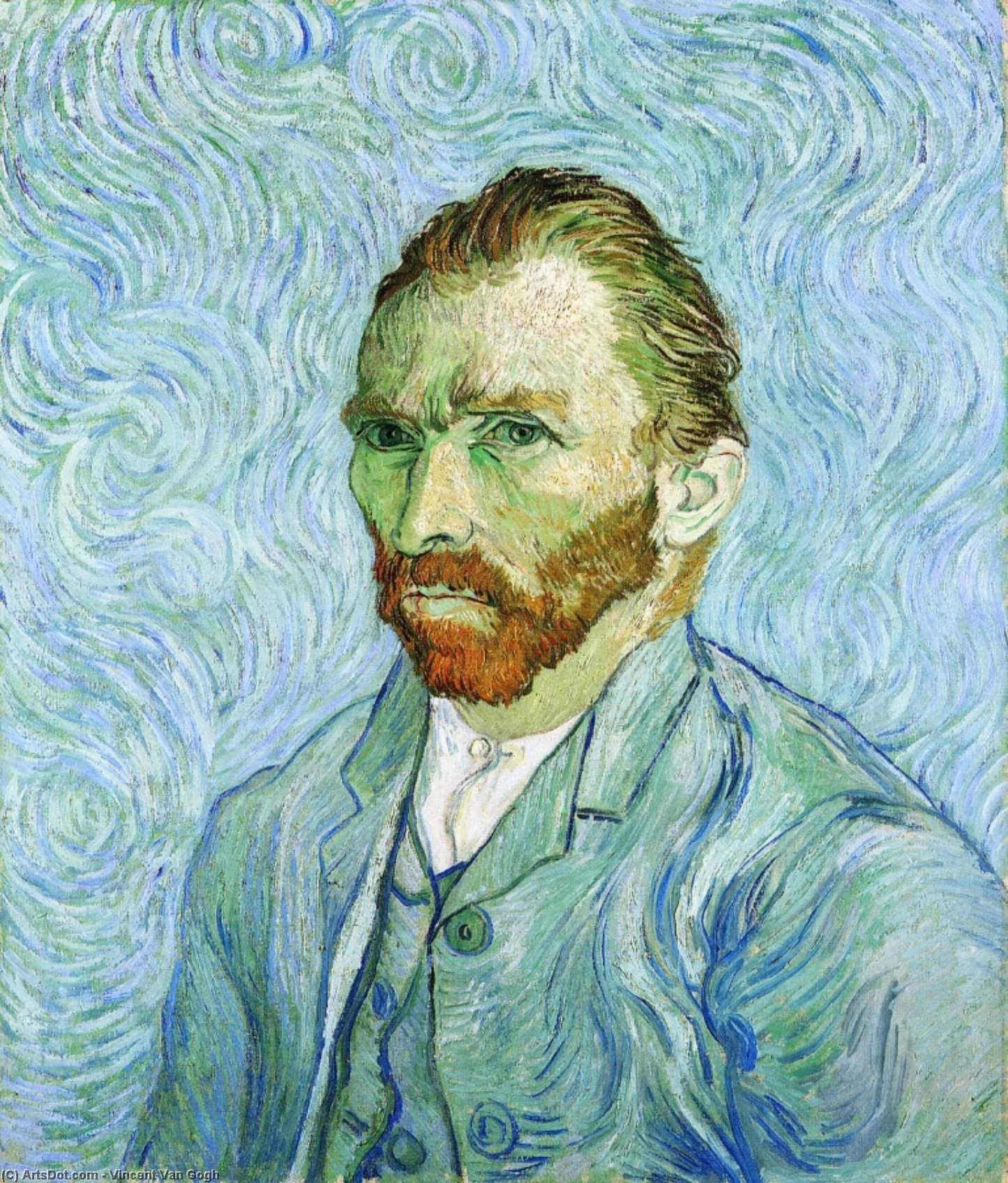
Self Portrait by Vincent Van Gogh
Vincent van Gogh’s “Self Portrait,” painted in 1889 during his stay at Saint Rémy Hospital, remains one of the most iconic images of modern art—a testament to both artistic genius and profound psychological turmoil. More than just a depiction of his physical appearance, it's an exploration of inner landscape, rendered with unparalleled expressive power.
The Painting’s Details
Executed in oil on canvas measuring 65 x 54 cm, the portrait showcases Van Gogh’s masterful technique—thick impasto brushstrokes that capture the texture and movement of paint itself. The dominant hue is a deep indigo blue, reflecting not only his mood but also the influence of Japanese prints, which captivated him during this period. Within this melancholic palette, Van Gogh meticulously rendered his facial features: piercing eyes gaze directly at the viewer with an intensity that conveys both vulnerability and defiance. The prominent nose and cheekbones are sculpted with remarkable precision, while the furrowed brow speaks to the anxieties plaguing his mind. Beneath a dark felt hat—a symbol of formality and perhaps a conscious effort to maintain composure—his gaze holds unwavering conviction.
Artistic Significance
“Self Portrait” is considered one of Van Gogh’s final works before he voluntarily admitted himself to Saint Rémy following an episode of psychosis, triggered by the infamous ear mutilation incident. The background—a hazy expanse of ultramarine sky—creates a sense of depth and isolation, mirroring the artist's emotional state. Critics have interpreted the painting as representing Van Gogh’s struggle with mental illness, his yearning for connection, and his unwavering commitment to artistic expression despite overwhelming difficulties. The swirling brushstrokes in the upper portion of the canvas echo the turbulent emotions simmering beneath the surface—a visual embodiment of inner turmoil.
Symbolism
Beyond its technical brilliance, “Self Portrait” is laden with symbolic meaning. The dark felt hat represents a desire for social acceptance and conformity, juxtaposed against the artist’s rebellious gaze. The intense stare conveys both vulnerability and determination—a refusal to succumb to despair despite facing immense challenges. Furthermore, scholars have noted parallels between the painting's composition and Van Gogh’s fascination with Japanese prints, particularly their flattened perspectives and bold use of color—elements that profoundly influenced his artistic style.
Legacy and Recognition
“Self Portrait” cemented Van Gogh’s reputation as one of history’s greatest painters and continues to inspire artists and collectors alike. Its enduring appeal lies in its ability to convey profound emotion through masterful technique—a timeless masterpiece that transcends cultural boundaries and speaks directly to the human condition. Today, it resides in the Musée d'Orsay in Paris, where visitors can contemplate its beauty and grapple with its complex psychological dimensions.
- Painting Details: Oil on canvas, 65 x 54 cm
- Artist: Vincent van Gogh
- Date: 1889
- Style: Post-Impressionism
For more information on Van Gogh’s self-portraits and other works, visit Wikipedia page dedicated to his self-portraits.