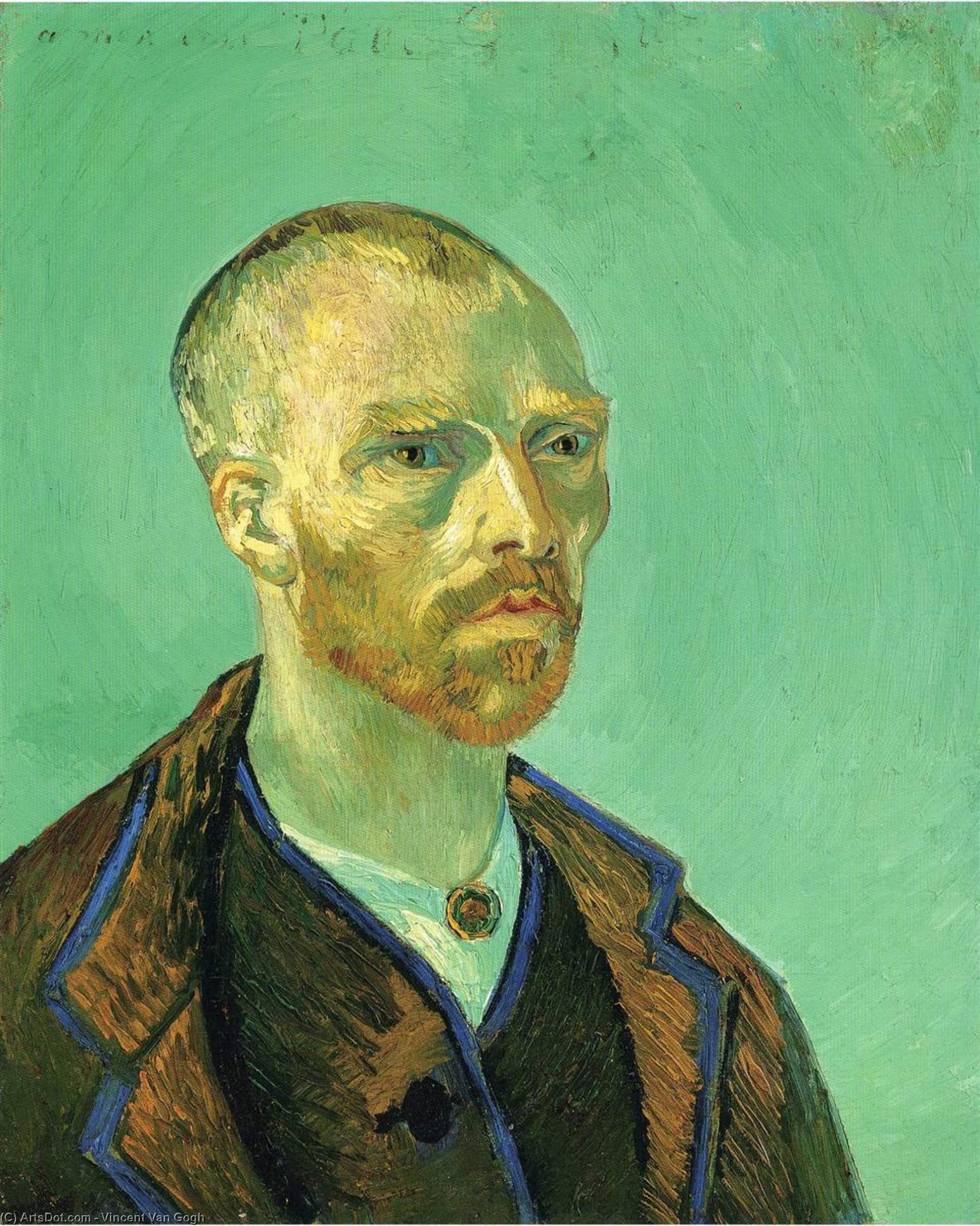
Self Portrait Dedicated to Paul Gauguin: A Glimpse into Van Gogh's Soul
- Artist: Vincent van Gogh
- Date: 1888
- Medium: Oil on Canvas
- Dimensions: 59 x 48 cm (23 1/4 x 18 7/8 in)
- Location: Fogg Art Museum, Harvard University Art Museums
Historical Context and Artistic Exchange
Painted during a pivotal moment in Van Gogh's career, "Self-Portrait Dedicated to Paul Gauguin" reflects his fervent desire for artistic collaboration and validation. In 1888, Van Gogh relocated to Arles, France, with the ambitious goal of establishing an artist’s colony—a haven where like-minded creatives could inspire and challenge one another. He invited Paul Gauguin, a leading figure in the Post-Impressionist movement, to join him. This self-portrait is part of a reciprocal exchange between the two artists; Gauguin created a self-portrait dedicated to Van Gogh as well. The act of exchanging portraits symbolized their mutual respect and artistic camaraderie, though this relationship would tragically deteriorate shortly after.
Style and Technique: Expressive Brushwork and Color
The painting exemplifies Van Gogh's distinctive Post-Impressionist style, characterized by bold brushstrokes and an expressive use of color. Unlike the smooth, blended techniques prevalent in earlier art movements, Van Gogh employed thick impasto—applying paint thickly to the canvas—creating a textured surface that conveys raw emotion. The background is dominated by a striking green hue, which contrasts sharply with the pale complexion of Van Gogh’s face. This deliberate use of color isn't merely decorative; it contributes to the painting's overall mood and psychological depth. Notice how the brushstrokes follow the contours of his face, emphasizing its structure while simultaneously conveying a sense of restlessness and inner turmoil.
Symbolism and Emotional Impact
Beyond its aesthetic qualities, "Self-Portrait Dedicated to Paul Gauguin" is rich in symbolism. Van Gogh's gaunt features and intense gaze suggest introspection and vulnerability. The monastic severity of his expression hints at a yearning for spiritual connection and artistic purity. The dedication to Gauguin underscores the importance of friendship and mentorship in Van Gogh’s life, even as it foreshadows the eventual breakdown of their relationship. The painting evokes a profound sense of melancholy and longing—a reflection of Van Gogh's own struggles with mental health and his relentless pursuit of artistic recognition. It is not simply a portrait; it is a window into the soul of an artist grappling with both creative genius and personal demons.
Legacy and Relevance Today
Today, "Self-Portrait Dedicated to Paul Gauguin" remains one of Van Gogh's most iconic works, captivating viewers with its raw emotional power and innovative artistic techniques. It serves as a poignant reminder of the complexities of human relationships and the enduring legacy of Post-Impressionist art. The painting’s exploration of selfhood, friendship, and artistic ambition continues to resonate with audiences worldwide, solidifying Van Gogh's place as one of history's most influential and beloved artists.