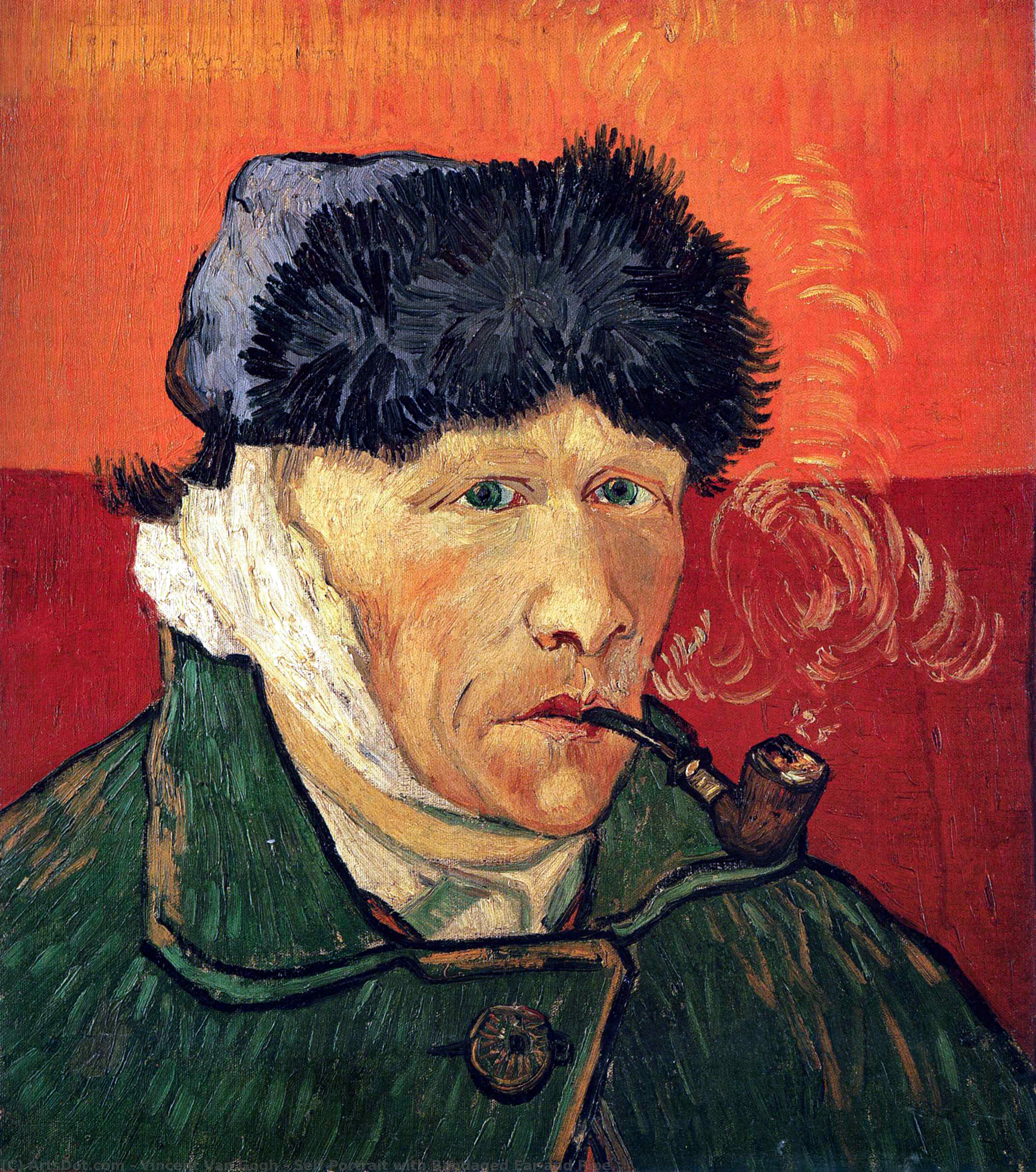
A Window into Turmoil: Van Gogh’s Self-Portrait with Bandaged Ear
Painted in Arles in December 1889, this profoundly moving self-portrait offers an intimate and unsettling glimpse into the psychological state of Vincent van Gogh following a period of intense emotional distress. Created shortly after the infamous incident involving his ear, the artwork is not merely a physical likeness but a raw and honest exploration of suffering, vulnerability, and artistic resilience.
Post-Impressionist Mastery & Bold Technique
Executed in Van Gogh’s signature Post-Impressionistic style, this painting exemplifies his revolutionary approach to color and brushwork. Thick, impasto strokes build up the surface texture, creating a palpable energy that seems to vibrate with emotion. The swirling background of oranges, reds, and blues contrasts dramatically with Van Gogh's pale complexion, intensifying the sense of inner turmoil. He eschews traditional academic techniques in favor of expressive distortion and subjective color choices – hallmarks of his unique artistic vision.
Historical Context: Arles & Artistic Crisis
The painting emerged from a turbulent period in Van Gogh’s life. Following his arrival in Arles, he envisioned establishing an artist's colony with Paul Gauguin. While initially productive, their relationship quickly deteriorated, culminating in a violent altercation that led to Van Gogh’s self-mutilation. This portrait was created during his convalescence and reflects the aftermath of this traumatic event. It stands as a testament to his determination to continue working despite profound personal struggles.
Symbolism & Emotional Resonance
Every element within the composition carries symbolic weight. The prominently displayed bandaged ear serves as an immediate visual indicator of physical pain and emotional breakdown. The pipe, held loosely in his lips, can be interpreted as a symbol of fleeting solace or a desperate attempt to find calm amidst chaos. His direct gaze confronts the viewer, inviting empathy while simultaneously maintaining a sense of isolation. The swirling background mirrors the artist’s internal state – a vortex of anxiety and uncertainty.
A Powerful Statement for Modern Interiors
This self-portrait transcends its historical context to become a timeless exploration of the human condition. Its intense emotionality and striking visual impact make it a captivating focal point for any interior space. Whether displayed in a modern living room, a contemplative study, or a sophisticated dining area, this artwork will undoubtedly spark conversation and inspire reflection. A reproduction allows you to bring the power and beauty of Van Gogh’s vision into your home, adding depth, character, and artistic significance.
This piece is ideal for collectors seeking iconic works, art enthusiasts drawn to emotionally resonant imagery, and interior designers aiming to create spaces that are both visually stunning and intellectually stimulating.