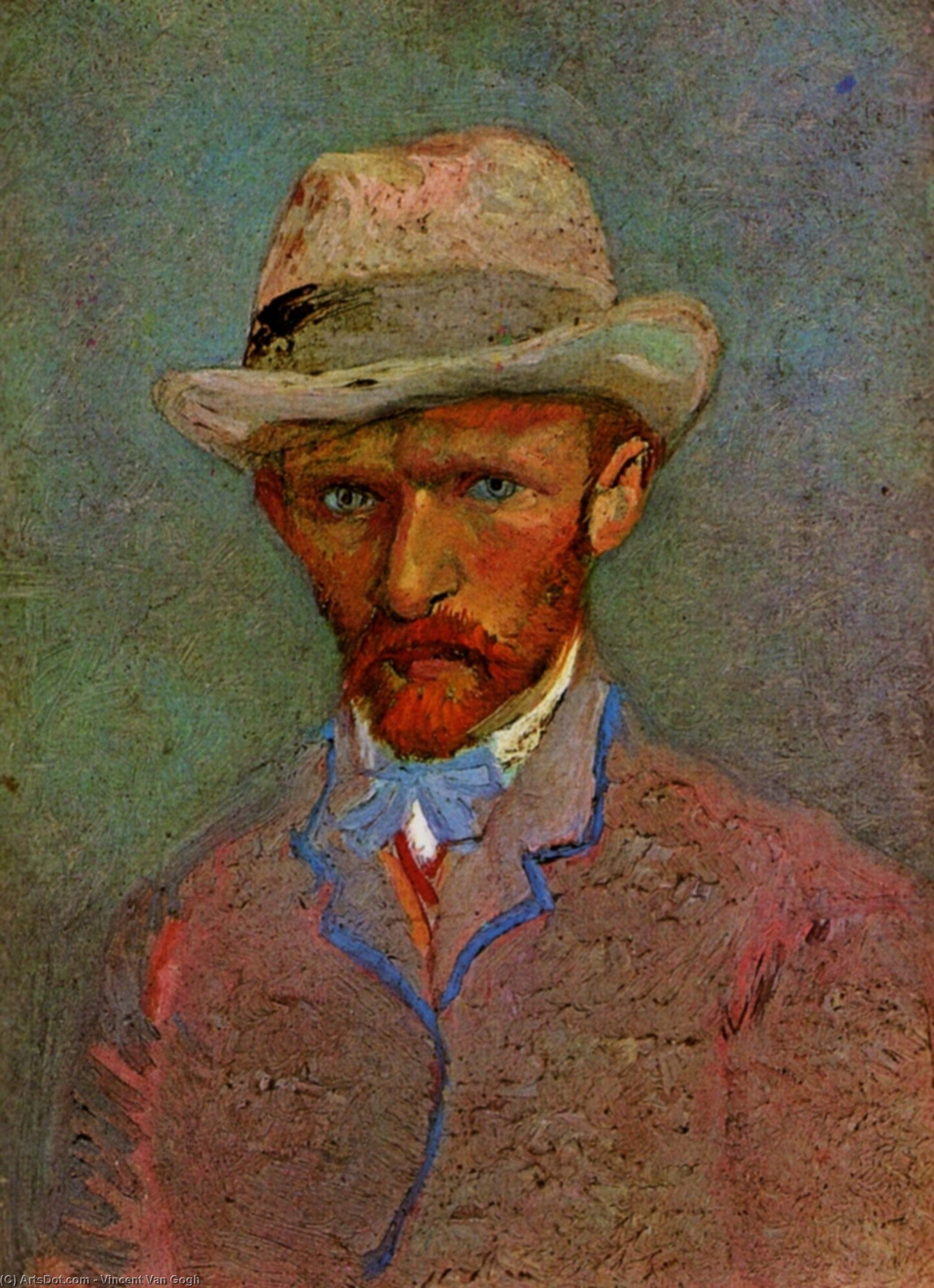
A Portrait of Introspection: Vincent van Gogh’s “Self-Portrait with Gray Felt Hat”
Vincent van Gogh's "Self-Portrait with Gray Felt Hat," painted in 1887 during his formative years in Paris, is more than just a likeness; it’s a window into the artist’s evolving psyche and a masterful demonstration of his burgeoning post-impressionist style. This oil on canvas work, now housed within the esteemed collections of museums worldwide, captures a moment of quiet contemplation, inviting viewers to connect with the complex emotions simmering beneath the surface of this iconic figure. The painting immediately draws attention through its bold contrasts – the dark, heavy brushstrokes of the felt hat against the softer rendering of his face, and the muted palette punctuated by flashes of vibrant color. It’s a study in texture and light, reflecting Van Gogh's growing experimentation with capturing the nuances of reality.
Van Gogh’s Parisian period was a crucible for artistic transformation. Exposed to the burgeoning Impressionist movement and the revolutionary techniques of Pointillism – exemplified by artists like Georges Seurat – he began to move away from the darker, more somber tones of his earlier work. “Self-Portrait with Gray Felt Hat” embodies this shift. The artist employs short, broken brushstrokes, a technique borrowed from Seurat, creating a shimmering effect across the canvas. Notice how these strokes build up layers of color, particularly around the hat and the collar, suggesting both texture and movement. The subtle use of light, directed primarily onto his face, creates an intimate atmosphere, drawing us into his gaze and fostering a sense of connection.
Decoding the Symbolism
Beyond its technical brilliance, the painting is rich in symbolic meaning. The gray felt hat itself has been interpreted as representing both vulnerability and resilience – a shield against the world while simultaneously acknowledging the artist’s isolation. The blue ribbon around his neck, a delicate counterpoint to the assertive hat, could symbolize hope or perhaps a fleeting moment of joy amidst a period of intense emotional turmoil. Van Gogh was grappling with mental health challenges during this time, and self-portraits served as a crucial means of self-expression and exploration. The direct gaze he directs at the viewer is particularly significant; it’s an invitation to share in his thoughts and feelings, a silent plea for understanding.
Historical Context: Paris and Artistic Experimentation
“Self-Portrait with Gray Felt Hat” was painted during a pivotal moment in Van Gogh's artistic development. He had recently moved to Paris, seeking inspiration and exposure to the vibrant art scene. This move marked a dramatic shift from his earlier work, characterized by earthy tones and depictions of rural life. In Paris, he encountered artists like Toulouse-Lautrec and Edgar Degas, absorbing their innovative approaches to color, composition, and subject matter. The painting reflects this experimentation – the brighter palette, the looser brushwork, and the focus on capturing a fleeting moment in time are all hallmarks of his Parisian period.
A Lasting Legacy
“Self-Portrait with Gray Felt Hat” stands as a testament to Van Gogh’s genius and enduring influence. It's not merely a portrait; it’s an emotional landscape, a glimpse into the soul of a troubled but profoundly gifted artist. The painting’s raw honesty and expressive power continue to resonate with viewers today, solidifying its place as one of the most iconic works in the Western art canon. For those seeking to experience the beauty and intensity of Van Gogh's vision, ArtsDot offers meticulously crafted hand-painted reproductions that faithfully capture every nuance of this remarkable masterpiece. Explore our collection and bring a piece of this timeless artwork into your home or office – a tangible reminder of the power of artistic expression.