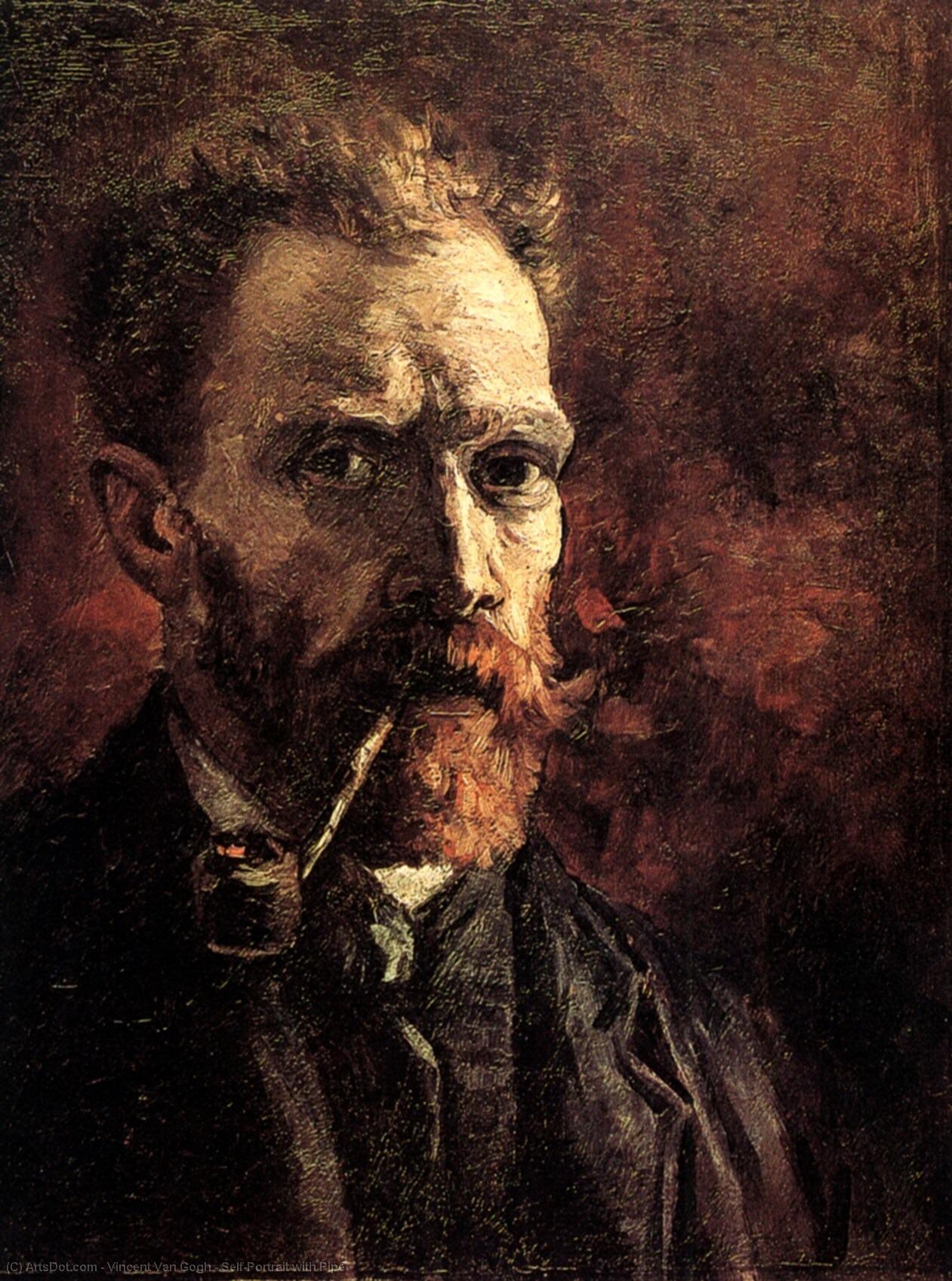
Self-Portrait with Pipe by Vincent van Gogh
Vincent van Gogh, one of the most renowned artists in history, left an indelible mark on the world of art. His
Self-Portrait with Pipe, painted in 1886, is a testament to his unique style and the turmoil he faced during his lifetime.
The Painting's Significance
This self-portrait, executed in oil on canvas, showcases Van Gogh’s mastery of realism. The painting depicts the artist himself, sporting a prominent beard and mustache, wearing glasses, and smoking a pipe. The attire, including a tie, adds an element of formality to his appearance. The vintage feel and black-and-white color scheme enhance the historical charm of the piece.
Artistic Style
Van Gogh's use of oil on canvas is characteristic of his work during this period. As discussed in
The Art Media Oil On Canvas, the medium allowed for vibrant and textured works that have stood the test of time.
Historical Context
During the late 19th century, art was undergoing significant transformations. The history of painting, as outlined in
History of Painting, shows a shift from traditional representational forms to more modern and abstract approaches. Van Gogh's work bridged the gap between Impressionism and Post-Impressionism.
Comparison with Other Artists
Paul Cézanne, another influential artist of the time, also explored new modes of representation. His
Self-Portrait (Tate), available on
Paul Cézanne: Self-Portrait (Tate), demonstrates a similar focus on structure and form. Van Gogh's work, however, is distinct in its emotional intensity and expressive brushwork.
Legacy
Van Gogh's
Self-Portrait with Pipe is a reflection of his inner turmoil and artistic genius. His legacy continues to inspire artists and art enthusiasts alike. For those interested in exploring more of Van Gogh's work,
Vase with Asters and Phlox and
Vase with Gladioli and Lilac are notable examples of his skill in capturing the beauty of everyday life.
Conclusion
In conclusion,
Self-Portrait with Pipe by Vincent Van Gogh is a powerful representation of the artist's unique style and personal struggles. It stands as a testament to the enduring legacy of Western painting, which continues to evolve and captivate audiences today.
For those interested in exploring more about the history of Western painting, refer to
Western Painting.