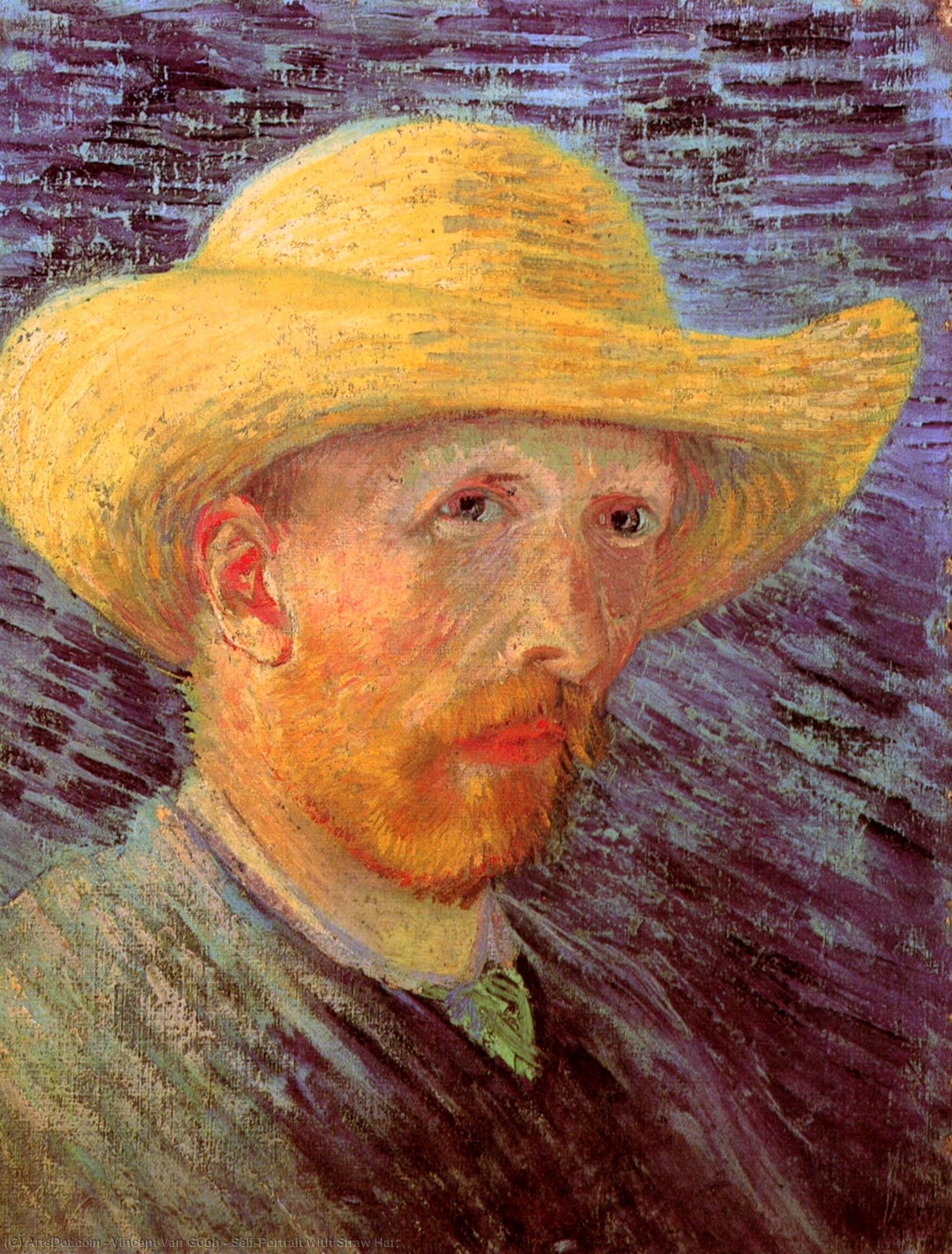
A Window into Van Gogh’s Soul: *Self-Portrait with Straw Hat*
Vincent van Gogh's *Self-Portrait with Straw Hat*, painted in 1887, is more than just a likeness; it’s an intimate glimpse into the mind of one of art history’s most celebrated – and tormented – figures. This work stands as a pivotal moment in his artistic development, showcasing his burgeoning confidence and evolving style during his Parisian period.
Decoding the Composition
The painting immediately draws the viewer's eye to Van Gogh himself, centrally positioned against a backdrop of cool blues. The straw hat, perched slightly off-center, isn’t merely an accessory; it acts as a framing device and introduces a touch of rustic simplicity that contrasts with the growing sophistication of his technique.
The direct gaze, unwavering and intensely personal, establishes a powerful connection between artist and observer. Van Gogh doesn't shy away from presenting himself – flaws and all – creating an immediate sense of vulnerability and honesty.
Mastering Post-Impressionism: Style & Technique
This self-portrait is a prime example of Van Gogh’s embrace of the Post-Impressionist style. He moves beyond simply *representing* reality to *expressing* his emotional response to it.
The thick, visible brushstrokes – known as impasto – are not accidental; they are deliberate marks that imbue the painting with energy and movement. The application of paint is almost sculptural, giving texture and depth to both his face and the straw hat. He expertly balances warm yellows and oranges in his skin tones and the hat against the cooler blues of the background, creating a visually dynamic composition.
Parisian Influences & Artistic Awakening
1887 was a transformative year for Van Gogh. Having recently moved to Paris to join his brother Theo, he was exposed to the avant-garde artistic community and began experimenting with new techniques and color palettes. The influence of Impressionism and Pointillism is subtly present in this work – a loosening of brushwork and a greater emphasis on capturing light and atmosphere. However, Van Gogh quickly moved beyond imitation, forging his own unique path characterized by emotional intensity and expressive distortion.
Symbolism & Emotional Resonance
The straw hat itself can be interpreted as symbolic. It suggests a connection to the countryside – perhaps a longing for the rural landscapes he knew from his native Netherlands. It also hints at humility, contrasting with the growing ambition evident in his artistic experimentation. More profoundly, the painting is a study in self-perception and psychological depth.
Van Gogh’s intense gaze suggests both introspection and a plea for understanding. The overall effect is one of profound melancholy tempered by an underlying sense of determination.
A Lasting Legacy & Interior Design Considerations
*Self-Portrait with Straw Hat* continues to resonate with audiences today, not only for its artistic merit but also for its poignant portrayal of the human condition. Its relatively muted color palette and intimate scale make it a versatile piece for interior design. It would complement both modern and traditional settings, adding a touch of sophistication and emotional depth to any space.
- Consider pairing it with neutral tones to allow the painting’s colors to truly stand out.
- Its introspective mood makes it ideal for bedrooms or studies.
- The textured brushstrokes add visual interest and tactile appeal.
This self-portrait is a testament to Van Gogh's genius – his ability to transform personal struggle into universal beauty. It’s a work that invites contemplation, offering a window into the soul of an artist who continues to captivate and inspire generations.