Introduction
Vincent Van Gogh, one of the most renowned artists in history, created numerous iconic paintings that continue to captivate art enthusiasts worldwide. Among his notable works is
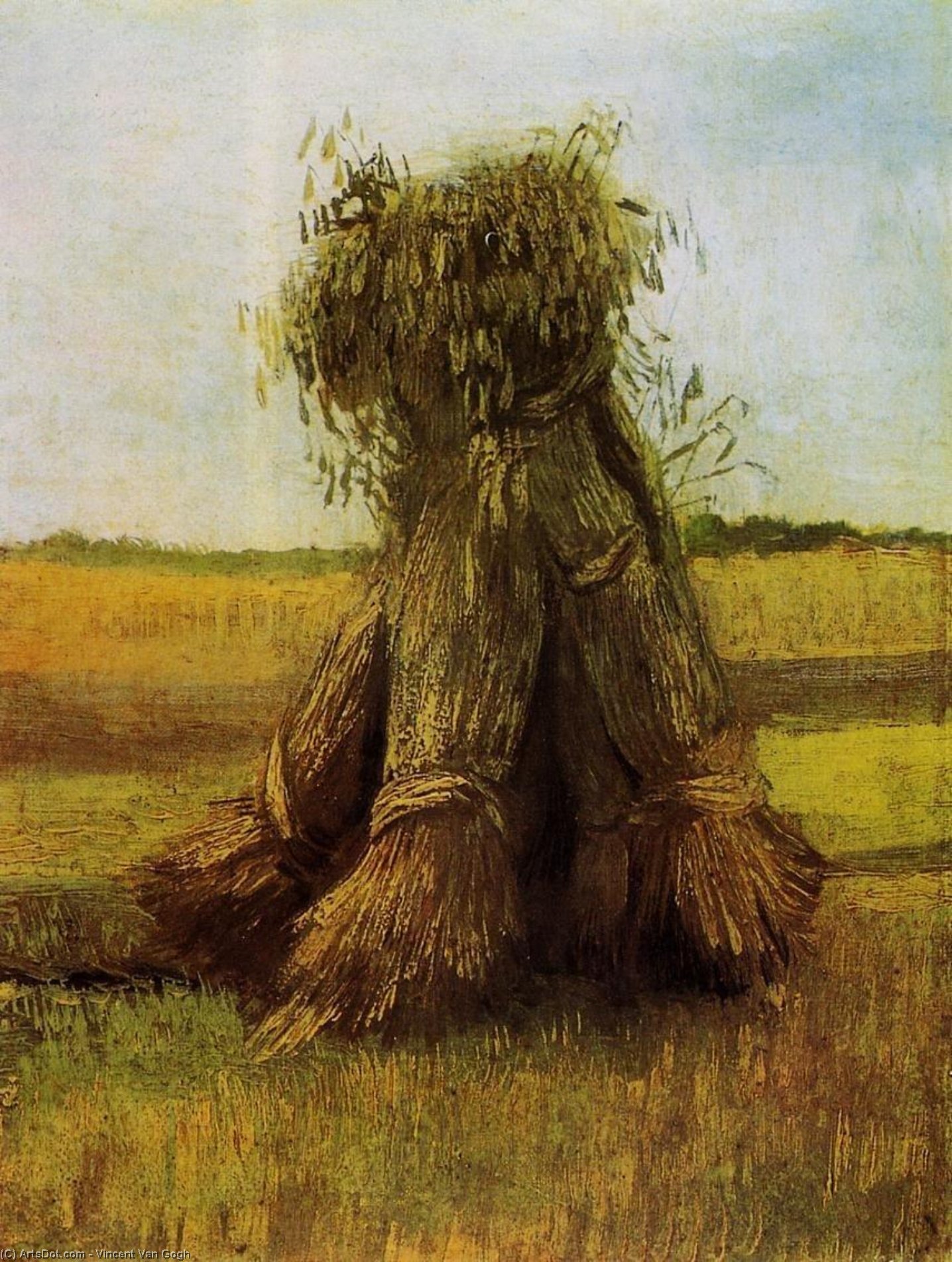
Sheaves of Wheat in a Field, a beautiful representation of wheat in a field, which is currently housed at the
Kröller-Müller Museum in Otterlo, Netherlands.
Painting Description
The painting depicts tall stalks of wheat, some of which are tied together in bundles. The foreground features several sheaves, while others can be seen further back in the scene. Two birds are also visible: one near the top left corner and another towards the middle right side of the image. The composition creates a sense of depth and movement as the viewer looks through the field of wheat.
Artistic Style
Van Gogh's style in
Sheaves of Wheat in a Field is characterized by realism, which was a common theme in his work during that period. The use of oil on canvas adds depth and texture to the painting, making it visually appealing.
Historical Context
Painted in 1885, this piece reflects Van Gogh's fascination with rural landscapes and the lives of peasants. His inspiration often came from Jean-François Millet, who also depicted scenes of people digging and working in fields. The religious connotation of diggers, as seen in Genesis 3:19, is a recurring theme in Van Gogh's work.
Other Relevant Works
Van Gogh created several other notable paintings during his time at the
Kröller-Müller Museum, including:
Conclusion
Sheaves of Wheat in a Field is a testament to Van Gogh's skill and his ability to capture the essence of rural life. This painting, along with his other works, continues to inspire art lovers and historians alike. For more information on Vincent Van Gogh and his paintings, visit
https://ArtsDot.com.