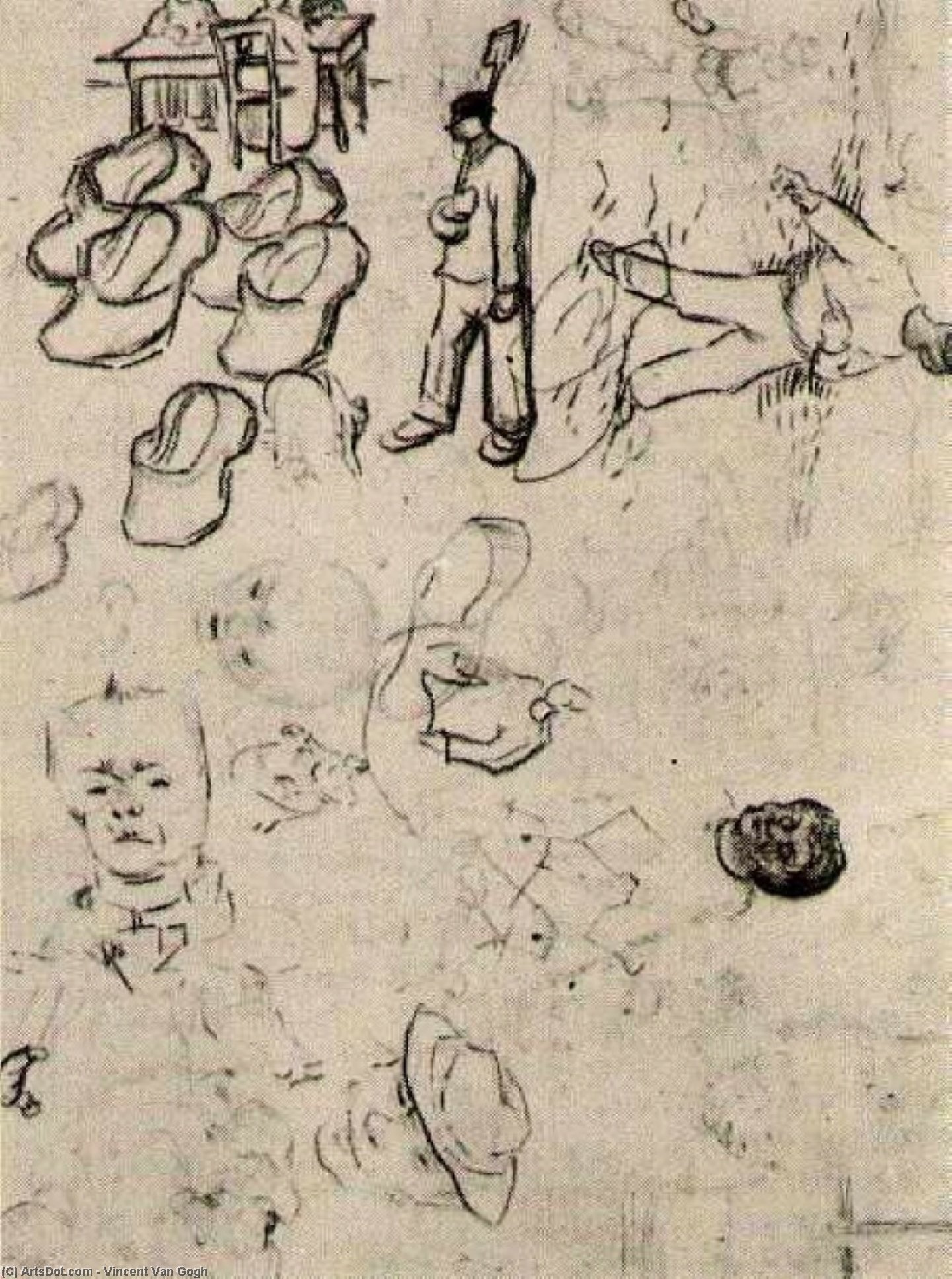
Explore Vincent van Gogh's 'Sheet with Figures at a Table, a Sower, Clogs, etc.' (1890), a masterful Post-Impressionist sketch showcasing bold color & expressive brushstrokes – discover more!
Introduction to the Painting
“Sheet with Figures at a Table, a Sower, Clogs, etc.” stands as a cornerstone of Vincent van Gogh’s mature artistic vision. Created in 1890 during his stay in Saint-Rémy-de-Provence—a period marked by intense introspection and experimentation—this work exemplifies the artist's unwavering commitment to capturing emotion and conveying profound ideas through visual form. More than just a depiction of everyday life, it’s an embodiment of Post-Impressionism’s core tenets: subjective experience and expressive brushwork prioritized over mere optical realism.
Artistic Style and Influence
Van Gogh’s distinctive style is immediately recognizable in “Sheet with Figures at a Table,” a testament to his mastery of line and color. Bold, impasto strokes—thickly applied paint—dominate the composition, creating palpable texture and dynamism that draws the viewer into the scene. Unlike Impressionists who sought to capture fleeting moments of light, Van Gogh deliberately employed expressive brushstrokes to convey inner feelings and psychological states. The palette is vibrant yet subdued, dominated by earthy tones punctuated by flashes of yellow and orange – colors he famously used to represent optimism and spiritual yearning. This approach profoundly influenced subsequent generations of artists, establishing a precedent for prioritizing emotional resonance over photographic accuracy.
- Impasto Technique: Van Gogh’s signature technique—applying paint thickly onto the canvas—creates a sculptural surface that captures light and shadow with remarkable subtlety.
- Color Symbolism: The use of yellow, particularly in the sower figure, symbolizes hope and rebirth – reflecting Van Gogh's personal struggles and aspirations for renewal during his mental illness.
- Dynamic Composition: The arrangement of figures—the sower, the women at the table, and the man repairing clogs—creates a sense of movement and interconnectedness, mirroring the artist’s desire to depict the complexities of human experience.
Historical Context and Significance
Painted during Van Gogh's voluntary confinement following a psychotic episode, “Sheet with Figures at a Table” reflects his preoccupation with themes of labor, rural life, and spiritual contemplation. It aligns perfectly with the broader artistic currents of Post-Impressionism—a movement that rejected Impressionist conventions in favor of exploring subjective emotion and psychological depth. The painting’s influence extends beyond its aesthetic qualities; it serves as a poignant reminder of Van Gogh's unwavering dedication to art despite personal hardship, cementing his legacy as one of the most emotionally resonant figures in modern art history.
Experience the Masterpiece
If you aspire to immerse yourself in the beauty and power of “Sheet with Figures at a Table,” or explore other iconic works by Vincent van Gogh, visit ArtsDot.com. Our extensive collection of fine art prints offers unparalleled access to reproductions crafted with meticulous attention to detail—allowing you to bring this masterpiece into your home and appreciate its enduring artistic significance. Explore high-quality prints available for purchase – transforming your space with the spirit of Post-Impressionism!
- Exceptional Quality Reproductions: Each print is produced using archival inks on premium canvas or paper, guaranteeing vibrant colors and lasting durability.
- Seamless Ordering Process: Our intuitive website simplifies browsing and purchasing—making it effortless to acquire a cherished piece of art history.
- Dedicated Customer Support: Our team of experienced art specialists provides personalized assistance – answering your questions and guiding you toward the perfect artwork for your collection.
Further Exploration
Delve deeper into Vincent van Gogh’s artistic journey by visiting ArtsDot.com's introduction to Post-Impressionism:
ArtsDot.com's introduction to Post-Impressionism. Discover related artworks and artists who shared Van Gogh’s vision—expanding your understanding of the artistic landscape of late 19th century Europe.