A Study in Mortality and Resilience: Examining Vincent van Gogh’s ‘Skull with Burning Cigarette’
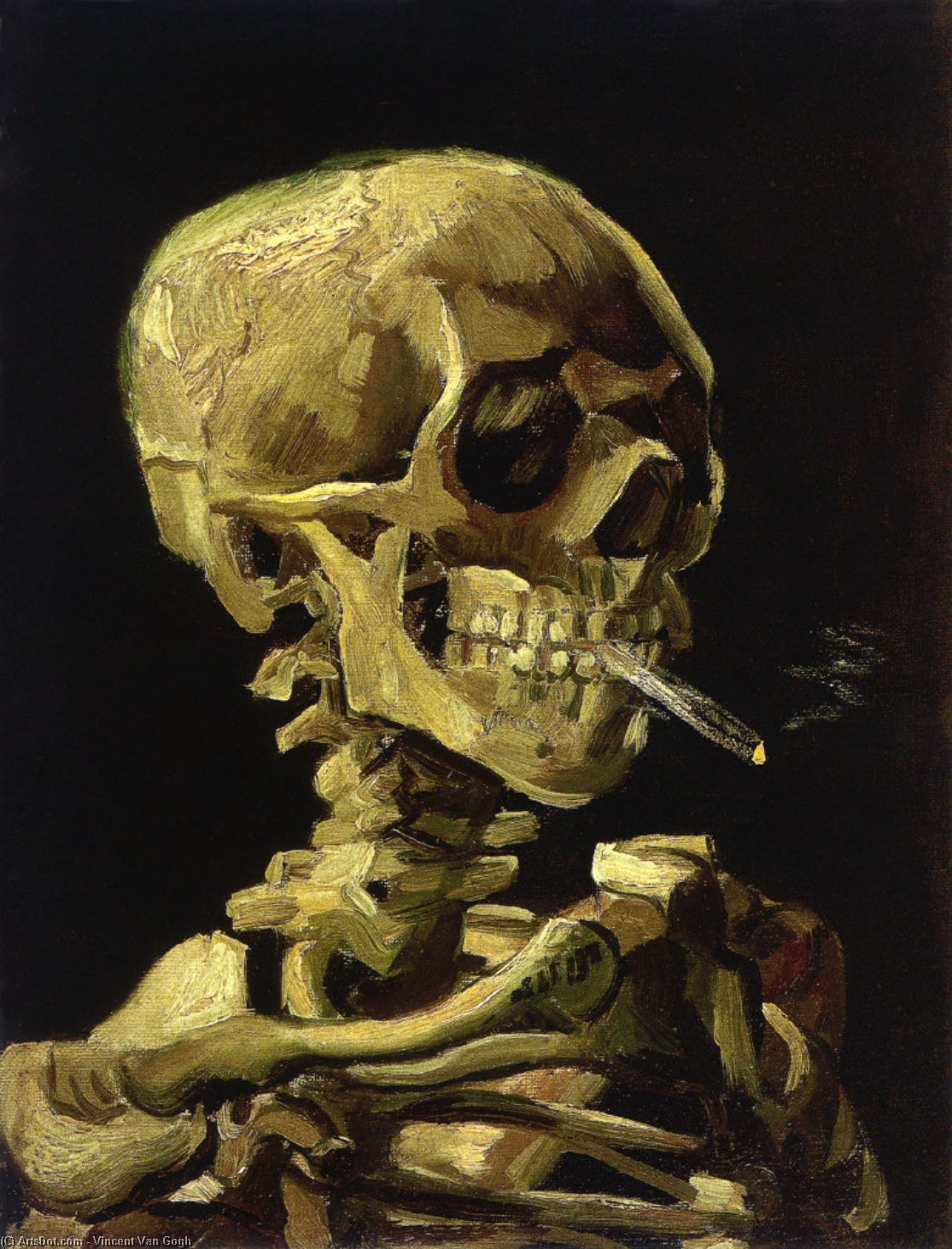
Vincent Willem van Gogh's 'Skull with Burning Cigarette,' painted in 1885 during his time in Paris, stands as a deceptively simple yet profoundly evocative image—a testament to the artist’s unwavering fascination with death and his ability to transform bleak subject matter into an expression of defiant beauty. Initially conceived as a preparatory sketch for a larger canvas exploring themes of human suffering, this small painting transcends its humble origins to become a cornerstone of Post-Impressionist art, capturing not merely the physical form of a skull but also the intangible essence of existence itself.
- Subject Matter: The artwork depicts a meticulously rendered skull resting upon a draped cloth, illuminated by a flickering candle flame. A cigarette smolders delicately in its bony maw—a deliberate juxtaposition designed to confront viewers with the inevitability of decay while simultaneously suggesting an assertion of life’s enduring spirit.
- Style and Technique: Van Gogh employed his signature impasto technique – applying thick layers of paint directly onto the canvas – creating a textured surface that vibrates with palpable energy. The color palette is restrained, dominated by earthy tones—ochre yellows, browns, and blacks—which heighten the skull’s solemn presence and emphasize its vulnerability against the warm glow of the candle light.
Historical Context: Facing Mortality in Modern Paris
Painted during Van Gogh's Parisian period, ‘Skull with Burning Cigarette’ reflects the burgeoning interest in scientific observation and anatomical studies prevalent at the time. Artists were increasingly drawn to exploring the human form—particularly its vulnerability—as a means of confronting existential anxieties. The cigarette itself carries symbolic weight; it represents not just habit but also indulgence and fleeting pleasure – elements that ultimately succumb to the relentless march of time. This painting speaks directly to the broader cultural preoccupation with mortality during the Belle Époque, capturing a moment of quiet contemplation amidst the vibrant bustle of Parisian life.
Symbolism: Beyond the Literal Representation
The skull is universally recognized as a symbol of death and decay—a reminder of our own impermanence. However, Van Gogh’s masterful execution elevates this familiar motif beyond mere morbidity. The flickering candle flame symbolizes hope and illumination, suggesting that even in darkness, there remains a spark of vitality. Furthermore, the cigarette's smoke curling upwards embodies aspiration and defiance – an attempt to transcend earthly limitations and reach for something transcendent. These subtle visual cues contribute to the painting’s enduring emotional impact.
Emotional Impact: A Meditation on Resilience
‘Skull with Burning Cigarette’ is not merely a depiction of death; it's a profound meditation on resilience—a celebration of life despite its inevitable end. The artist’s expressive brushstrokes convey a palpable sense of melancholy yet simultaneously imbue the image with an undeniable dynamism. Viewing this artwork prompts reflection on our own mortality and encourages us to embrace each moment with gratitude and courage. It remains a powerful reminder that beauty can be found even in confronting uncomfortable truths—a characteristic hallmark of Van Gogh’s artistic vision.