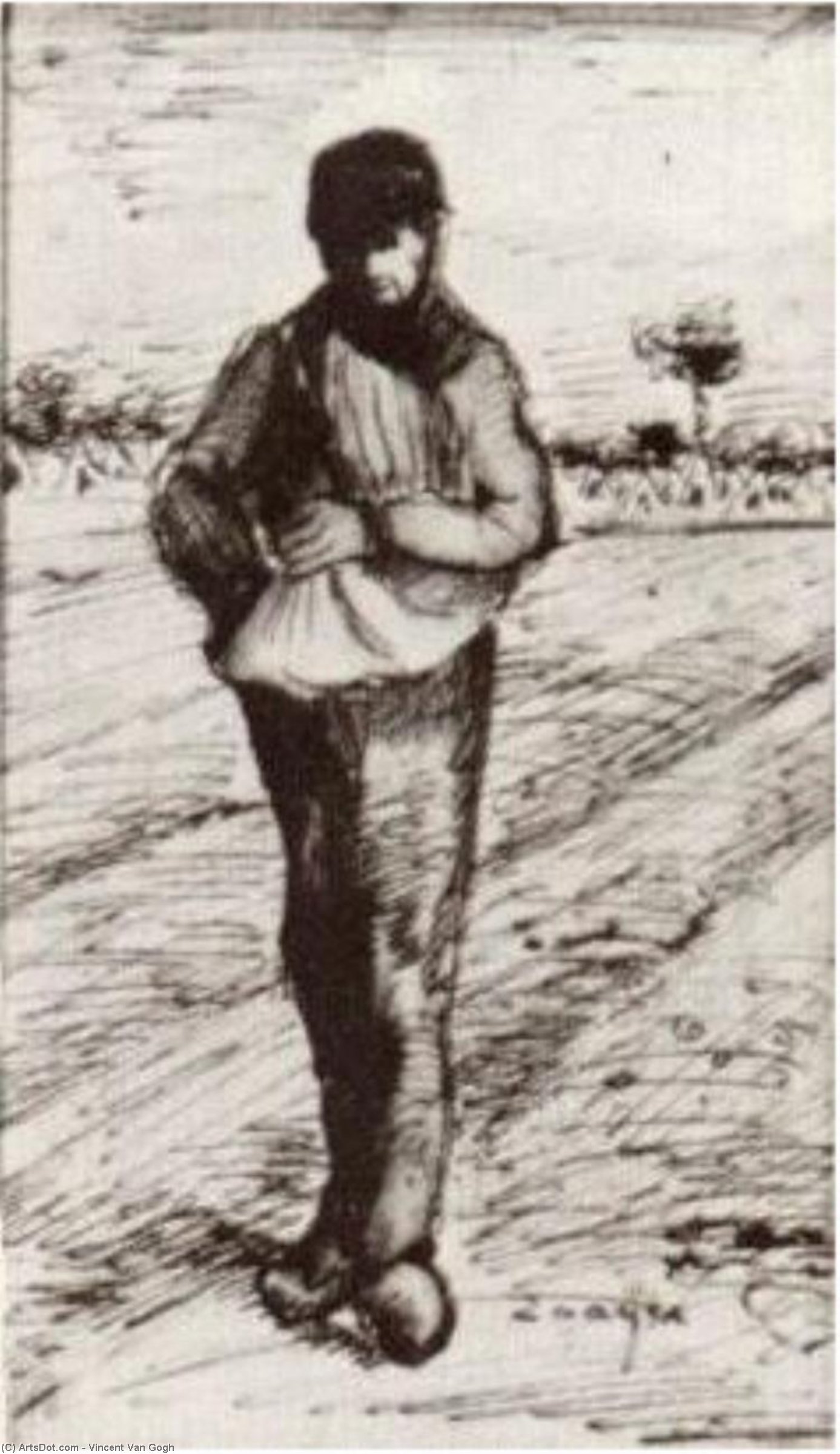
The Weight of the World: An Exploration of Van Gogh’s ‘A Study of Man’
Vincent van Gogh's A Study of Man, painted in 1887 during his time in Paris, is more than just a portrait; it’s a raw distillation of observation, emotion, and the burgeoning Symbolist movement. Executed with a characteristic intensity that would come to define his oeuvre, the painting captures a young man – likely a friend or acquaintance of the artist – lost in contemplation, his posture conveying a profound sense of melancholy and introspection. The work immediately draws the viewer into a world of psychological depth, a hallmark of Van Gogh’s evolving artistic vision.

(Placeholder image - Replace with an actual image)
Impasto and the Language of Feeling
Van Gogh’s technique in A Study of Man is immediately recognizable through his masterful use of impasto – thick, textured layers of paint applied directly to the canvas. This wasn't merely a stylistic choice; it was integral to his method of conveying emotion. The ridges and peaks of the paint create a palpable sense of movement and energy, mirroring the internal turmoil suggested by the subject’s pose. The dark, almost bruised tones – predominantly blues, greens, and browns – contribute significantly to the painting's somber mood. Notice how he builds up the form of the man’s face and hands, not with precise detail but with a deliberate roughness that emphasizes their physicality and vulnerability.
Symbolism in Isolation
The symbolism within the painting is subtle yet potent. The man's hunched posture, head bowed, suggests a burden – perhaps of grief, loneliness, or simply the weight of human existence. His hands, clasped together, could represent both protection and a desperate search for solace. Notably, the background is deliberately blurred and indistinct, isolating the figure and intensifying his sense of solitude. This technique aligns with the Symbolist movement’s interest in representing subjective experience rather than objective reality. The limited color palette further reinforces this feeling of isolation, creating a visual space that feels both intimate and profoundly empty.
A Parisian Revelation
Painted during Van Gogh's time in Paris – a pivotal period in his artistic development – A Study of Man reflects the influence of Impressionism and Post-Impressionism. While retaining his own distinctive style, he began to experiment with brighter colors and looser brushstrokes, absorbing lessons from artists like Édouard Manet and Camille Pissarro. However, unlike the Impressionists’ focus on capturing fleeting moments of light, Van Gogh used color and texture to express deeper emotional states. This work represents a crucial step in his journey toward developing his own unique artistic voice – one characterized by intense emotion and psychological depth.
Collecting the Moment
A Study of Man is a powerful testament to Van Gogh’s ability to capture not just a likeness, but an essence. It's a painting that invites contemplation, prompting viewers to consider themes of isolation, vulnerability, and the human condition. Reproductions of this work offer a remarkable opportunity to bring this iconic image into your own space, allowing you to experience the emotional resonance of Van Gogh’s genius firsthand.