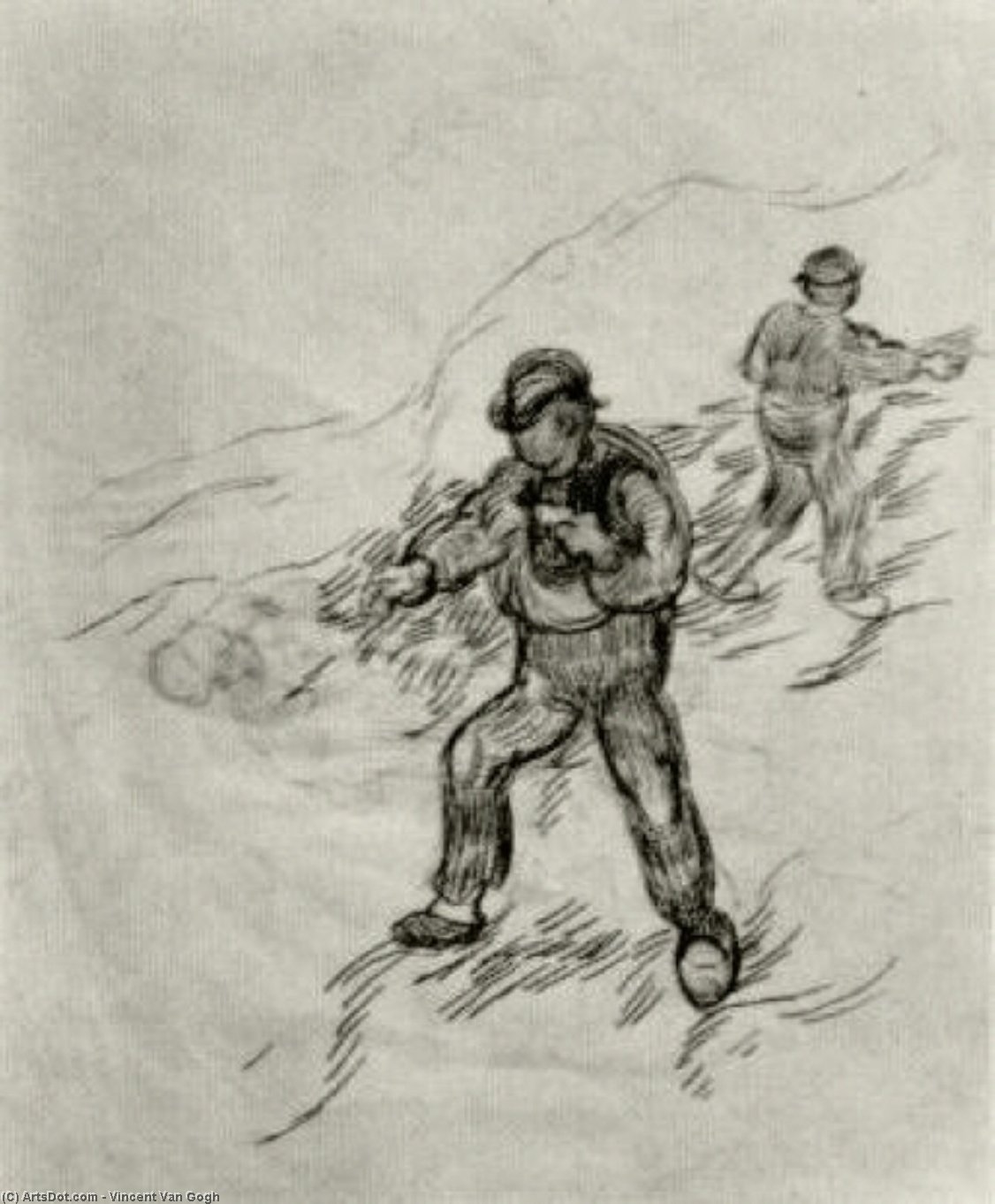
A Study in Rural Resilience: Examining Vincent van Gogh’s “The Sower”
Jean-François Millet’s 1850 painting, *The Sower*, served as an undeniable catalyst for Vincent van Gogh's artistic vision. This seminal work—a depiction of a farmer diligently planting seeds at dawn—captured Millet’s masterful observation of the French countryside and its profound connection to the rhythms of rural life. Van Gogh, deeply moved by Millet’s understated yet powerful portrayal, embarked on a series of drawings that sought to distill the essence of this image into a more expressive form.
- Composition & Technique: Van Gogh meticulously replicated Millet's pyramidal structure, employing thick impasto—a technique characterized by applying paint in textured layers—to imbue his sketches with palpable physicality. The artist’s use of hatching and cross-hatching skillfully rendered the undulating hillside and the farmer’s clothing, creating a tonal range that mirrored Millet’s subdued palette.
- Historical Context: Millet's painting emerged during the Realist movement, which championed honest depictions of everyday life—often focusing on peasant labor and rural landscapes. Van Gogh embraced this tradition, recognizing its value in conveying truthfulness and capturing the spirit of his time.
Beyond mere imitation, Van Gogh infused “The Sower” with a palpable sense of emotion. The farmer’s posture—bent slightly forward, radiating determination—became emblematic of perseverance and hope amidst hardship. Millet's depiction of dawn symbolized renewal and the promise of future harvests; Van Gogh amplified this symbolism through his expressive lines and tonal variations.
- Symbolism: The sower represents faith, labor, and the cyclical nature of existence—themes central to both Millet’s painting and Van Gogh's broader artistic concerns. The hillside embodies stability and grounding, providing a backdrop for the farmer’s solitary act of cultivation.
“The Sower” stands as more than just a visual representation; it is an embodiment of humanist values—a testament to the dignity of manual labor and the enduring beauty of the natural world. Van Gogh's masterful reworking of Millet’s image cemented his place among the most influential artists of the Impressionist era, inspiring generations of painters to explore themes of rural life and emotional expression.
- Interior Design Inspiration: Consider incorporating textures reminiscent of Van Gogh’s impasto technique into your interior design schemes—perhaps through linen upholstery or textured wallpaper—to evoke a sense of warmth and authenticity.