Introduction to the Painting
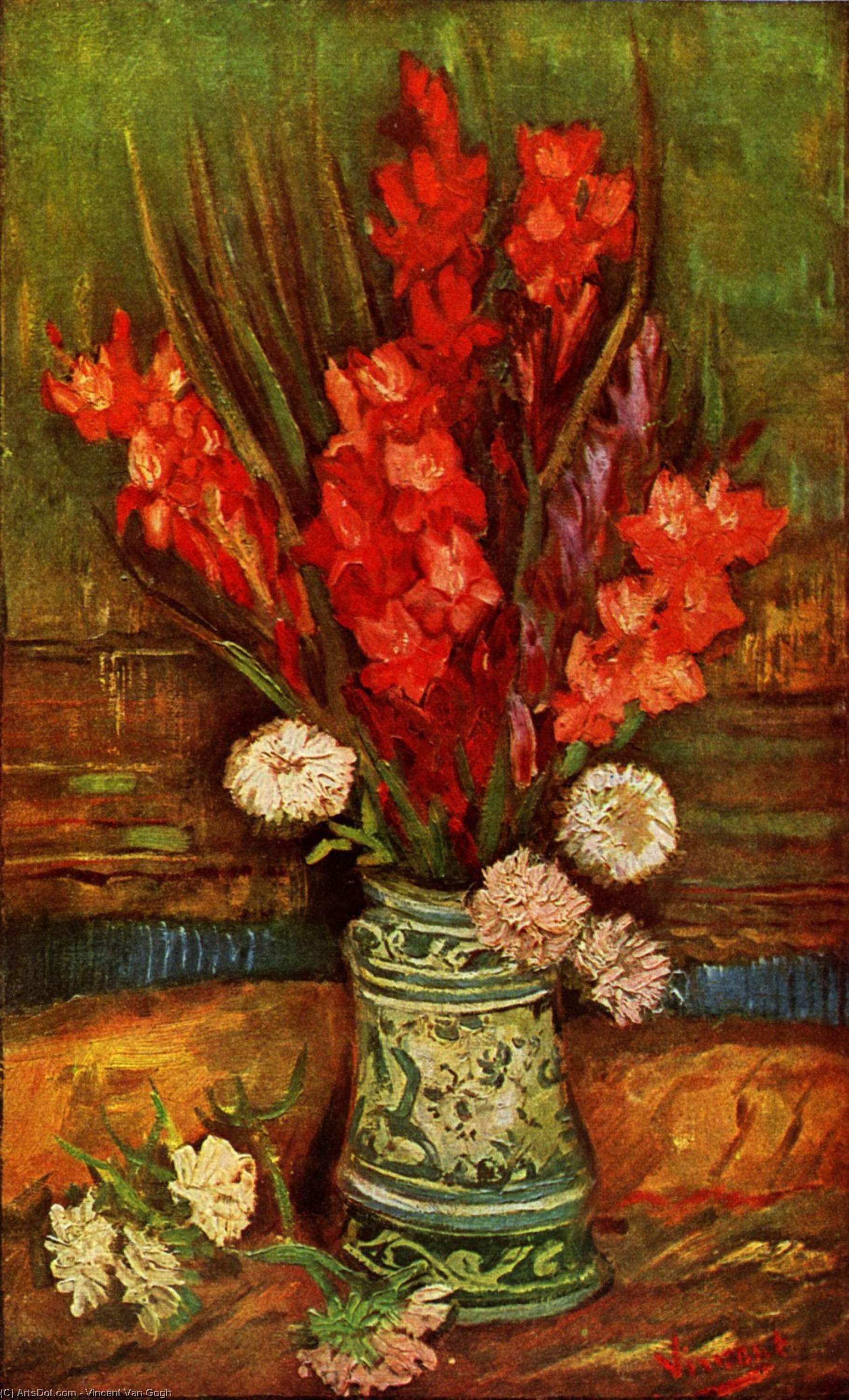
Vincent Van Gogh's Still Life - Vase with Red Gladiolas, created in 1886, is a quintessential example of his unique style and contribution to the Post-Impressionism movement. This painting, like many others by Van Gogh, showcases his ability to transform ordinary subjects into extraordinary works of art.
Artistic Style and Technique
Van Gogh's use of vibrant colors and bold brushstrokes in
Still Life - Vase with Red Gladiolas exemplifies the Post-Impressionist style. The painting features a vase filled with red gladiolas, set against a backdrop of other objects such as books, a potted plant, a bowl, and a bottle. A chair is also visible at the far right edge of the image. This composition creates an artistic and visually appealing display of flowers and objects.
Historical Context
During his time in Paris, Van Gogh was heavily influenced by various art movements, including Impressionism and Pointillism. He incorporated elements from these styles into his work, leading to a gradual shift from the somber mood of his earlier pieces to more varied and expressive compositions. The influence of Japanese art, ukiyo-e, and woodblock prints is also evident in his approach to composition and painting.
Significance and Evolution
By 1887, Van Gogh's work had matured significantly, as seen in paintings like
Pairs of Shoes and
Blue Vases. These works demonstrate his mastery of color, light, and technique. The visit to Asnières with Émile Bernard further transformed his style, resulting in the use of bright, contrasting colors and light.
Conclusion
Vincent Van Gogh's Still Life - Vase with Red Gladiolas is a testament to his innovative approach to still life painting. The vibrant colors and expressive brushstrokes make this piece a captivating masterpiece of Post-Impressionism.
Experience the beauty of Van Gogh's masterpieces with handmade oil painting reproductions from ArtsDot.