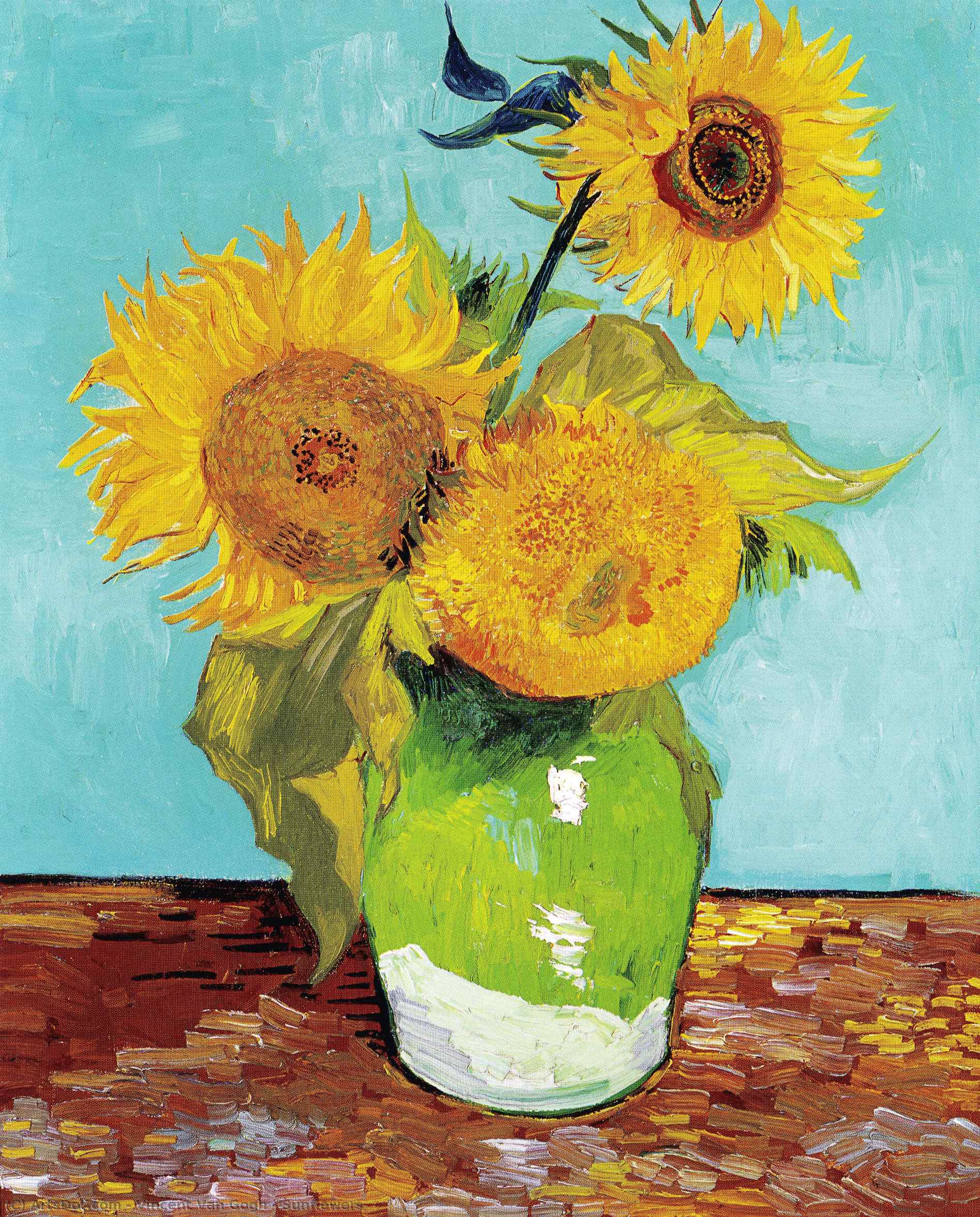
The Radiant Bloom: An Exploration of Van Gogh’s Sunflowers
Vincent van Gogh's "Sunflowers" isn’t merely a still life; it’s an explosion of emotion, a vibrant testament to the artist’s profound connection with nature and his uniquely expressive style. Painted in 1888 during his time at Arles, France – a period marked by both intense creativity and personal turmoil – this series of sunflower paintings transcends their subject matter to become iconic symbols of joy, gratitude, and the fleeting beauty of life itself. The work’s immediate impact is one of overwhelming warmth; the dominant yellows—ranging from pale lemon to rich ochre—radiate an almost palpable energy, drawing the viewer into a world saturated with light and color.
The initial impetus for this series stemmed from a desire to please his friend Paul Gauguin, who was soon to be residing in Van Gogh’s newly acquired Yellow House. Van Gogh envisioned a decorative scheme for the room, intending to hang multiple sunflower paintings as a welcoming gesture. However, the process quickly evolved into something far more personal and deeply felt. He wrote to Theo, describing his intention to “paint with the gusto of a Marseillais eating bouillabaisse,” capturing the frenetic energy he poured into each brushstroke. The resulting canvases are not simply representations of flowers; they’re embodiments of Van Gogh's emotional state – a celebration of life’s simple pleasures amidst the shadows of his mental struggles.
A Masterclass in Post-Impressionist Technique
Van Gogh’s technique is immediately recognizable, a hallmark of his distinctive post-impressionist style. He employed thick, impasto brushstrokes – applying paint directly to the canvas with visible texture and movement – creating a tactile surface that invites close examination. The sunflowers themselves are rendered not as smooth, idealized forms but as dynamic masses of color and shape, each petal vibrating with individual energy. Notice how he uses short, choppy strokes to capture the rough texture of the stems and leaves, contrasting sharply with the swirling, almost turbulent application of paint within the flower heads.
- Impasto: The thick layering of paint creates a three-dimensional effect, adding depth and physicality to the flowers.
- Color Theory: Van Gogh masterfully utilizes complementary colors – yellow against blue, orange against green – to intensify the vibrancy of the composition and create visual excitement.
- Brushwork: The energetic, expressive brushstrokes are central to the painting’s emotional impact, conveying a sense of movement and vitality.
Symbolism and Emotional Resonance
Beyond their aesthetic qualities, the sunflowers hold profound symbolic meaning within Van Gogh's oeuvre. Initially associated with gratitude – he sent them as gifts to his brother Theo – they quickly evolved into emblems of hope, joy, and longevity. The arrangement of the flowers in varying stages of bloom speaks to the cyclical nature of life, representing both growth and decay. The presence of a single, withered sunflower at the base suggests an acceptance of mortality, while the vibrant blooms above celebrate the beauty of the present moment.
Furthermore, sunflowers were associated with the sun – a powerful symbol of light, warmth, and vitality – reflecting Van Gogh’s yearning for connection and his desire to overcome darkness. The painting can be interpreted as an expression of optimism amidst personal hardship, a testament to the enduring power of beauty and creativity.
A Legacy Preserved: Reproductions and Artistic Inspiration
“Sunflowers” has become one of the most reproduced artworks in history, its iconic imagery permeating popular culture. ArtsDot.com offers high-quality, hand-painted reproductions that capture the essence of Van Gogh’s original masterpiece, allowing you to bring this vibrant symbol into your own home or office. These meticulously crafted reproductions faithfully recreate the painting's texture, color palette, and emotional intensity, ensuring an authentic representation of this timeless work of art. Whether as a statement piece in a modern interior or a cherished addition to a classic setting, “Sunflowers” continues to inspire awe and admiration, reminding us of the transformative power of art.