A Moment Frozen in Vibrant Hue
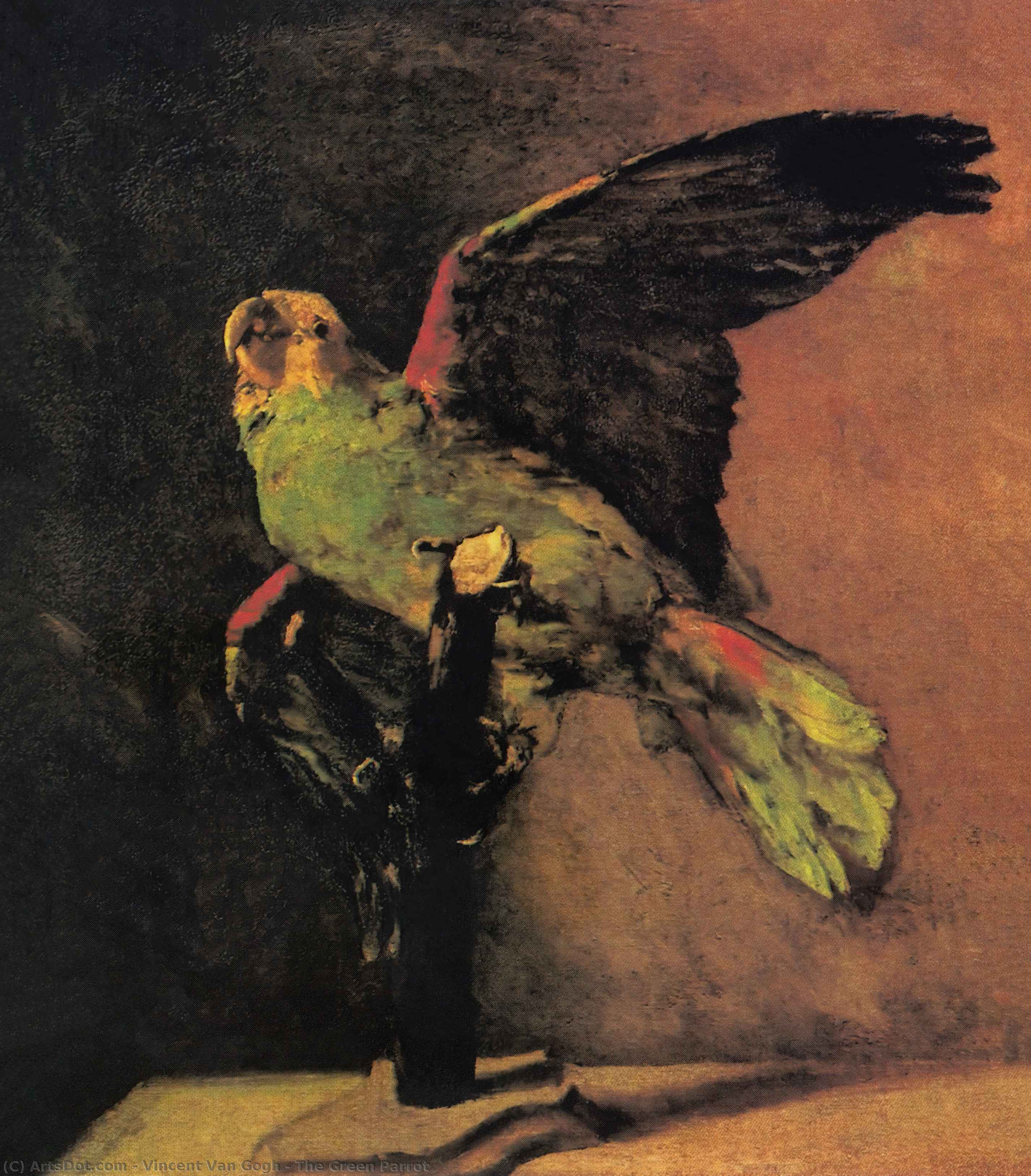
Vincent van Gogh’s *The Green Parrot*, painted in 1886 during his prolific Parisian period, isn't merely a depiction of avian beauty; it’s an embodiment of the artist’s unwavering commitment to capturing feeling on canvas. Executed with characteristic impasto—thickly applied paint—the artwork stands as a testament to Van Gogh’s revolutionary approach to artistic expression.
Technique and Impressionistic Vision
- Impasto: The dominant technique is impasto, where thick layers of pigment are built up onto the surface, creating palpable texture. This method allows for a dramatic interplay between light and shadow, enhancing the vibrancy of the colors and conveying a sense of dynamism.
- Color Palette: Van Gogh employs a bold palette dominated by shades of green—ranging from emerald to olive—contrasting sharply with the dark background. This deliberate choice underscores his fascination with color theory and its ability to evoke emotional responses.
- Visible Brushstrokes: The visible brushstrokes are not accidental; they are integral to Van Gogh’s artistic vision. Each stroke contributes to the overall texture and movement of the painting, mirroring the artist's own turbulent inner life.
Historical Context: Parisian Experimentation
Painted amidst a burgeoning artistic landscape in Paris—where Impressionism was challenging academic conventions—*The Green Parrot* reflects Van Gogh’s desire to engage with contemporary trends. He sought inspiration from artists like Claude Monet and Edgar Degas, experimenting with techniques that prioritized capturing fleeting impressions of light and color.
Symbolic Resonance: Beyond Representation
While seemingly straightforward in its subject matter—a parrot perched on a branch—the painting transcends mere visual representation. The parrot itself has been interpreted as symbolizing joy, vitality, and perhaps even paradise – concepts deeply resonant with Van Gogh’s spiritual aspirations. Its placement against the dark backdrop amplifies these symbolic meanings, highlighting the bird's luminosity and its defiance of obscurity.
Emotional Impact: A Window into the Artist’s Soul
*The Green Parrot* is undeniably a painting driven by emotion. It captures Van Gogh’s profound engagement with his surroundings—a moment of observation infused with palpable passion. The artwork invites viewers to contemplate not just what they see but also how it feels, prompting reflection on themes of beauty, solitude, and the enduring power of artistic expression.