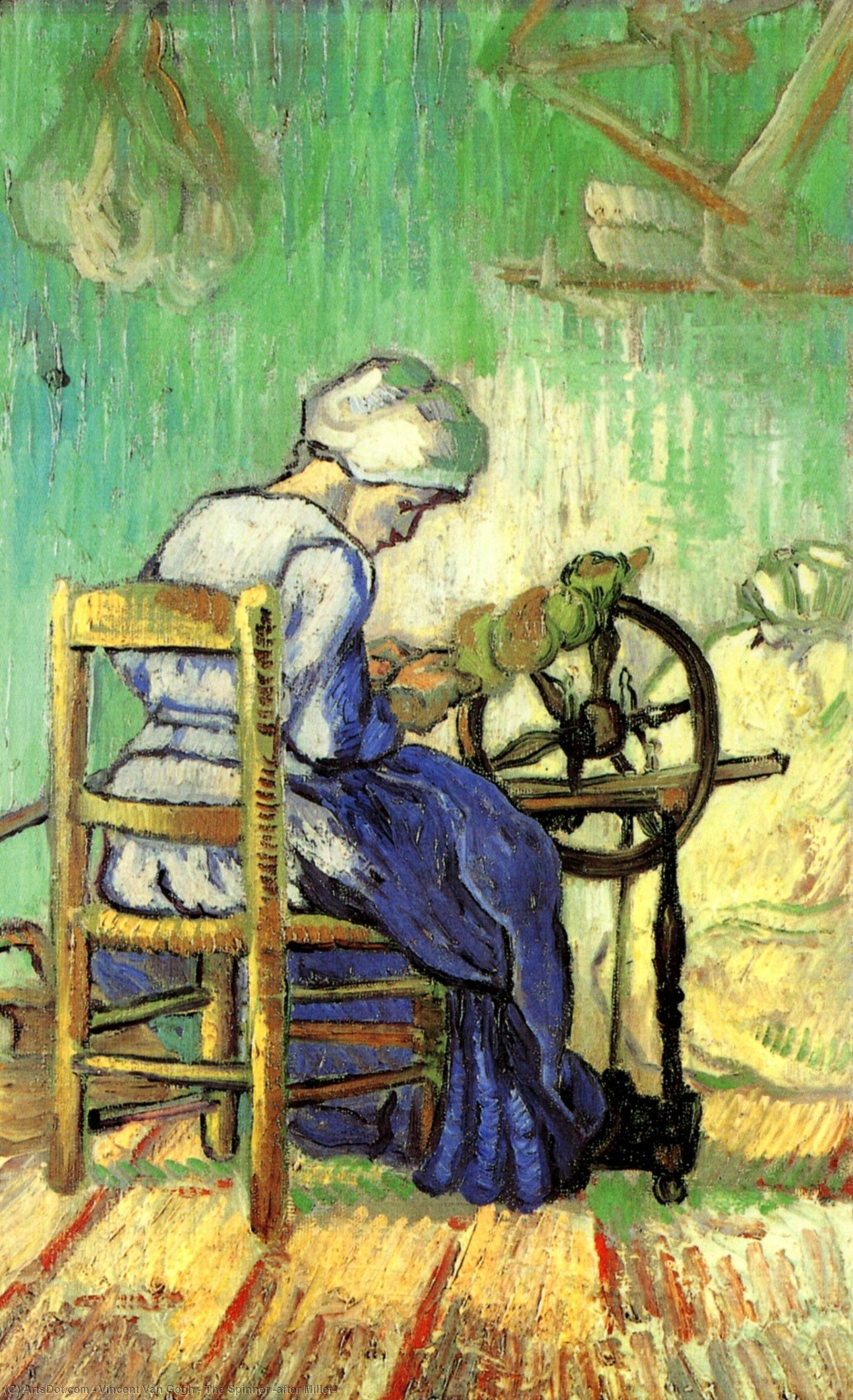
A Dialogue Across Generations: Van Gogh’s Interpretation of Millet
This captivating oil on canvas presents Vincent van Gogh's deeply personal response to Jean-François Millet’s iconic image of rural labor. Created in 1889 during a period of intense artistic exploration and emotional turmoil for the artist, this work isn’t merely a copy; it is a vibrant reimagining – a conversation across generations about life, hardship, and the dignity of everyday existence. Van Gogh doesn't simply *reproduce* Millet’s scene; he infuses it with his own distinctive post-impressionistic sensibility, transforming a moment of quiet industry into a powerfully emotive experience.
Subject & Composition: The Rhythm of Rural Life
The painting centers on a woman absorbed in the age-old task of spinning wool. Seated and focused, she embodies both the physical labor and the meditative quality inherent in traditional crafts. Van Gogh retains the core compositional elements of Millet’s original – the seated figure, the spinning wheel dominating the foreground, the suggestion of a simple domestic interior with chairs and a potted plant offering a touch of life. However, he subtly shifts the perspective and intensifies the emotional weight of the scene. The arrangement isn't static; it feels dynamic, mirroring the continuous motion of the spinning wheel itself and hinting at the relentless cycle of work that defined rural life in the 19th century.
Style & Technique: Impasto and Emotional Resonance
Van Gogh’s signature style is immediately apparent in his bold application of paint. Thick
impasto – layers of pigment built up on the canvas – creates a tactile surface, almost sculptural in its texture. This isn't merely about depicting light and shadow; it’s about conveying *feeling*. The swirling brushstrokes, particularly evident in the background, imbue the scene with a sense of movement and unrest. While Millet employed a more naturalistic palette, Van Gogh utilizes color expressively – cool blues and greens dominate, punctuated by warmer tones that draw attention to the figure and her work. This deliberate use of color amplifies the emotional impact, suggesting both the tranquility of focused labor and an underlying current of melancholy.
Historical Context: A Bridge Between Realism & Modernity
This piece exists at a fascinating intersection of artistic movements. Millet’s original “Spinner” was rooted in the realist tradition, aiming to depict rural life with honesty and empathy. Van Gogh, however, moves beyond mere representation. He builds upon Millet's foundation but injects it with the emotional intensity and subjective perspective that characterize post-impressionism. Created during his time at Saint-Paul-de-Mausole asylum in Saint-Rémy, this work reflects not only his admiration for Millet but also his own internal struggles and search for meaning. It’s a testament to Van Gogh's ability to synthesize artistic influences while forging his unique path.
Symbolism & Emotional Impact: Labor, Loneliness, and Resilience
The spinning wheel itself is rich in symbolism – representing not only industry and domesticity but also the cyclical nature of life and the passage of time. The woman’s solitary figure evokes a sense of loneliness and quiet perseverance. While her task is humble, Van Gogh elevates it to something profound, imbuing it with dignity and emotional weight. The painting doesn't offer easy answers or romanticize rural hardship; instead, it presents a raw and honest portrayal of human experience – the beauty found within labor, the solitude that accompanies it, and the enduring resilience of the human spirit.
Key Features
- Artist: Vincent van Gogh (1853-1890)
- Date: 1889
- Medium: Oil on Canvas
- Dimensions: 40 x 25 cm
- Style: Post-Impressionism
This work is more than just a beautiful image; it’s a powerful statement about art history, emotional expression, and the enduring relevance of Millet's subject matter. Its rich texture, expressive brushwork, and poignant symbolism make it an ideal focal point for any interior – adding depth, character, and intellectual stimulation to both contemporary and traditional spaces. A high-quality reproduction allows you to experience Van Gogh’s transformative vision and bring a piece of art history into your home or office.