Vincent van Gogh (1853-1890): Explore the life & art of the Dutch Post-Impressionist master behind 'Starry Night' and 'Sunflowers'. Discover his bold style & lasting impact on modern art.
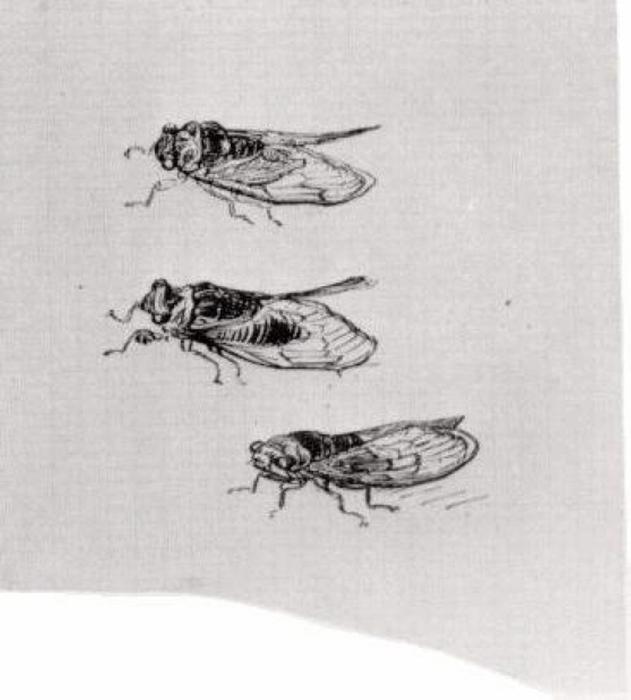
Three Cicadas – A Study in Texture and Emotion
Vincent van Gogh’s “Three Cicadas,” created in 1889 during his prolific Parisian period, stands as a deceptively simple yet profoundly expressive sketch that encapsulates the artist's signature preoccupation with capturing fleeting moments of natural beauty alongside palpable emotional resonance. Executed in oil on canvas – a technique he honed throughout his artistic journey – this piece exemplifies Van Gogh’s masterful manipulation of pigment and brushstroke to convey not merely what he saw, but how he *felt*. It’s a testament to his ability to transform observation into visceral experience.
Style and Technique: Impressionistic Echoes
While firmly rooted in Post-Impressionism, “Three Cicadas” reveals subtle influences from Impressionist principles. Like Monet and Renoir before him, Van Gogh prioritized capturing the ephemeral qualities of light and atmosphere. However, unlike Impressionists who sought to depict a scene as it appeared at a particular instant, Van Gogh imbued his subject with an inner life—a feeling of stillness punctuated by vibrant color and textured brushwork. The loose, agitated strokes – characteristic of his expressive style – are particularly evident in the rendering of the cicadas’ wings and bodies, creating a dynamic interplay between solidity and movement that draws the viewer into the scene. Notice how Van Gogh utilizes thick impasto—applying paint thickly onto the canvas—to build up surface texture, mirroring the buzzing energy of the insects themselves.
Historical Context: Parisian Reflections
Painted during Van Gogh’s time in Paris, “Three Cicadas” reflects his evolving artistic sensibilities as he distanced himself from the landscapes of Provence and embraced urban life. This period marked a significant shift towards introspection and experimentation, fueled by his engagement with Symbolist ideas—particularly the exploration of inner psychological states through visual imagery. The cicada itself held symbolic significance for Van Gogh, representing rebirth and transformation – themes that resonated deeply within his own personal struggles and aspirations. It’s considered to be one of many preparatory sketches undertaken during this period, demonstrating Van Gogh's meticulous process of observation and artistic development.
Symbolism: Texture as Emotion
Beyond its stylistic considerations, “Three Cicadas” operates on a symbolic level. The cicadas—ancient insects associated with metamorphosis and renewal—serve as a visual metaphor for change and resilience. Their presence against the muted tones of the canvas underscores Van Gogh’s desire to convey not just the appearance of nature but also its underlying emotional power. The artist's deliberate use of texture – particularly the thick impasto – amplifies this symbolic dimension, mirroring the turbulent inner landscape that informed his artistic vision. It invites contemplation on themes of mortality and regeneration—a preoccupation that would become central to Van Gogh’s oeuvre.
Emotional Impact: A Moment Frozen in Time
Ultimately, “Three Cicadas” succeeds in capturing a profound sense of stillness amidst apparent chaos. The artist's masterful technique transforms a simple depiction of insects into an emotionally charged image—one that speaks to the viewer’s own experience of beauty and vulnerability. It embodies Van Gogh’s unwavering commitment to conveying emotion through visual form, cementing his place as one of art history’s most influential figures. Reproductions from ArtsDot offer exceptional quality, allowing admirers to appreciate this iconic artwork's enduring power.