Vincent van Gogh (1853-1890): Explore the life & art of the Dutch Post-Impressionist master behind 'Starry Night' and 'Sunflowers'. Discover his bold style & lasting impact on modern art.
A Forest Whispering with Light: Unpacking Vincent van Gogh’s “Trees with Ivy”
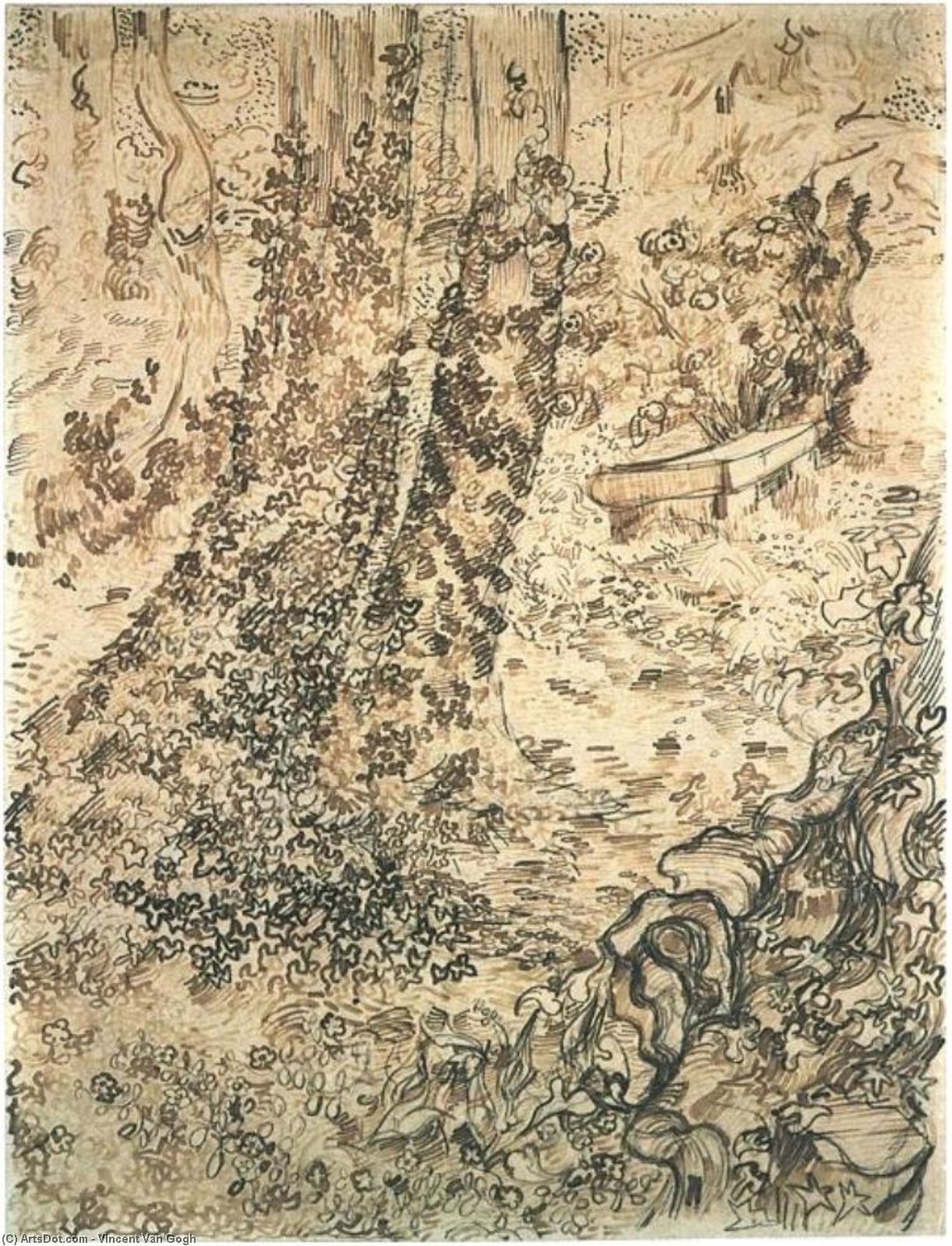
Vincent van Gogh's "Trees with Ivy," painted in 1889 during his time at the Saint-Rémy asylum, isn’t merely a depiction of foliage; it’s a profound exploration of light, texture, and the artist’s intensely personal relationship with nature. Created amidst periods of significant emotional turmoil, this work offers a glimpse into Van Gogh's evolving artistic vision – a shift away from stark realism towards a more expressive and emotionally charged style. The painting captures a dense forest scene, dominated by towering trees interwoven with lush ivy, creating an atmosphere both vibrant and subtly melancholic. It’s a testament to his ability to transform the ordinary—a simple woodland—into a landscape brimming with feeling.
The Post-Impressionist Palette: Bold Strokes and Vibrant Color
“Trees with Ivy” exemplifies Van Gogh's distinctive post-impressionistic style, characterized by its bold brushstrokes and intensely saturated colors. Unlike the delicate pastel hues of earlier Impressionism, Van Gogh employed a palette of rich yellows, greens, browns, and blues – not to accurately represent reality, but to convey his subjective experience of the scene. The thick application of paint, known as *impasto*, adds a remarkable tactile quality to the canvas, inviting viewers to almost feel the roughness of the bark and the weight of the ivy branches. This technique wasn’t simply decorative; it was integral to Van Gogh's method of expressing emotion through color and texture. The use of ink as the primary medium, alongside oil paints, adds an unexpected layer of intricacy, creating a sense of depth and detail that belies the painting’s overall expressive nature.
Echoes of Wheat Fields: A Shared Landscape
Examining “Trees with Ivy” in relation to other works from 1889 – particularly "Wheat Field with Rising Sun" and "Enclosed Wheat Field with Reaper" – reveals a fascinating thematic connection. These paintings, along with “Trees with Ivy,” share a focus on the natural world, specifically agricultural landscapes. Van Gogh was deeply moved by the rhythms of rural life and the changing seasons. The dynamic brushwork and vibrant colors in all three pieces suggest a shared desire to capture not just the appearance of these scenes, but also their underlying energy and vitality. The composition itself – the sweeping lines, the interplay of light and shadow – mirrors the patterns found in fields of wheat, creating a sense of visual harmony across his oeuvre.
Symbolism Within the Verdant Embrace
Beyond its purely aesthetic qualities, “Trees with Ivy” is rich in symbolic potential. The trees themselves can be interpreted as representing strength and resilience – enduring witnesses to time and change. The ivy, with its clinging tendrils, might symbolize connection, growth, or even a sense of entrapment, reflecting Van Gogh’s own struggles with mental illness during this period. The dense foliage creates a feeling of enclosure, suggesting both the beauty and the limitations of the natural world. It's important to note that Van Gogh rarely offered explicit explanations for his symbolism; much of its meaning resides in the viewer’s interpretation, fueled by the painting’s emotional intensity.
A Legacy Preserved: Reproductions and a Window into Genius
Today, “Trees with Ivy” stands as one of Vincent van Gogh's most captivating works, celebrated for its expressive power and technical brilliance. ArtsDot offers meticulously crafted, handmade oil painting reproductions that allow art lovers to experience the beauty and emotion of this masterpiece firsthand. These reproductions capture not only the visual details but also the unique texture and vibrancy of Van Gogh’s original technique. Owning a reproduction is more than simply acquiring a print; it's gaining access to a piece of art history, a tangible connection to the mind of one of the world’s most influential artists. Furthermore, exploring Van Gogh’s broader body of work – as showcased at institutions like the Rijksmuseum in Amsterdam and the Van Gogh Museum in Amsterdam – provides invaluable context for understanding the depth and complexity of his artistic vision.