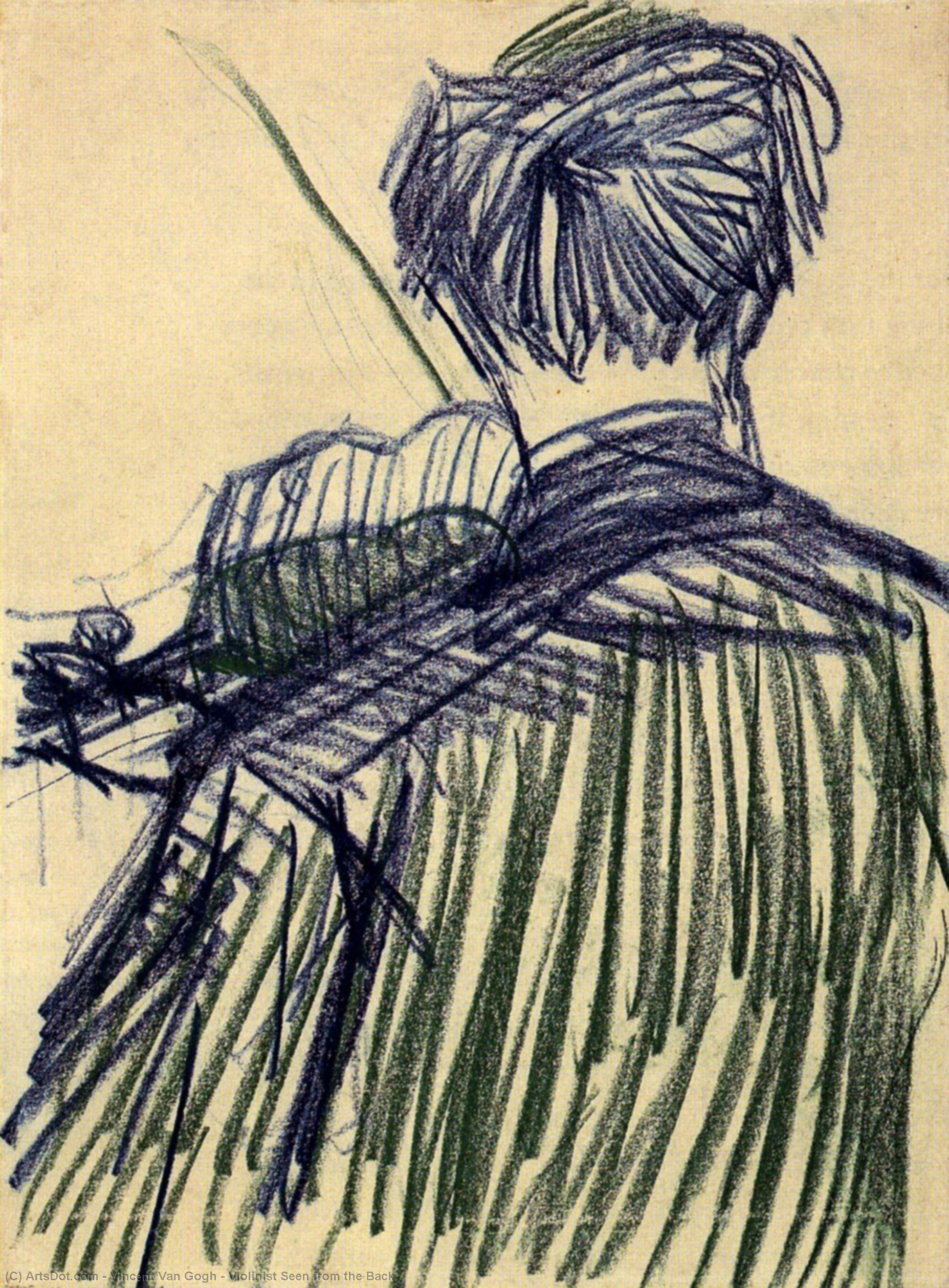
A Moment Frozen in Charcoal: Exploring Vincent van Gogh’s Violinist Seen From The Back
Vincent van Gogh's "Violinist Seen From The Back," created in 1887, transcends mere depiction; it’s a distillation of emotion and observation into a deceptively simple chalk drawing. This piece resides within the broader movement of Post-Impressionism—a reaction against Impressionism’s focus on fleeting light—and exemplifies its core tenets: deliberate distortion, heightened color palettes (though absent here), and an unwavering commitment to conveying inner feeling rather than objective reality. Examining this artwork reveals layers of artistic intention and offers a glimpse into Van Gogh's profound engagement with the human condition.
The Essence of Post-Impressionism
Post-Impressionism wasn’t simply “more” Impressionism; it was fundamentally different. Artists like Cézanne, Gauguin, and Picasso pushed beyond capturing visual sensations to explore psychological states and subjective experience. They achieved this through expressive brushstrokes—often thick and impasto—and a willingness to manipulate form and color to communicate emotion. Van Gogh’s approach aligns perfectly with these principles, prioritizing the artist's internal vision over photographic accuracy. The drawing isn’t concerned with capturing the precise appearance of the musician but rather conveying his absorbed concentration and the palpable atmosphere of musical contemplation.
Technique and Composition: Charcoal Lines Speak Volumes
The artwork utilizes charcoal—a medium favored by Van Gogh for its ability to produce tonal variations and textural richness—to remarkable effect. Notice the bold, decisive lines that define the violinist’s posture and outline his form. These aren't delicate sketches; they are confident statements of artistic intent. The artist skillfully employs shading to sculpt the figure, creating a sense of depth and volume despite the absence of color. Furthermore, the musician’s head is turned away from the viewer—a compositional choice that invites contemplation and emphasizes his immersion in the music itself. This deliberate framing contributes significantly to the artwork's emotional impact.
Symbolism Within Simplicity
Though seemingly unassuming, "Violinist Seen From The Back" carries symbolic weight. Music has long been associated with introspection, solace, and transcendence—themes frequently explored by Van Gogh throughout his oeuvre. The violinist’s posture embodies stillness and focused attention, representing the artist's desire to capture a moment of profound mental engagement. The drawing serves as a reminder that beauty can be found in quiet contemplation and that art possesses the power to convey emotions beyond words. It’s a testament to Van Gogh’s ability to distill complex ideas into a single, evocative image.
A Legacy of Emotional Expression
“Violinist Seen From The Back” stands as a cornerstone of Post-Impressionist artistry and continues to resonate with audiences today. Its enduring appeal lies in its honesty—a refusal to compromise artistic vision for the sake of realism. Like many of Van Gogh’s works, it invites viewers to consider not just what is seen but also what is felt. It exemplifies his unwavering belief that art should serve as a conduit for emotional truth and remains an inspiring example of how masterful technique can communicate profound psychological insight.
- Artist: Vincent Willem van Gogh
- Date: 1887
- Medium: Chalk Drawing
- Style: Post-Impressionism