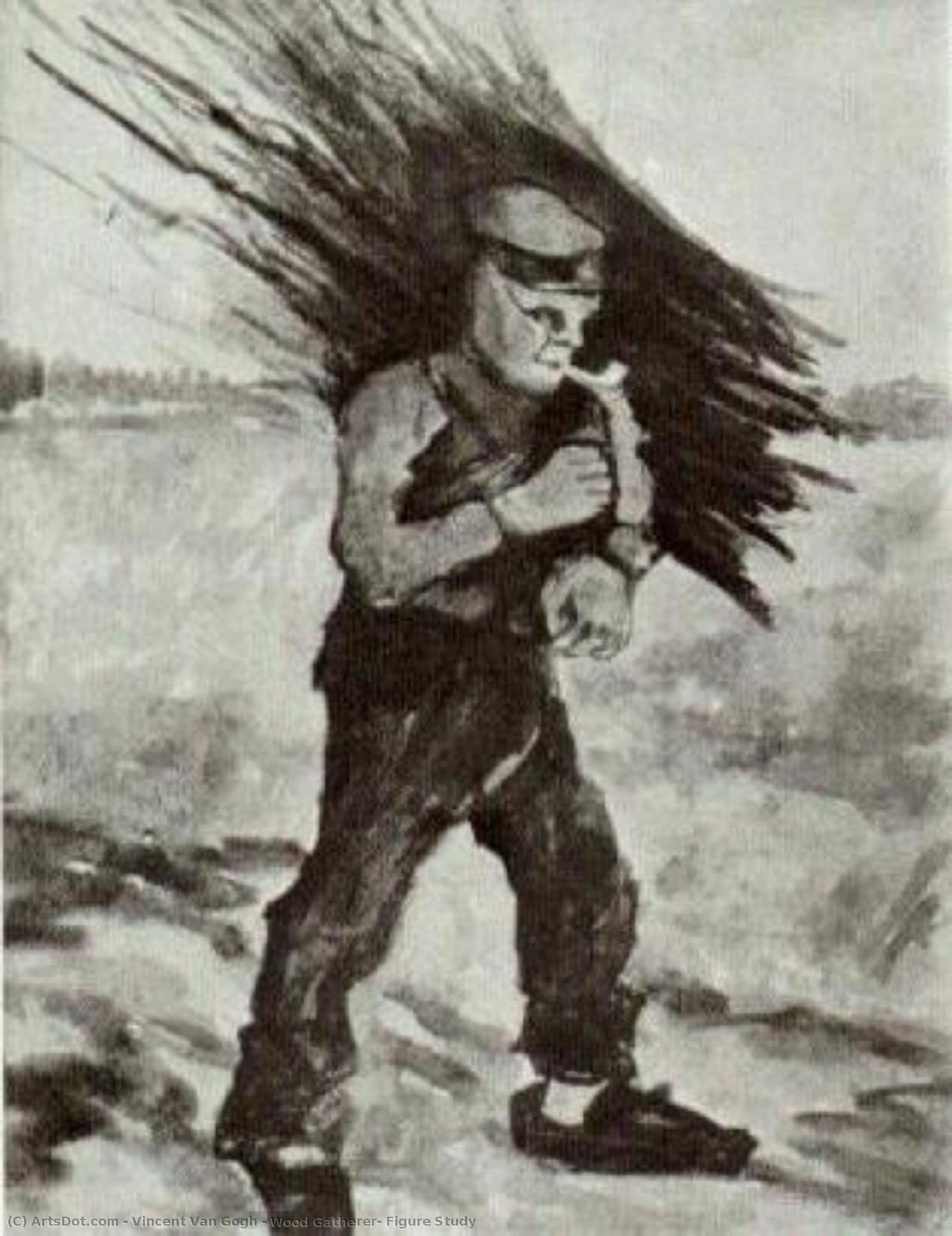
A Study in Resilience: Examining Vincent van Gogh’s ‘Wood Gatherer’
Vincent Willem van Gogh's “Wood Gatherer,” completed in 1884 during his time in Nuenen, Netherlands—a period marked by a deliberate immersion in rural life and an unwavering dedication to capturing the dignity of labor—stands as a testament to both artistic innovation and profound human empathy. This unassuming watercolor on paper transcends mere depiction; it’s a distillation of emotion rendered with meticulous observation and masterful technique.
- Subject Matter: The painting portrays a solitary man, presumably a wood gatherer, undertaking the physically demanding task of transporting a substantial load of firewood. This choice of subject wasn't arbitrary; Van Gogh sought to portray the everyday realities faced by rural laborers—a conscious effort to honor their toil and convey a sense of solidarity with those who labored for survival.
- Style: “Wood Gatherer” firmly establishes itself within the Realism movement, rejecting the idealized landscapes favored by Impressionists. Instead, Van Gogh prioritizes accuracy in portraying the textures and contours of the environment—the snow-covered ground, the sparse trees—and crucially, the human figure.
- Technique: Van Gogh’s distinctive brushwork is immediately recognizable. Thick impasto strokes dominate the composition, layering pigment onto the paper to create a palpable sense of physicality. The monochromatic palette—primarily shades of brown and gray—further enhances this effect, emphasizing the harshness of winter conditions and focusing attention on the central figure.
Historical Context: Van Gogh’s Nuenen period represents a pivotal moment in his artistic development. Following his departure from Paris and disillusionment with Salon exhibitions, he sought refuge in Brabant Province, aiming to reconnect with his roots and find inspiration in the simple rhythms of rural existence. This retreat coincided with a broader intellectual ferment—the burgeoning Symbolist movement questioning traditional aesthetic conventions—yet Van Gogh remained steadfastly committed to portraying observable reality with uncompromising honesty.
Symbolism & Emotional Impact: Beyond its descriptive accuracy, “Wood Gatherer” resonates deeply on an emotional level. The man’s bowed posture and downward gaze convey a palpable sense of strain and perseverance—a visual embodiment of the burdens borne by those who strive to sustain themselves amidst adversity. The bird perched atop a tree branch serves as a subtle emblem of hope and resilience, juxtaposed against the bleakness of the landscape. Ultimately, Van Gogh's masterpiece compels us to contemplate themes of labor, dignity, and the enduring human spirit.
Interior Design Considerations: Reproductions of “Wood Gatherer” can bring a touch of rustic elegance into any space. Its muted palette lends itself beautifully to calming interiors, while its textural brushstrokes evoke a sense of warmth and authenticity. Consider framing it in a simple wooden frame to accentuate its understated beauty—a visual reminder of Van Gogh’s enduring legacy as an artist who captured the essence of human experience with unparalleled sensitivity.