Vincenzo Catena
Initially, Catena’s style closely resembled that of Giovanni Bellini, a leading Venetian painter known for his serene Madonnas and refined technique.
The earliest documented mention of Catena is an inscription on the back of La Laura by Giorgione, where he’s described as Giorgione's *colego* (colleague).
However, it wasn’t until after Giorgione’s death in 1510 that his innovative
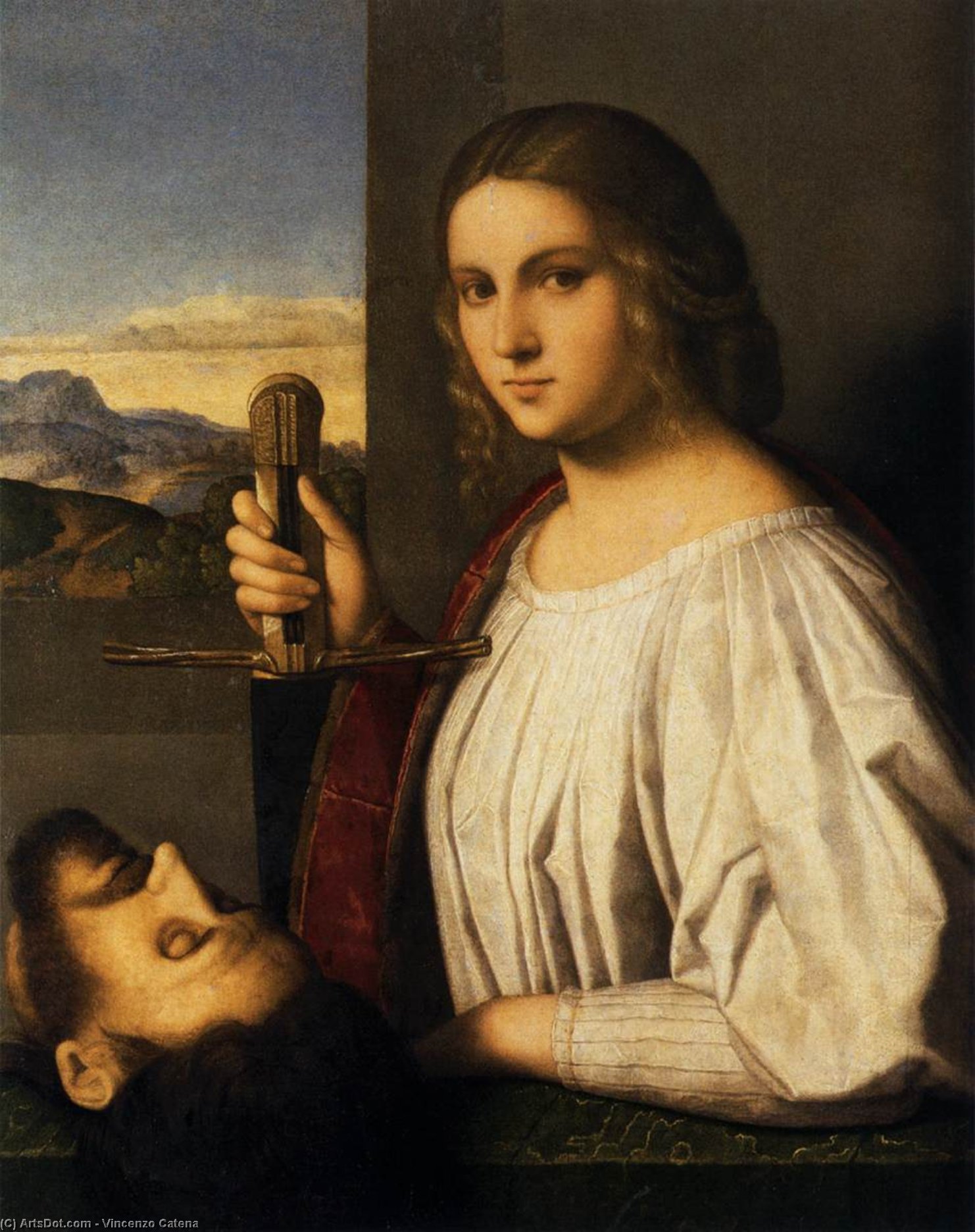
Judith by Vincenzo Catena: A Venetian Echo of Classical Drama
Vincenzo Catena’s “Judith,” painted circa 1520, stands as a testament to the enduring fascination with biblical narratives within the Venetian Renaissance. This striking depiction captures a moment of decisive action—Judith, armed with a sword, presents the severed head of Holofernes to Abraam—a scene steeped in symbolism and executed with meticulous attention to detail that reflects the artistic currents circulating throughout Venice at the time.
Initially influenced by Giovanni Bellini’s serene palette and masterful composition, Catena swiftly moved beyond mere imitation. Giorgione's *colego*, as documented on La Laura’s backing, signaled a pivotal shift toward bolder experimentation. Following Giorgione’s untimely demise in 1510, Catena embraced the expressive dynamism championed by Titian, incorporating vibrant hues and textural nuances that would become hallmarks of his oeuvre.
- Style: Venetian Renaissance – Characterized by a harmonious blend of Byzantine tradition and classical ideals.
- Technique: Oil on wood panel – Catena skillfully employed layering techniques to achieve depth and luminosity, mirroring the advancements in pigment production during this period.
- Historical Context: The painting emerged against the backdrop of humanist scholarship and artistic revival fueled by rediscovered Greco-Roman texts. It reflects a preoccupation with moral virtue and heroic struggle—themes prevalent throughout Renaissance art.
The composition itself is deliberately theatrical, mirroring the dramatic conventions of classical sculpture. Judith’s posture exudes confidence and determination as she gazes towards an unseen figure, conveying both vulnerability and unwavering resolve. The stark contrast between the crimson dress and the pale flesh tones underscores the narrative's core conflict—the triumph of righteousness over barbarity.
More than just a visual representation of scripture, “Judith” embodies the Renaissance spirit’s desire to grapple with profound moral questions. Catena’s masterful rendering captures not only the physicality of the scene but also its psychological complexity, cementing its place as an iconic image of Venetian artistic achievement.
- Symbolism: The sword represents Judith's courage and defiance; Holofernes’ severed head symbolizes pagan oppression vanquished by divine providence.
- Emotional Impact: The painting evokes feelings of awe, contemplation, and admiration for the heroic spirit—a sentiment deeply rooted in Renaissance humanist ideals.
A reproduction of “Judith” offers an opportunity to bring this captivating artwork into your home or interior design project. ArtsDot’s high-quality reproductions faithfully capture Catena's artistic vision, allowing you to appreciate the beauty and intellectual depth of Venetian Renaissance art.