Vittore Carpaccio's "Birth of the Virgin": A Window into Venetian Narrative
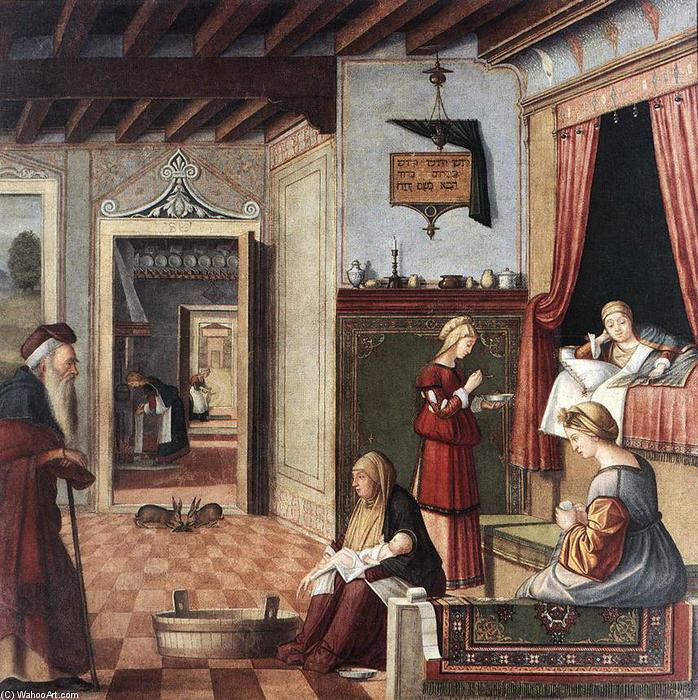
ArtsDot presents a meticulously crafted hand-painted reproduction of Vittore Carpaccio’s seminal work, “Birth of the Virgin,” completed in 1504. This captivating scene, measuring 126 x 128 cm, offers an intimate glimpse into a pivotal moment within the Christian narrative – the arrival of Mary to her parents, Joseph and Maryam, amidst a tableau of domestic tranquility and burgeoning faith. Carpaccio’s masterful execution transports the viewer directly into the heart of this biblical story, revealing not just a depiction of birth but a profound meditation on family, devotion, and the mysteries of divine grace.
A Conservative Vision: Carpaccio's Style and Influences
Born in Venice around 1465, Vittore Carpaccio’s artistic journey was profoundly shaped by his apprenticeship under Gentile Bellini, a cornerstone of the Venetian school. However, unlike many of his contemporaries who embraced the burgeoning humanist trends of the Italian Renaissance, Carpaccio maintained a remarkably conservative approach to painting. His style is characterized by its meticulous detail and a deliberate avoidance of overtly expressive or idealized forms – a conscious decision that reflects the prevailing religious sensibilities of the time. Evidence of Carpaccio’s influences can be seen in his engagement with Antonello da Messina's polished surfaces and, surprisingly, early Netherlandish art, creating a unique Venetian style that prioritizes narrative clarity and emotional resonance over revolutionary innovation. This careful balance is particularly evident in the rendering of textures – from the folds of fabric to the smoothness of skin – contributing significantly to the painting’s palpable realism.
Narrative Detail and Symbolic Resonance
The scene unfolds with a quiet drama, populated by a diverse group of figures engaged in everyday activities. A woman sits on a bench, attended by another woman who kneels in prayer; a man stands nearby offering support. The presence of a dog and cat adds an element of domesticity, grounding the miraculous event within a recognizable human context. Notably, two books are depicted – one centrally positioned, perhaps representing sacred texts, and another towards the right, suggesting learning or contemplation. These details aren’t merely decorative; they enrich the narrative, inviting viewers to consider themes of faith, knowledge, and the role of both earthly and divine forces in shaping human destiny. The careful arrangement of figures and objects contributes to a sense of carefully constructed storytelling, a hallmark of Carpaccio's work.
Technical Mastery and Emotional Impact
Carpaccio’s technique is characterized by his use of layered glazing – a method perfected during the Venetian Renaissance – which allows for an extraordinary depth of color and luminosity. The subtle gradations of light and shadow create a remarkable sense of realism, while simultaneously imbuing the scene with a palpable emotional atmosphere. The muted palette, dominated by earthy tones and rich reds, contributes to the painting’s solemnity and reinforces its devotional purpose. This reproduction captures not just the visual elements of the original but also the spirit of Carpaccio's artistic vision – a testament to his skill and dedication to conveying profound religious narratives through meticulous observation and masterful technique.