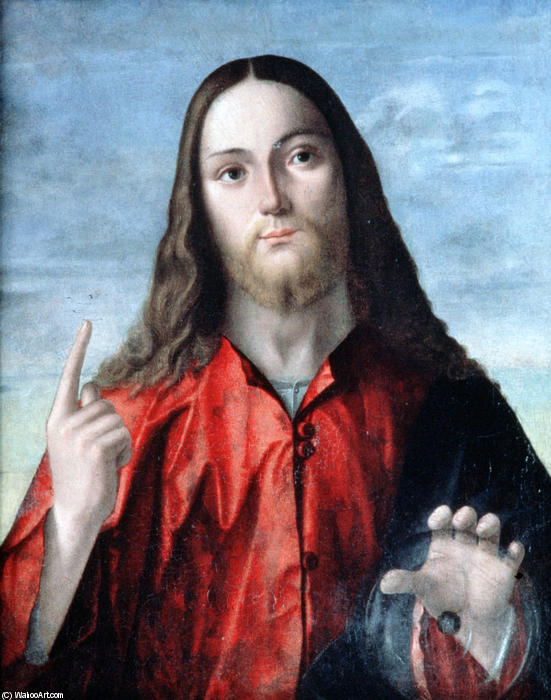
The
Salvator Mundi painting by
Vittore Carpaccio is a remarkable piece of art that showcases the artist's skill and attention to detail. Created in 1520, this oil painting measures 58 x 46 cm and is a prime example of High Renaissance art. The painting depicts Jesus Christ as the savior of the world, wearing a red robe and holding a small globe or ball, symbolizing the earth or universe.
Artistic Style and Composition
Vittore Carpaccio's style is characterized by his conservative approach to art, showing little influence from Humanist trends. His work is often compared to that of
Gentile Bellini, under whom he studied. The composition of
Salvator Mundi features a clock on the wall behind Jesus, possibly indicating the passage of time or the importance of the moment captured in the painting.
Similar Paintings and Artists
Other notable paintings that showcase similar styles and themes include
Piero Della Francesca's
Baptism of Christ (detail), which can be found at the
National Gallery in London. For those interested in exploring more of
Vittore Carpaccio's work, his cycle of nine paintings,
The Legend of Saint Ursula, is a must-see. You can find more information about these paintings on
ArtsDot.com.
Handmade oil painting reproductions of
Salvator Mundi are available for purchase on
ArtsDot.com, allowing art enthusiasts to own a piece of history. For more information about
Vittore Carpaccio and his work, visit
Wikipedia.
The
Salvator Mundi painting is a testament to
Vittore Carpaccio's skill and artistry, and its beauty and significance continue to captivate audiences today.