A Divine Gathering in Venetian Gold
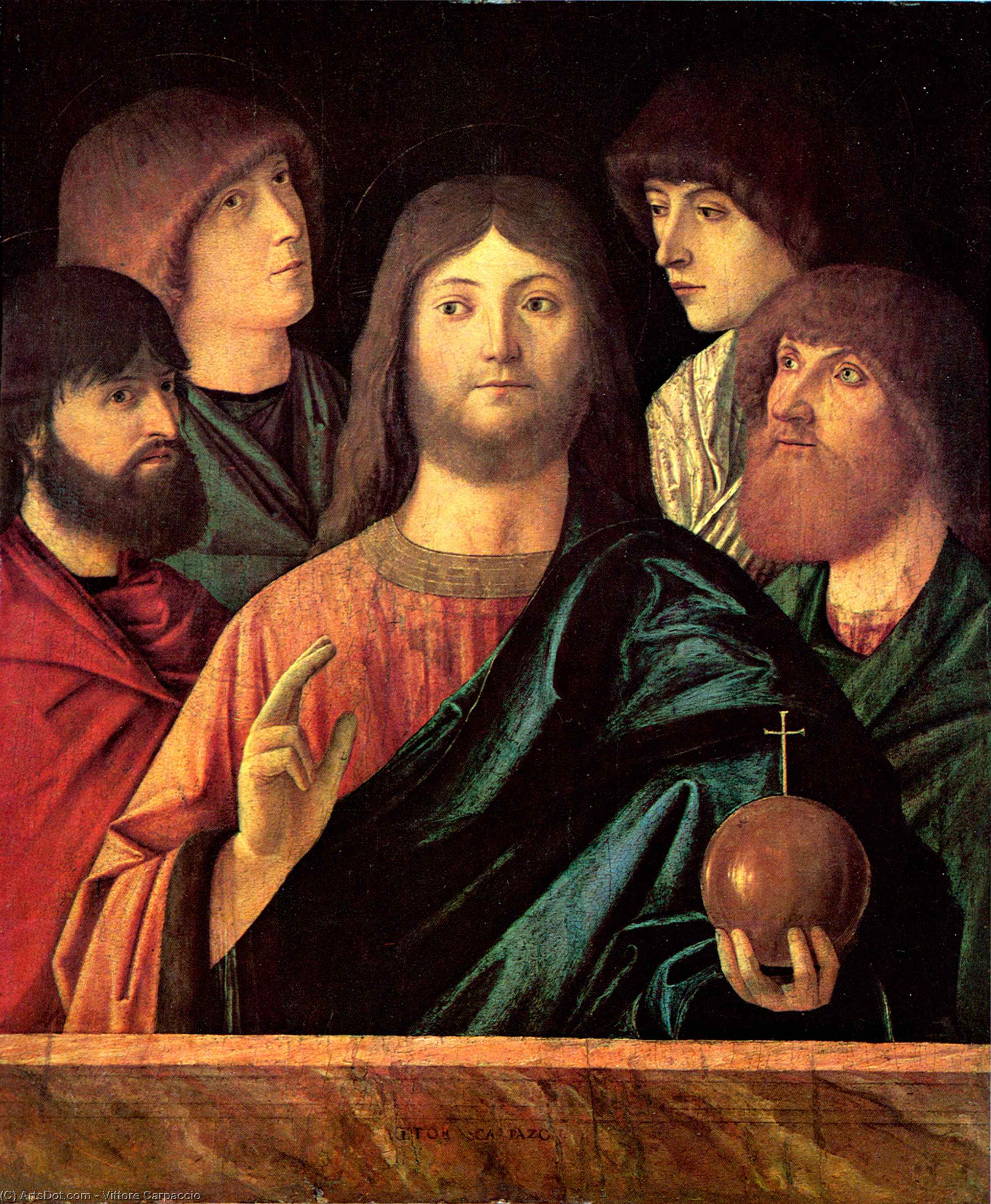
In the quiet, sacred atmosphere of the late fifteenth century, Vittore Carpaccio captured a moment of profound spiritual communion in his masterpiece, Saviour blesses the four apostles. This evocative painting serves as a window into the heart of the Venetian Renaissance, where the divine meets the earthly through a meticulous display of light and devotion. The scene unfolds with an intimate grace, centering on Jesus Christ as he bestows his blessing upon four apostles. Each figure is positioned with a deliberate, rhythmic harmony that guides the viewer’s eye across the canvas, creating a sense of eternal stillness. The composition is not merely a depiction of a religious event but a carefully orchestrated narrative that invites the observer to sit at the very table of the apostles, feeling the weight of the sacred moment.
The artistry of Carpaccio shines through his unique ability to blend the luminous traditions of the Venetian school with the detailed, almost tactile precision of early Netherlandish art. As a pupil of Gentile Bellini, Carpaccio inherited a mastery of color and light that allows the vibrant palette of this work to pulse with life. The textures of the garments, the subtle shadows cast across the indoor setting, and the soft glow illuminating the faces of the apostles all contribute to a sense of profound realism. This technique creates a bridge between the celestial and the mundane, making the miraculous feel tangibly present within the reach of the viewer.
Symbolism and the Venetian Spirit
Beyond its surface beauty, the painting is rich with symbolic depth that would have resonated deeply with a Renaissance audience. The arrangement of the figures—some standing in quiet contemplation, others leaning in with reverence—reflects the hierarchical yet communal nature of the early Christian church. The presence of additional figures in the periphery, tucked into the corners and edges of the frame, suggests a larger, unseen congregation, reminding us that the grace being bestowed is intended for all humanity. The indoor setting, featuring a dining table in the background, subtly evokes the Last Supper, grounding this specific moment of blessing within the broader liturgical traditions of the era.
For the discerning collector or interior designer, this piece offers more than just historical significance; it provides an emotional anchor for any space. The painting’s ability to evoke feelings of peace, reverence, and timelessness makes it a superlative choice for creating a sophisticated atmosphere. Whether placed in a grand library or a contemplative study, a high-quality reproduction of this work brings with it the prestige of the Scuola di San Giorgio degli Schiavoni and the enduring legacy of Venetian mastery. It is an investment in beauty that transcends time, offering a window into a period where art was the ultimate vessel for the soul's expression.