A Sacred Moment Captured in Venetian Splendor
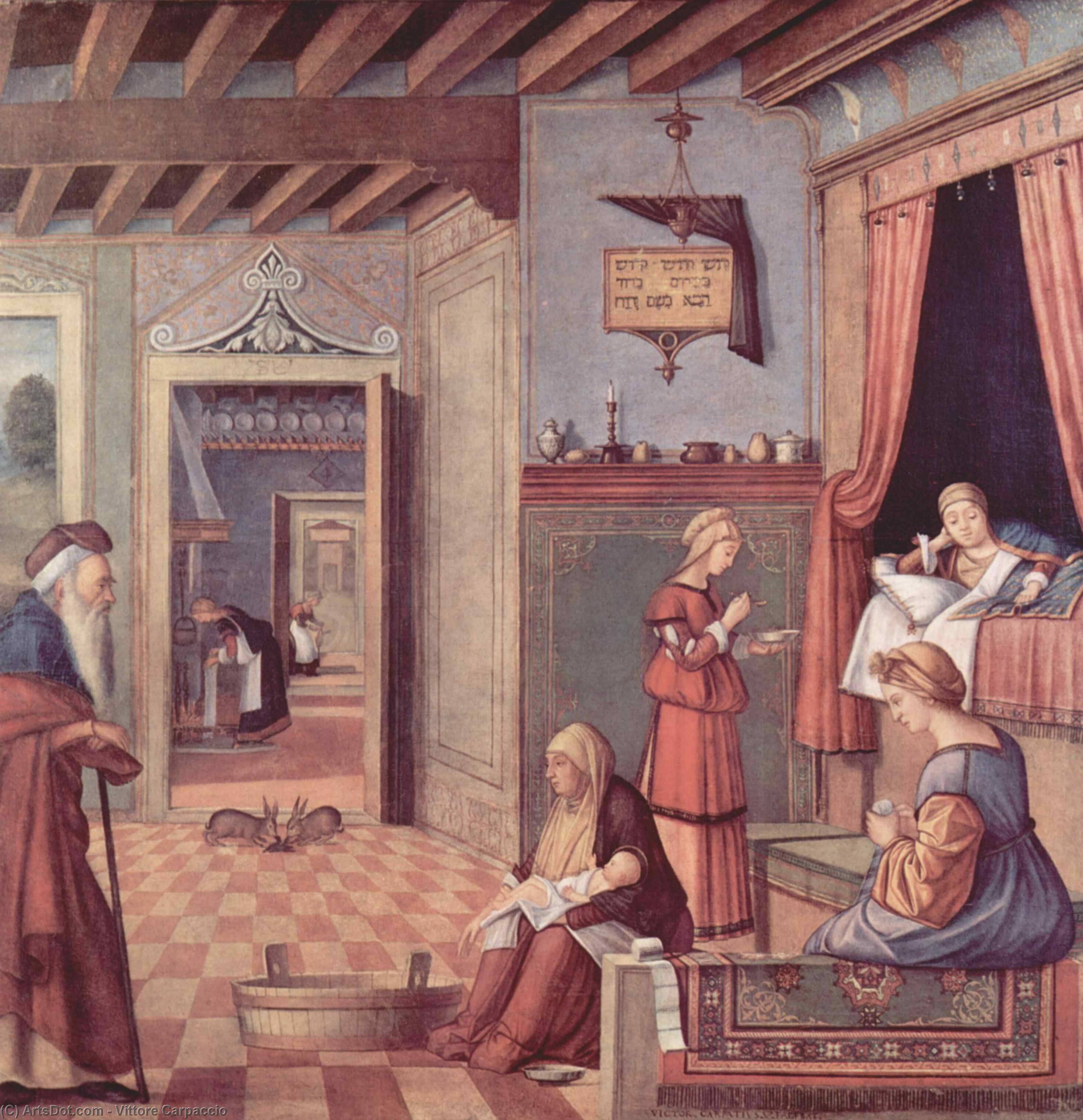
In the quiet, sun-drenched intimacy of a Renaissance chamber, Vittore Carpaccio invites us to witness one of the most profound moments in Christian iconography: The Birth of the Virgin. Painted around 1508, this masterpiece transcends a mere historical depiction, offering instead a window into a world where the divine and the domestic intertwine with breathtaking grace. As we gaze upon the scene, we find ourselves transported to a period where every brushstroke served a narrative purpose, and every object within the frame whispered a story of devotion and miracle. The composition centers on the tender aftermath of birth, where a woman sits cradling the infant Mary, surrounded by a community of attendants whose presence lends a sense of communal sanctity to the private event.
Carpaccio, a master of the Venetian school, employs a style that is both deeply rooted in tradition and uniquely personal. While his training under Gentile Bellini provided him with a foundation in luminous color and light, his work also breathes with the meticulous detail characteristic of early Netherlandish art. This fusion creates a visual texture that is incredibly rich; one can almost feel the weight of the fabrics, the coolness of the stone floor, and the warmth of the sunlight filtering through the doorway. The artist’s ability to balance large-scale narrative movement with minute, observational details—such as the resting dog in the corner or the carefully placed books—creates a sense of "lived-in" holiness that is rare in religious portraiture.
Symbolism and the Art of Narrative Detail
To look closely at this painting is to embark on a journey of discovery through its symbolic language. Carpaccio was a storyteller by nature, and in The Birth of the Virgin, he uses the domestic setting to ground the miraculous in reality. The presence of books suggests the burgeoning humanism of the era, hinting at the wisdom and prophecy surrounding the arrival of the Virgin. Even the humble elements, like the bowl on the floor or the soft drapery hanging near the exit, serve to heighten the sensory experience of the viewer, making the sacred event feel tangible and immediate. The interplay of light and shadow—a hallmark of Venetian painting—does more than just define form; it illuminates the spiritual significance of the moment, casting a glow upon the newborn that symbolizes purity and divine grace.
For the discerning collector or interior designer, this work offers an unparalleled opportunity to introduce a sense of timeless elegance and contemplative peace into a space. A high-quality reproduction of this painting does not merely decorate a wall; it anchors a room with historical weight and emotional depth. The soft palette and balanced composition make it a versatile centerpiece, capable of complementing both classical settings and contemporary interiors that crave a touch of soulful sophistication. Owning such a piece is an invitation to daily reflection, bringing the quiet majesty of the Italian Renaissance into the modern home.