A Glimpse into the Belle Époque Soul
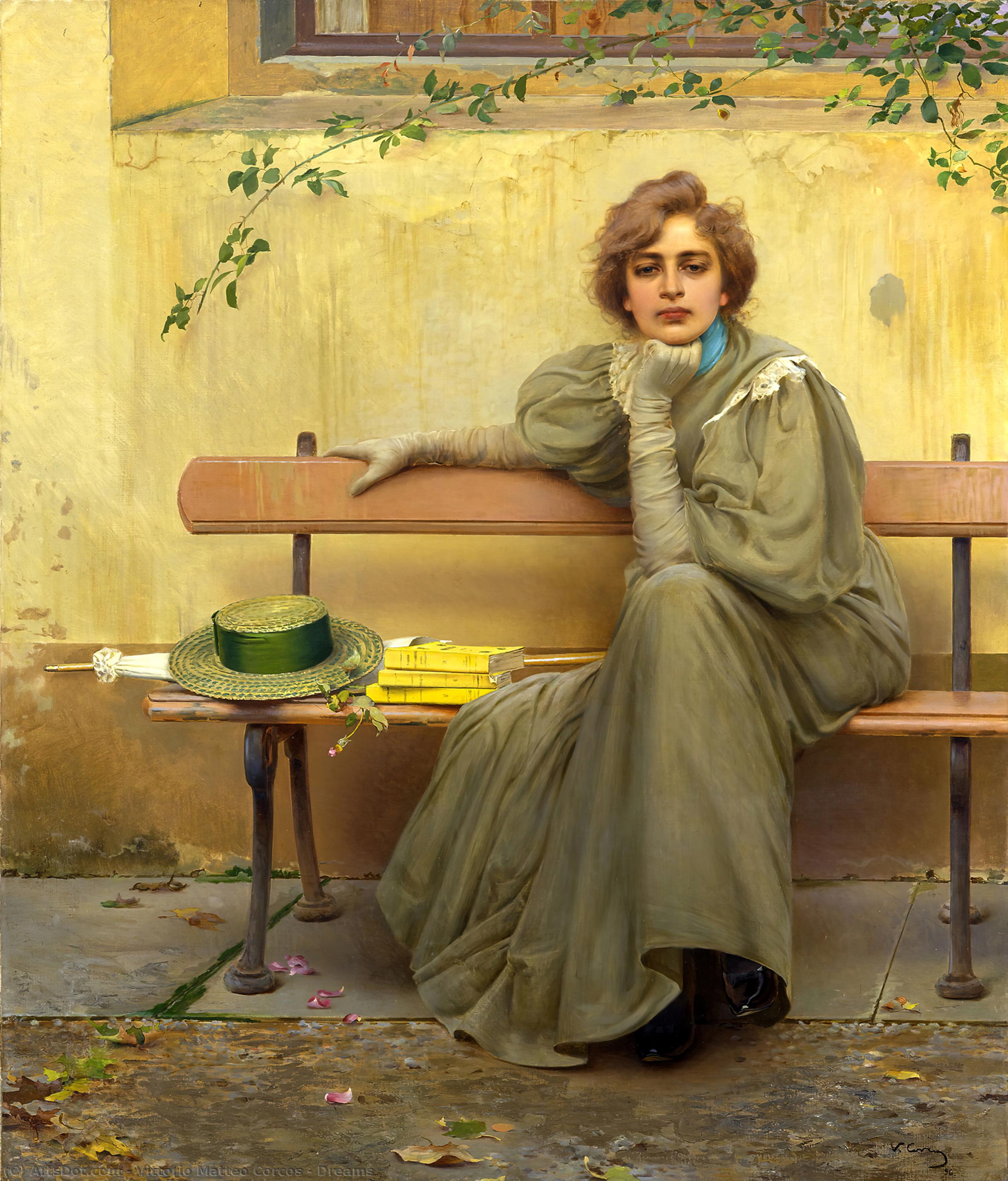
In the quietude of an outdoor setting, Vittorio Matteo Corcos invites us into a moment of profound intimacy with his 1896 masterpiece, Dreams. This captivating portrait of Elena Vecchi serves as more than just a depiction of a young woman; it is a window into the introspective spirit of the late nineteenth century. As we gaze upon the subject, seated pensively on a park bench, we are immediately drawn into her private world of contemplation. The composition, centered around her figure, commands attention through a delicate balance of realism and emotional depth, making it an exquisite focal point for any collection that values narrative elegance and historical resonance.
The painting captures a sense of nostalgic melancholy, achieved through a masterful use of light and atmosphere. A soft, diffused glow—reminiscent of an overcast afternoon—bathes the scene, casting gentle shadows that accentuate the textures of the natural world. The background, featuring a textured wall draped in climbing vines, provides a lush, organic framework that enhances the feeling of seclusion. For the discerning collector or interior designer, this artwork offers a serene yet intellectually stimulating presence, perfect for creating a space of reflection and sophisticated calm.
The Scandal of Modernity and Symbolism
Beyond its aesthetic beauty, Dreams carries a weight of cultural significance that once stirred the social fabric of Florence. At the time of its exhibition in 1896, Corcos’s portrayal of Elena Vecchi was considered daringly modern. Her pose—characterized by crossed legs and a certain unstudied ease—challenged the rigid decorum expected of women during the Belle Élampe. This subtle rebellion reflects the shifting roles of women in an era of burgeoning independence, transforming a simple portrait into a powerful commentary on modernity and confidence.
Every element within the frame is imbued with symbolic meaning. The closed book resting beside her serves as a poignant metaphor for her inner life; unlike the common Impressionist trope of a woman interrupted during reading, Elena’s gaze is directed provocatively toward the viewer, suggesting that her true stories reside within her thoughts rather than on the page. The muted palette of greens and yellows, punctuated by subtle golden tones, evokes a sense of tranquility laced with a hint of longing. This interplay of color and subject matter creates an emotional resonance that lingers long after the first encounter.
Mastery of Technique and Visual Texture
Corcos demonstrates his extraordinary skill through meticulous brushwork and a sophisticated command of oil on canvas. The technique leans toward Victorian realism, where every fold of fabric, the grain of the wooden bench, and the delicate veins of the leaves are rendered with a near-photographic precision. This level of detail provides a rich tactile quality to the piece, making it an ideal choice for high-quality reproductions intended to bring a sense of luxury and depth to a room.
The artist’s ability to blend colors seamlessly creates a smooth, luminous surface that captures the nuances of human emotion. The organic shapes of the subject and the surrounding foliage are balanced against the more geometric forms of the books and hat, creating a harmonious composition that is both visually stable and dynamically engaging. For those seeking to adorn a space with art that speaks of timelessness and technical excellence, Dreams stands as an enduring testament to the power of realistic portraiture to capture the ephemeral beauty of the human spirit.