Discover Walter Richard Sickert (1860-1942), a pivotal British painter influenced by Whistler & Degas. Known for evocative scenes of London life, music halls, and interiors, he was central to early 20th-century avant-garde art.
Tate Gallery
(London, United Kingdom)
Discover British & international art at Tate Britain! Explore centuries of masterpieces, from Turner to modern icons – free entry awaits in London’s riverside gallery.
A Portrait Steeped in Shadow and Memory: Walter Richard Sickert’s Lady Martin
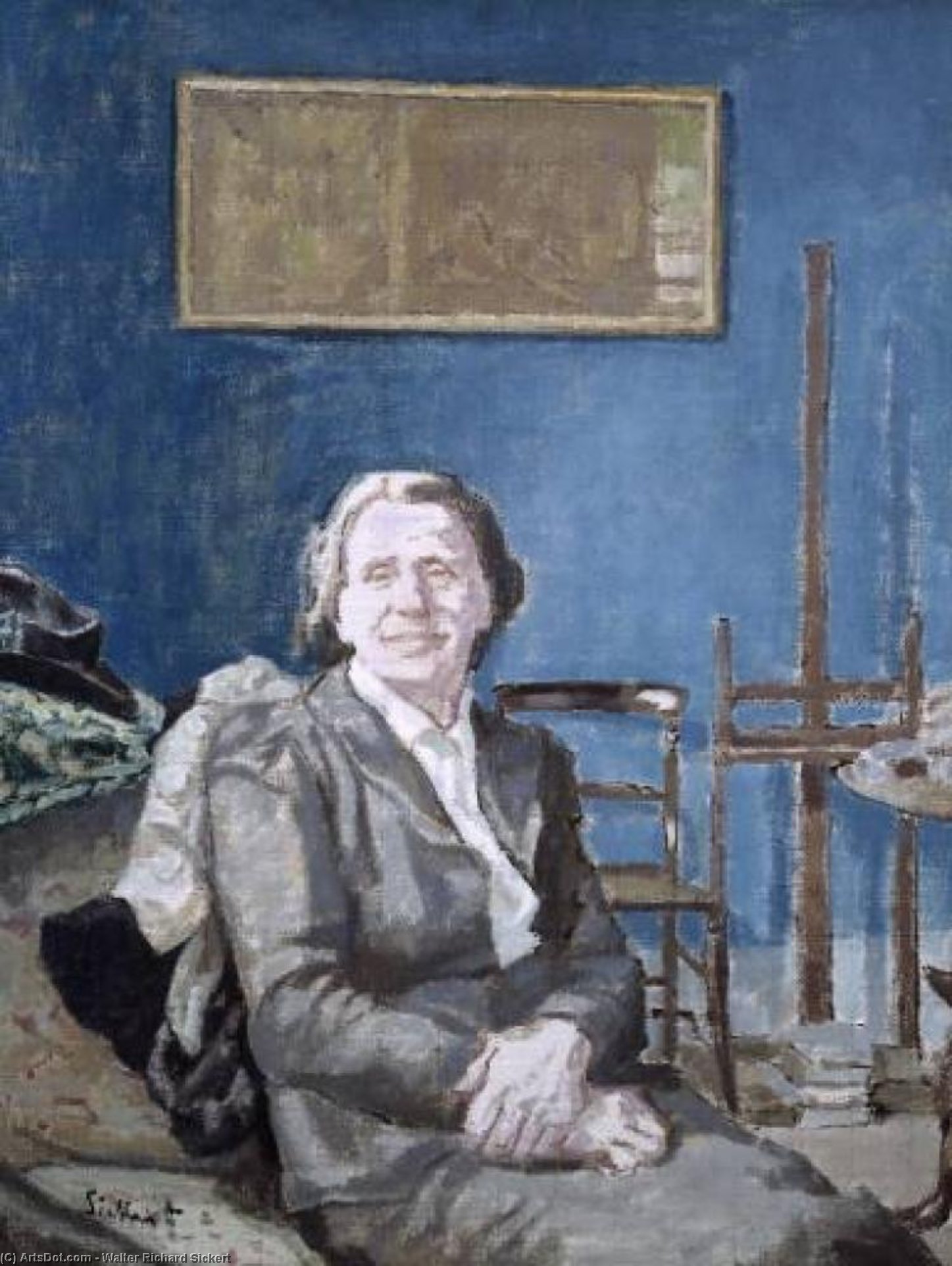
Walter Richard Sickert's “Lady Martin,” painted in 1935, is more than just a depiction of a woman; it’s an embodiment of the Camden Town Group’s fascination with psychological realism and their deliberate rejection of academic conventions. Executed on canvas using oil paint—a technique favored by Sickert for its ability to capture subtle tonal variations—the artwork presents Ada Martin seated in a chair, her hands folded calmly in her lap against a backdrop of muted blue. This seemingly simple composition belies a profound exploration of interiority and the complexities of human emotion.
The room itself is meticulously rendered, mirroring the Camden Town Group’s commitment to portraying everyday life with unflinching honesty. A dining table sits discreetly in the background, hinting at domestic tranquility juxtaposed against the quiet contemplation of the sitter. Two vases—one positioned on the left wall and another slightly to the right—add visual interest without disrupting the overall mood. These objects aren't merely decorative; they contribute to the sense of space and subtly reinforce the theme of stillness.
Sickert’s stylistic choices are particularly noteworthy. He eschewed bright colors, opting instead for a palette dominated by blues and browns – colours that evoke feelings of melancholy and introspection. This deliberate restraint aligns perfectly with Sickert's broader artistic philosophy, which sought to capture not just what was seen but what was felt beneath the surface. The theatrical lighting—characteristic of Sickert’s oeuvre—further enhances this effect, casting shadows across Ada Martin’s face and creating a sense of dramatic depth.
- Style: Camden Town Realism – Rejecting Impressionistic idealism for gritty depictions of urban life
- Technique: Oil Paint on Canvas – Allows for nuanced tonal gradations and captures subtle psychological expressions
- Historical Context: Painted during the height of Sickert’s artistic maturity, reflecting his engagement with modernist ideas and a preoccupation with portraying inner states
The painting's symbolism is understated yet powerful. The blue wall serves as a visual anchor, representing both serenity and perhaps a hint of sadness—a reflection of Ada Martin’s contemplative gaze. Similarly, the folded hands symbolize composure and restraint, conveying a sense of quiet dignity. Sickert skillfully avoids explicit narrative elements, allowing viewers to interpret the image based on their own emotional responses.
Ultimately, “Lady Martin” resonates with an enduring emotional impact. It invites contemplation about solitude, memory, and the unspoken anxieties that reside beneath the veneer of everyday life. Like many of Sickert’s works, it captures a fleeting moment in time—a snapshot of human experience rendered with remarkable sensitivity and psychological acuity. Its muted palette and masterful technique continue to inspire artists and collectors alike, cementing its place as a cornerstone of British Modernism.
- Emotional Impact: Evokes feelings of melancholy, introspection, and quiet contemplation
- Symbolism: Represents serenity, restraint, and the complexities of human emotion through color and posture