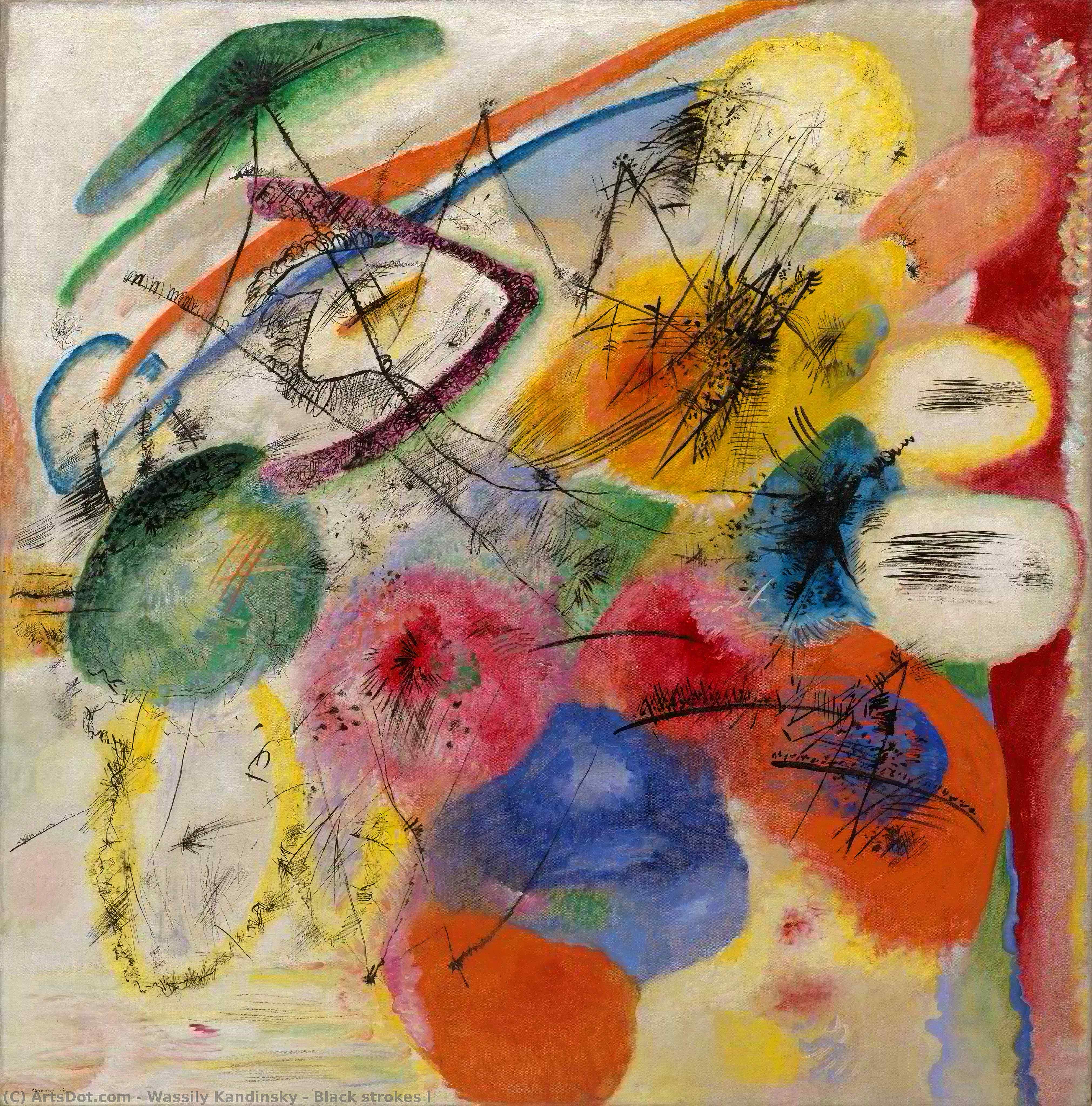
Explore Wassily Kandinsky’s ‘Black Strokes I,’ a pivotal 1913 abstract expressionist masterpiece. Dynamic lines & bold colors evoke spiritual intensity. A Guggenheim treasure!
Discover Wassily Kandinsky (1866-1944), the pioneer of abstract art! Explore his vibrant expressionism, spiritual themes & Bauhaus legacy through stunning reproductions.
A Symphony of Abstraction: Exploring Kandinsky’s “Black Strokes I”
Wassily Kandinsky's "Black Strokes I," created in 1913, stands as a pivotal work in the evolution of abstract art. It isn’t merely a painting; it’s a visual articulation of inner necessity – Kandinsky’s belief that color and form could express spiritual truths independent of representational imagery. This piece embodies the burgeoning spirit of abstraction, moving away from depicting the external world towards conveying emotional and psychological states directly to the viewer.
Historical Context: The Dawn of Pure Abstraction
1913 was a watershed year for Kandinsky. He was actively developing his theories on the spiritual in art, documented in his influential writings *Concerning the Spiritual in Art*. This period marked his decisive break from representational painting and a full embrace of non-objective forms. Influenced by Theosophy and a fascination with synesthesia (the blending of senses), Kandinsky sought to create paintings that resonated with the soul, much like music. “Black Strokes I” is a prime example of this exploration, born from a desire to liberate art from its traditional constraints. It predates the full flowering of Abstract Expressionism in America by decades, yet foreshadows many of its core tenets.
Artistic Style and Technique: A Dance of Line and Color
Executed in oil on canvas (131 x 129 cm), “Black Strokes I” is characterized by a dynamic interplay of bold colors – vibrant yellows, blues, reds, and greens – interwoven with assertive black lines. These aren’t merely decorative elements; they function as visual ‘instruments,’ each contributing to the painting's overall emotional resonance. Kandinsky’s brushwork is expressive and varied, ranging from delicate washes to thick impasto, creating a rich textural surface. The composition isn’t structured around a central focal point but rather invites the eye to wander across the canvas, discovering new relationships between forms and colors with each viewing.
Decoding the Symbolism: Beyond Representation
While Kandinsky rejected explicit symbolism, his work wasn't devoid of meaning. He believed that colors possessed inherent spiritual qualities – yellow associated with earthly energy, blue with depth and tranquility, red with passion and vitality. The black strokes themselves can be interpreted as boundaries or pathways, containing and directing the flow of color and energy. The painting isn’t *about* something; it *is* something - a direct expression of feeling and inner experience. It's an invitation to engage with art on a purely intuitive level.
Emotional Impact and Legacy: A Lasting Influence
“Black Strokes I” evokes a sense of controlled chaos, energy, and spiritual yearning. The painting’s dynamic composition and vibrant colors can be both exhilarating and unsettling, prompting viewers to confront their own emotional responses. It's a work that demands attention and rewards contemplation.
Kandinsky’s pioneering spirit profoundly influenced subsequent generations of artists, including those associated with Abstract Expressionism – Jackson Pollock, Mark Rothko, Willem de Kooning, and Clyfford Still. His emphasis on non-objective forms and the expressive power of color continues to resonate in contemporary art today.
Collecting & Interior Design Considerations
A reproduction of “Black Strokes I” can serve as a striking focal point in any modern or contemporary interior. Its bold colors and dynamic composition make it particularly well-suited for living rooms, offices, or creative spaces. The painting’s abstract nature allows it to complement a wide range of décor styles, adding a touch of sophistication and intellectual depth. Consider pairing it with neutral tones to allow the artwork's vibrancy to truly shine. Its enduring appeal makes it not just an aesthetic addition but also a conversation starter – a testament to Kandinsky’s visionary genius.