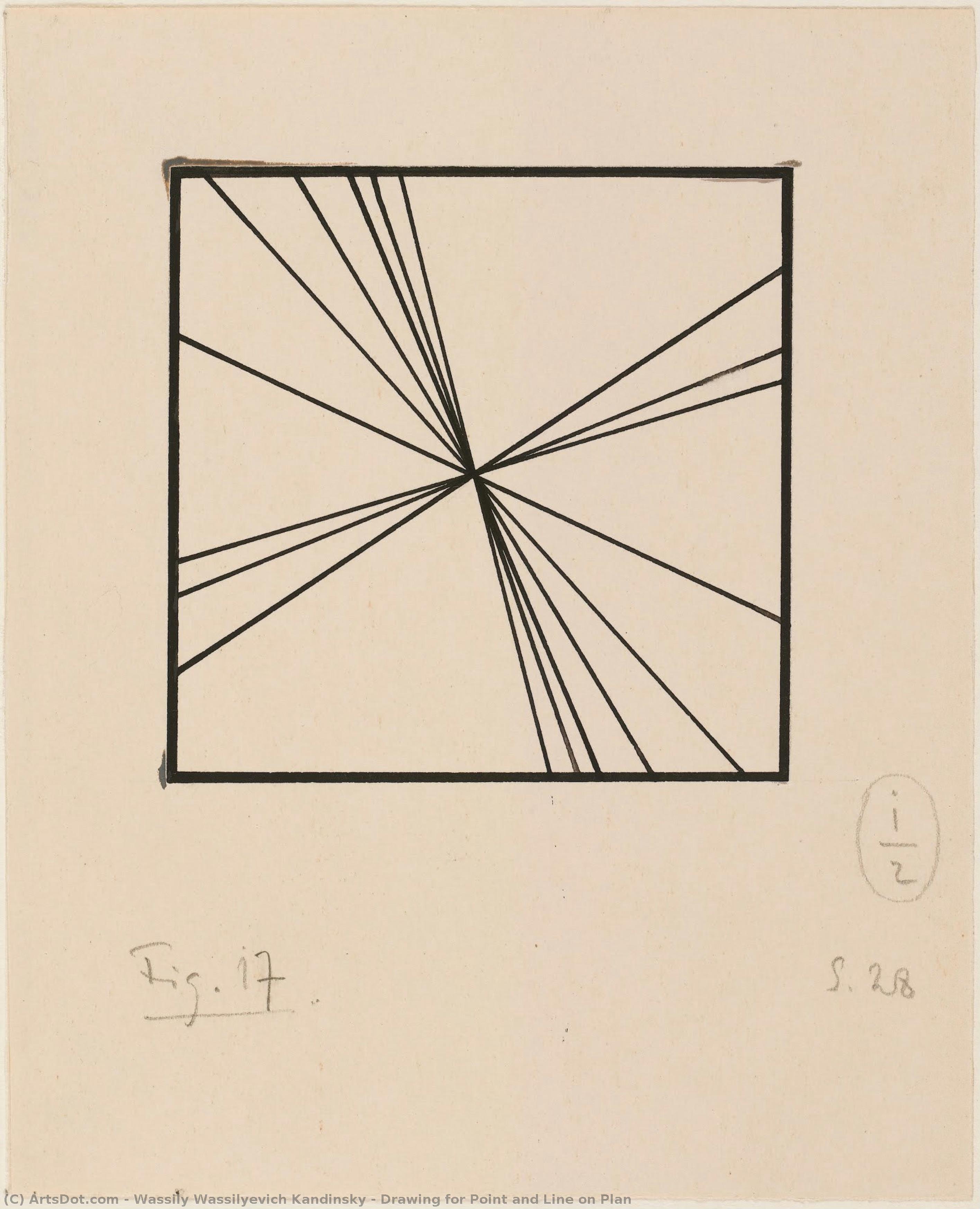
Explore Kandinsky's revolutionary "Drawing for Point and Line on Plane" (1925). A cornerstone of abstract art, this black & white masterpiece reveals geometric abstraction and spiritual automatism – a Bauhaus aesthetic exploration.
Discover Wassily Kandinsky (1866-1944), the pioneer of abstract art! Explore his vibrant expressionism, spiritual themes & Bauhaus legacy through stunning reproductions.
Explore groundbreaking modern and contemporary art at Centre Pompidou-Metz, Metz, France – a stunning architectural marvel showcasing iconic masterpieces & fostering artistic dialogue.
Drawing for Point and Line on Plane – A Pioneer’s Exploration of Geometric Abstraction
The photograph captures a seminal work by Wassily Kandinsky, “Drawing for Point and Line on Plane,” executed in 1925. This deceptively simple composition—a square overlaid with a circle—represents far more than just geometric shapes; it embodies Kandinsky's groundbreaking contribution to the burgeoning field of abstract art and serves as a cornerstone of the Bauhaus aesthetic. The image itself, rendered in stark black and white, amplifies the painting’s textural qualities and emphasizes its deliberate reduction to fundamental visual elements.
The Genesis of Geometric Abstraction
Kandinsky’s artistic journey began with an unexpected encounter—a visit to Monet's “Haystacks” at Giverny—which instilled within him a profound appreciation for Impressionism’s exploration of light and color. However, it was Wagner’s opera "Lohengrin," particularly its evocative musical imagery, that truly catalyzed his intellectual transformation. Recognizing the limitations of representational art in conveying spiritual experience, Kandinsky embarked on a radical quest to liberate painting from illusionistic depiction. He sought to express inner feelings directly through visual forms—a concept he termed “spiritual automatism.”
Technique and Composition: A Dialogue Between Line and Shape
The execution of "Drawing for Point and Line on Plane" exemplifies Kandinsky’s meticulous approach to abstraction. Using pencils and ink on paper, he meticulously crafted a series of intersecting lines that spiral outwards from the central circle. These lines aren't merely decorative; they are deliberately positioned to create a dynamic interplay between horizontal and vertical planes, mirroring the composer’s musical structure. The artist’s careful consideration of line density and direction contributes significantly to the painting’s overall sense of movement and depth—a characteristic that would become synonymous with Constructivist art.
Symbolism Within Simplicity
Beyond its formal qualities, “Drawing for Point and Line on Plane” resonates with symbolic significance rooted in Kandinsky's philosophical framework. The square represents stability and order, while the circle embodies unity and harmony – concepts central to Kandinsky’s belief that art should transcend rational thought and tap into primal emotional impulses. The interwoven lines symbolize the interconnectedness of opposing forces—a visual metaphor for the spiritual struggle inherent in achieving artistic liberation.
A Legacy Enduring Influence
“Drawing for Point and Line on Plane” stands as a testament to Kandinsky’s visionary ambition and his unwavering commitment to exploring the expressive potential of pure abstraction. Its influence extends far beyond its own time, shaping the trajectory of modern art and inspiring generations of artists to embrace geometric forms as vehicles for conveying emotion and spiritual insight. Reproductions of this iconic artwork continue to captivate audiences worldwide, offering a glimpse into the genesis of a revolutionary artistic movement—a movement that fundamentally redefined our understanding of visual representation.