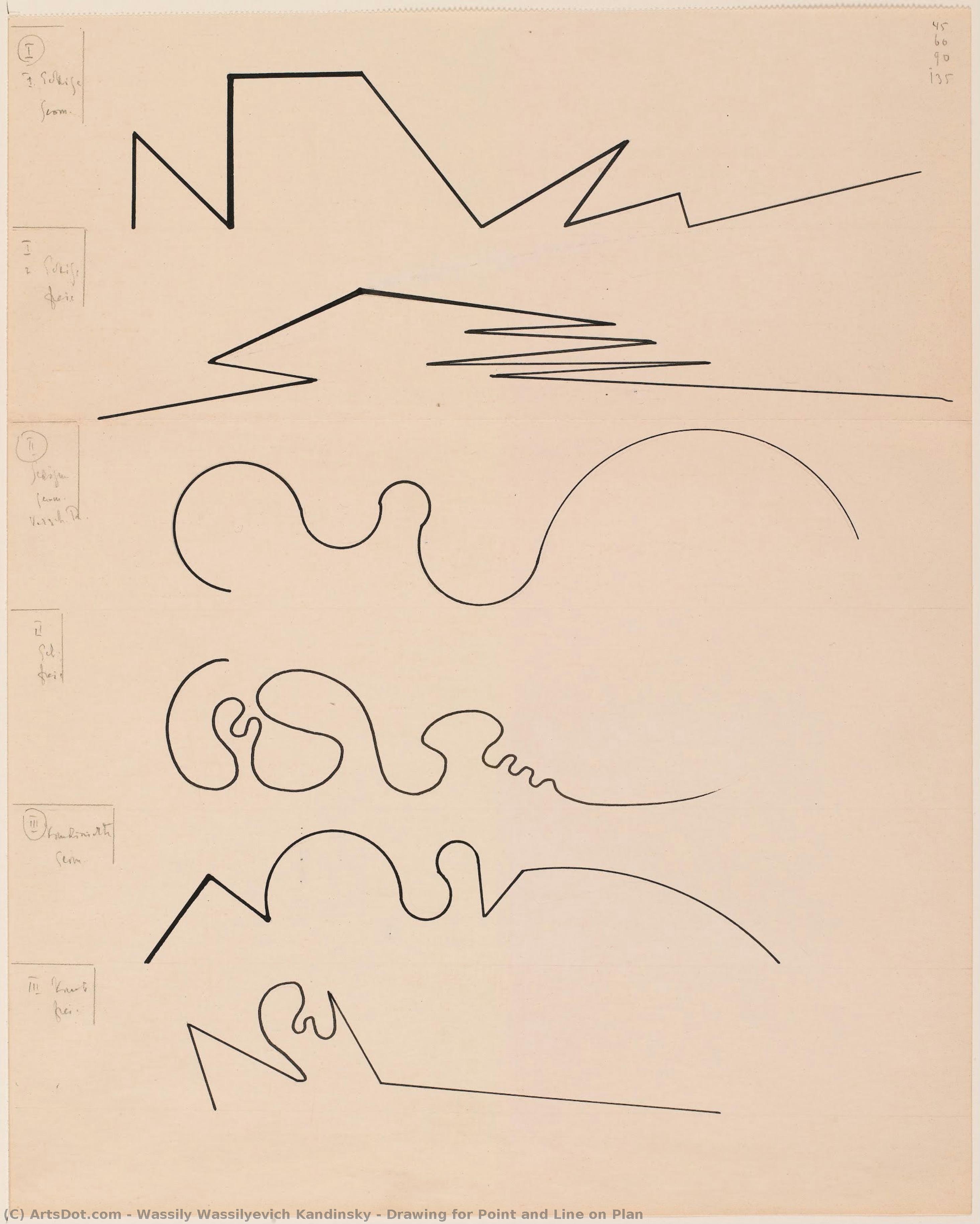
Explore Wassily Kandinsky's groundbreaking 'Drawing for Point and Line on Plane,' a seminal piece of abstract expressionism reflecting his philosophical exploration of color, line, and emotion during the Bauhaus era.
Discover Wassily Kandinsky (1866-1944), the pioneer of abstract art! Explore his vibrant expressionism, spiritual themes & Bauhaus legacy through stunning reproductions.
Explore groundbreaking modern and contemporary art at Centre Pompidou-Metz, Metz, France – a stunning architectural marvel showcasing iconic masterpieces & fostering artistic dialogue.
Drawing for Point and Line on Plane – A Pioneer’s Exploration of Geometric Abstraction
Wassily Wassilyevich Kandinsky's "Drawing for Point and Line on Plane," created in 1925, stands as a cornerstone of abstract expressionism and a testament to the transformative power of artistic experimentation. More than just a visual composition, it embodies Kandinsky’s profound belief that art could transcend representational imagery and communicate directly with the human spirit—a conviction rooted in his formative experiences with Impressionist landscapes and Wagnerian opera. This notebook sheet, housed at Centre Pompidou in Paris, offers a glimpse into Kandinsky's ongoing investigation of fundamental artistic principles during the Bauhaus period, marking a crucial step away from traditional academic painting toward a radically new aesthetic language.
The Geometry of Emotion: Kandinsky’s Conceptual Framework
Kandinsky didn’t approach abstraction as mere stylistic whim; it was driven by deeply held philosophical ideas. Influenced by Jungian psychology and Eastern mysticism—particularly Tibetan Buddhist art—he theorized that colors and lines possessed inherent vibrational energies capable of evoking specific emotions and spiritual states. “Drawing for Point and Line on Plane” exemplifies this concept, utilizing geometric shapes – predominantly triangles, circles, and intersecting lines – not to depict external reality but to generate internal resonance within the viewer. The deliberate arrangement of these forms isn’t arbitrary; it's a calculated effort to harness their visual qualities as conduits for conveying feelings of balance, dynamism, and contemplation.
Technique and Material Considerations
Executed in pencil and ink on paper, the drawing showcases Kandinsky’s meticulous attention to detail despite its simplified form. The artist employed precise hatching techniques to delineate the contours of the triangles and circles, creating subtle variations in tonal value that contribute to the overall textural richness of the piece. Furthermore, the interplay between horizontal and vertical lines establishes a visual rhythm that guides the eye across the surface. This careful craftsmanship underscores Kandinsky’s commitment to mastering traditional drawing skills while simultaneously pushing them beyond conventional boundaries—a duality characteristic of his artistic practice throughout his career.
Historical Context: Bauhaus Influence and Artistic Avant-Garde
“Drawing for Point and Line on Plane” emerged during Kandinsky's time at the Bauhaus school in Weimar, Germany, where he collaborated with Josef Albers and László Moholy-Nagy to explore the intersection of art, design, and technology. The Bauhaus ethos championed functional aesthetics combined with experimental techniques—a philosophy that directly informed Kandinsky’s artistic endeavors. This drawing aligns perfectly with Bauhaus principles by prioritizing clarity of form and geometric precision while simultaneously rejecting representational illusionism. It represents a pivotal moment in the development of modern art, signaling a decisive break from academic tradition and paving the way for subsequent generations of artists to embrace abstraction as a vehicle for expressive communication.
Symbolic Resonance: Beyond Representation
The triangular shapes within “Drawing for Point and Line on Plane” hold symbolic significance beyond their geometric form. Kandinsky associated triangles with stability and upward movement—representing aspiration and spiritual ascension. The circles, conversely, symbolize wholeness and unity—reflecting the artist’s desire to capture the essence of cosmic harmony. These symbols aren't intended to depict tangible objects but rather to evoke intangible concepts—beliefs, emotions, and spiritual experiences—demonstrating Kandinsky’s unwavering conviction that art could transcend literal depiction and communicate directly with the subconscious mind.
Emotional Impact: A Quiet Intensity
Despite its understated appearance, “Drawing for Point and Line on Plane” possesses a palpable emotional intensity. The harmonious balance between geometric forms and tonal variations creates a sense of serenity and contemplation—inviting viewers to engage in an internal dialogue about beauty, spirituality, and the fundamental nature of existence. This drawing serves as a powerful reminder that true artistic expression lies not in replicating reality but in capturing its underlying vibrations—a legacy that continues to inspire artists and collectors alike.