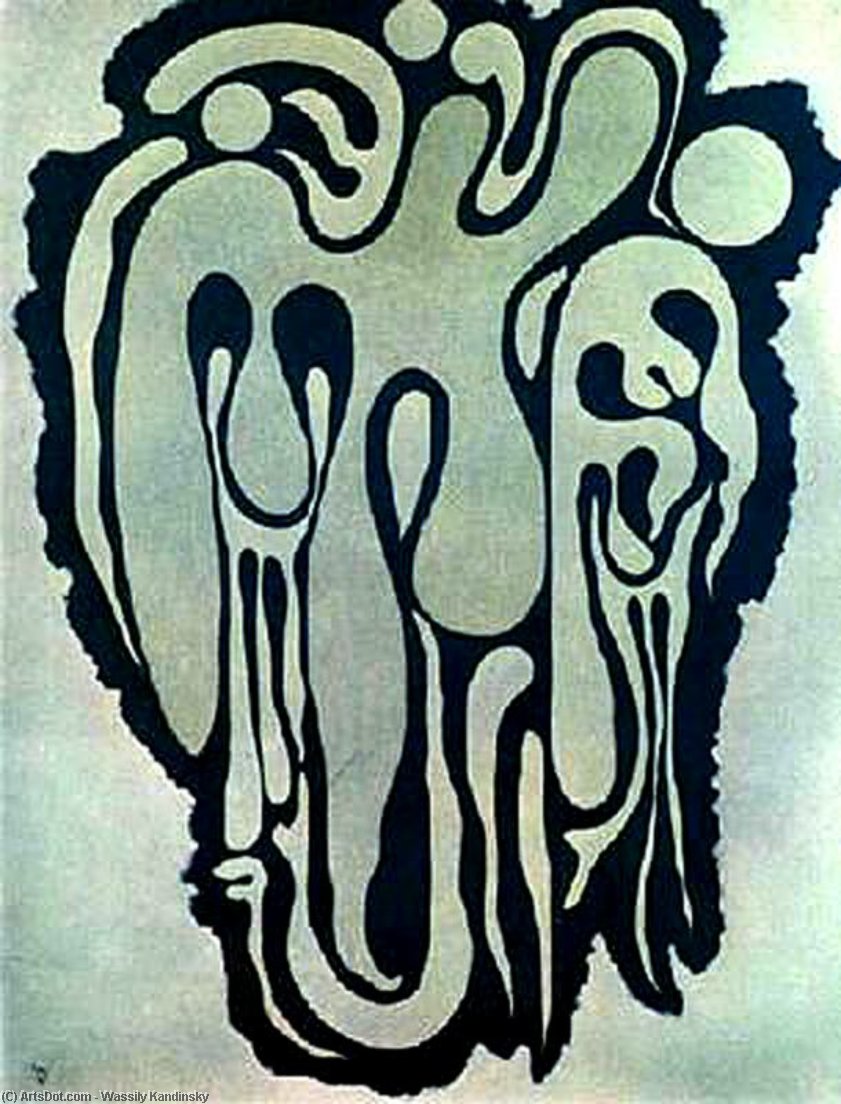
Green Figure

Explore Wassily Kandinsky’s mesmerizing ‘Green Figure,’ an abstract masterpiece from the early 20th century that embodies vibrant blues and whites—a testament to his pioneering spirit and groundbreaking approach to color theory.


Wassily Wassilyevich Kandinsky (1866 - 1944)

Discover Wassily Kandinsky (1866-1944), the pioneer of abstract art! Explore his vibrant expressionism, spiritual themes & Bauhaus legacy through stunning reproductions.

A Pioneer of Abstraction: Exploring Wassily Kandinsky’s “Green Figure”

  • Subject Matter & Composition The painting depicts a singular figure composed of interconnected geometric shapes—primarily circles and lines—that convey an impression of dynamism and movement. Unlike representational art, which strives to depict recognizable objects or scenes, Kandinsky deliberately eschewed realism, prioritizing instead the expression of inner spiritual experience.
  • Style & Technique Kandinsky’s approach aligns with the burgeoning field of abstract expressionism, marking a decisive break from traditional artistic conventions. He employed a technique characterized by spontaneous brushstrokes and layering of colors—primarily blues and whites—to achieve an ethereal quality. The artist meticulously crafted each element to contribute to the overall visual harmony and evoke specific emotional responses.
  • Historical Context Created in Munich around 1913, “Green Figure” emerged during a period of intense artistic experimentation fueled by intellectual currents such as Jungian psychology and Nietzschean philosophy. Kandinsky’s work reflects the broader cultural fascination with symbolism and the desire to transcend purely visual perception, seeking instead to communicate ideas and emotions directly.
  • Symbolism & Color Palette The dominant hues—deep blues and luminous whites—are imbued with profound symbolic significance. Blue represents tranquility and spirituality, while white embodies purity and transcendence. Kandinsky believed that color possessed inherent expressive power, capable of influencing the viewer’s subconscious mind and conveying feelings beyond verbal description.
  • Emotional Impact “Green Figure” transcends mere visual aesthetics; it aims to elicit contemplation and introspection. The swirling lines and overlapping shapes create a sense of disorientation yet simultaneously convey an underlying feeling of serenity and spiritual awakening. It invites viewers to engage in a dialogue with the artwork, prompting them to consider its connection to inner states of consciousness.