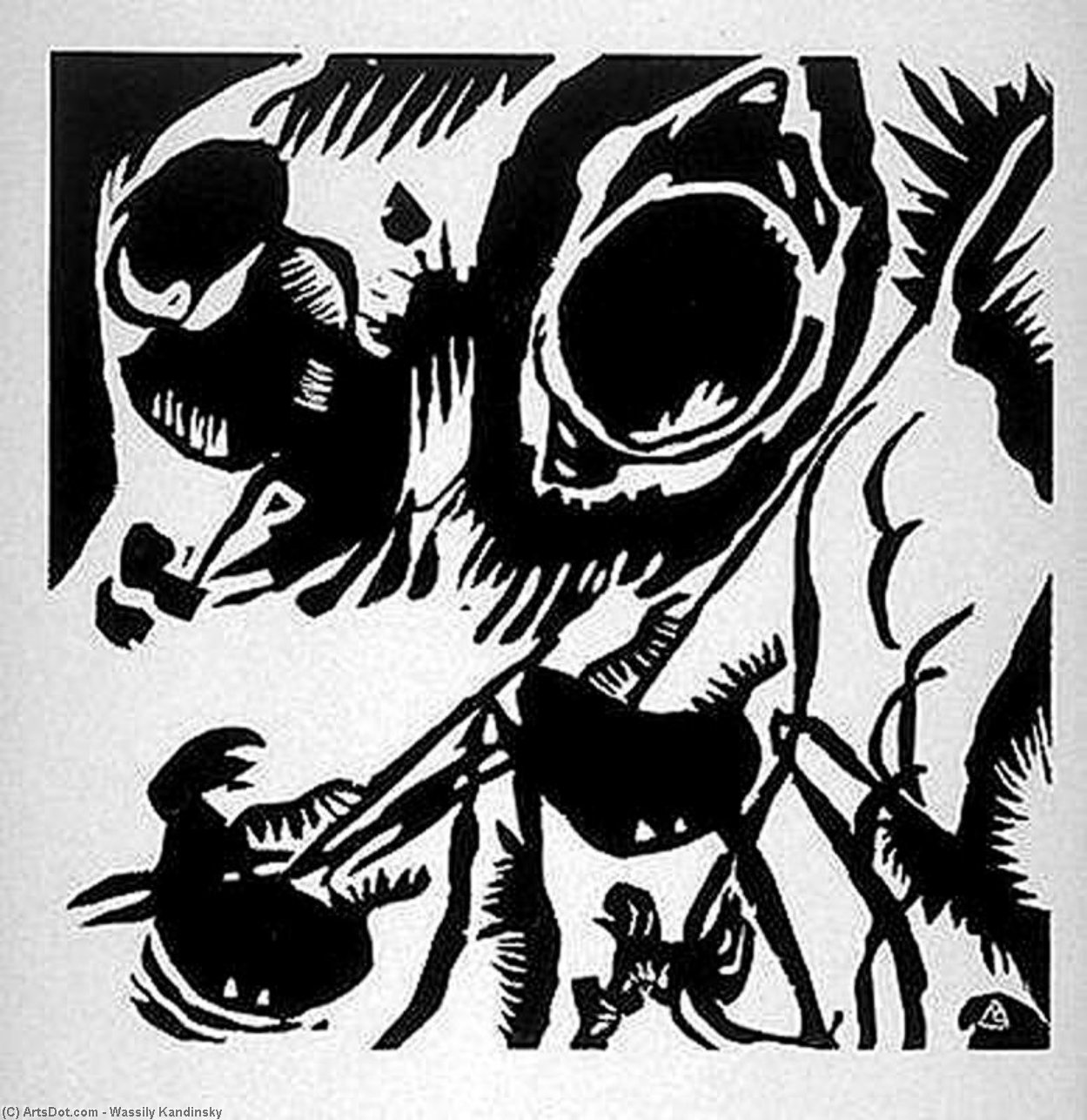
A Window into the Spiritual: Decoding Kandinsky’s “Motiv aus Improvisatio 25”
Wassily Kandinsky's "Motiv aus Improvisatio 25," created around 1913, is not merely a woodcut print; it’s a visual echo of an inner world striving for expression. Emerging from a period of intense artistic and spiritual exploration, this work embodies the pivotal shift towards abstraction that defined Kandinsky's legacy and revolutionized modern art. The piece isn’t about depicting reality as we see it, but rather translating emotional and spiritual states into a language of form and line. It feels less like looking *at* something and more like being enveloped *within* a dynamic energy field.
The Birth of Abstraction from Inner Necessity
Kandinsky’s artistic journey was profoundly shaped by his synesthetic experiences – the blending of senses, where he perceived colors as having corresponding sounds. This unique perception fueled his belief that art should transcend mere representation and tap into a deeper, universal language of feeling. “Motiv aus Improvisatio 25” is a direct manifestation of this philosophy. The work originates from Kandinsky’s series of “Improvisations,” spontaneous creations intended to capture fleeting moments of inner inspiration. This particular motif, extracted from one such improvisation, distills that energy into a concentrated form. The absence of recognizable objects isn't an omission; it’s a deliberate act of liberation, freeing the artwork from the constraints of the material world and allowing pure emotion to take center stage. The stark contrast between black and white intensifies this effect, stripping away any distraction and focusing attention on the interplay of shapes and lines.
A Symphony of Lines and Forms
The woodcut technique itself contributes significantly to the artwork’s character. Unlike the smooth gradations achievable with painting, the woodcut produces a more graphic, textured quality. The deliberate carving into the wood block creates bold, angular lines that seem to vibrate with energy. These aren't gentle curves or delicate strokes; they are assertive declarations of form. Within this framework, fragmented figures and landscape-like suggestions emerge – hints of human and animal forms interwoven in a dynamic composition. There’s a sense of movement, almost chaotic yet controlled, created by the diagonal lines and overlapping shapes. The density of the composition draws the eye inward, inviting contemplation of the relationships between these abstract elements. It's as if Kandinsky is attempting to capture the very essence of life – its inherent dynamism, its fleeting moments, and its underlying spiritual currents.
Echoes of a Revolutionary Spirit
To understand “Motiv aus Improvisatio 25,” it’s crucial to consider the historical context in which it was created. Kandinsky was deeply involved with the avant-garde movements of his time, particularly Der Blaue Reiter (The Blue Rider), a group of artists who sought to express spiritual truths through art. This period witnessed a growing disillusionment with traditional artistic conventions and a fervent desire for new forms of expression that could reflect the anxieties and aspirations of the modern age. Kandinsky’s work resonated with this spirit, offering a radical alternative to representational art and paving the way for future generations of abstract artists. The print is not simply an aesthetic object; it's a testament to a revolutionary moment in art history—a bold declaration of artistic freedom and spiritual exploration.
Ultimately, “Motiv aus Improvisatio 25” invites viewers to engage with art on a deeply personal level. It’s a work that doesn’t offer easy answers or literal interpretations but instead encourages introspection and emotional resonance. Whether adorning the walls of a modern home or inspiring creative endeavors, this powerful woodcut serves as a timeless reminder of the transformative power of abstract art and the enduring quest for inner meaning.