A Captivating Representation of Nature
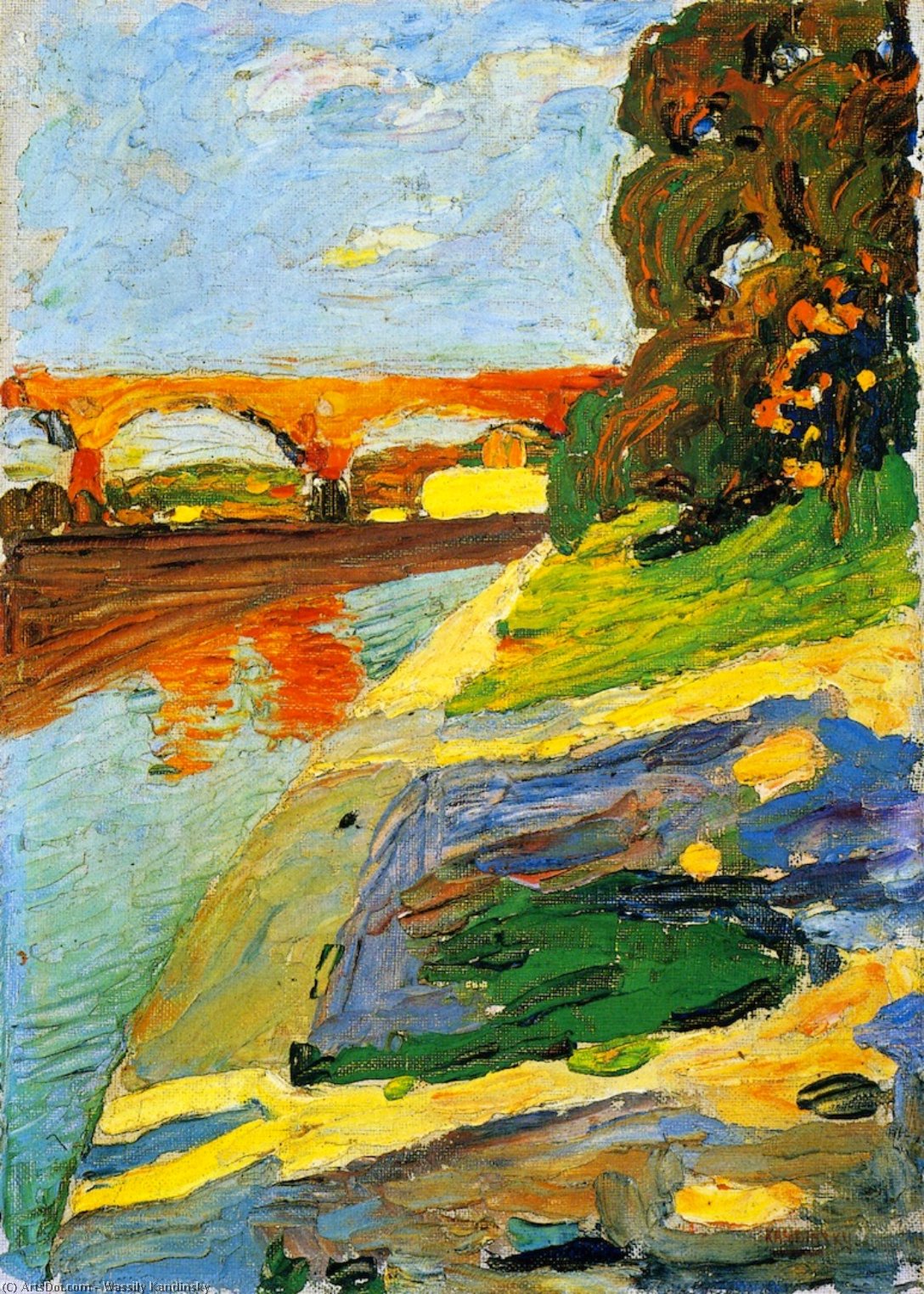
Wassily Kandinsky, a renowned Russian painter and art theorist, created the captivating piece
Munich - The Isar in 1901. This painting is a beautiful representation of a river with a bridge in the background, capturing the essence of nature as it flows through the landscape. The serene atmosphere is enhanced by trees on both sides of the river, adding to the peaceful ambiance.
Human Connection and Activity
In addition to the natural elements, several people are scattered throughout the painting, possibly enjoying the view or engaging in various activities near the water's edge. The presence of these individuals adds a sense of life and human connection to the otherwise peaceful scene. This blend of nature and human activity creates a unique and captivating visual experience.
Artistic Style and Influence
Munich - The Isar is an example of Expressionism, a style characterized by the use of vibrant colors and distorted forms to convey emotions and inner experiences. Kandinsky's work was influenced by his interest in spirituality and the emotional properties of color. This painting reflects his ability to capture the essence of a scene while infusing it with a sense of dynamism and life.
Relevance and Legacy
Wassily Kandinsky is known for his contributions to modern art, particularly in the development of abstract art. His work has inspired many artists and continues to be celebrated today.
Munich - The Isar is a testament to his skill in capturing the beauty of everyday scenes and transforming them into works of art.
Related Works and Artists
For those interested in exploring more of Kandinsky's work, consider:
Museums and Collections
Works by Wassily Kandinsky can be found in various museums, including the
Centre Pompidou in Paris, France. For more information on his art and other related artists, visit
ArtsDot.com.
Conclusion
Munich - The Isar by Wassily Kandinsky is a captivating piece that combines the serenity of nature with human activity. It reflects his unique style and influence on modern art, making it a significant work in the history of Expressionism.