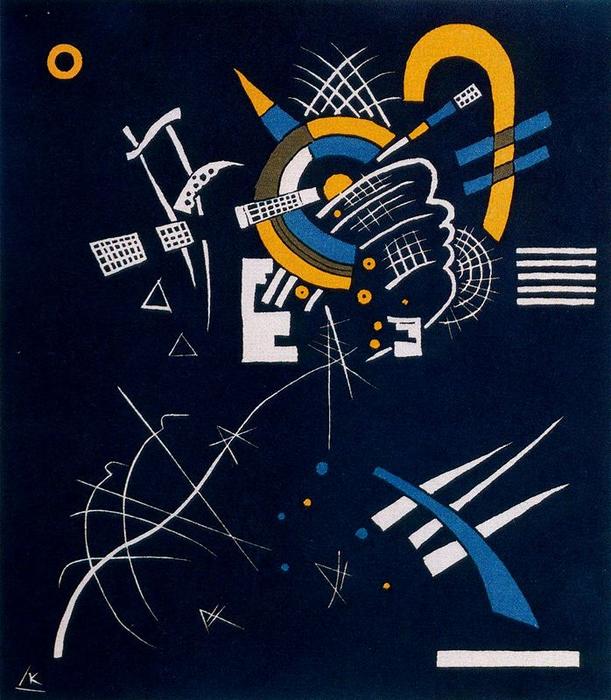
Pequeños mundos VII: A Symphony of Color and Geometric Form
Wassily Kandinsky’s “Pequeños mundos VII,” created in 1922, stands as a cornerstone of abstract expressionism and embodies the artist's profound exploration into the relationship between color and emotion. Produced during his formative years at the Bauhaus school in Weimar—a crucible for avant-garde experimentation—this lithograph offers more than just visual beauty; it presents a meticulously crafted meditation on the fundamental principles underpinning Kandinsky’s artistic vision.
- Subject Matter: The image depicts a predominantly blue background punctuated by strategically positioned yellow circles and crimson triangles. These geometric shapes aren't merely decorative elements but serve as conduits for conveying specific psychological states—a testament to Kandinsky’s belief that art should transcend representational imagery to communicate directly with the viewer’s subconscious.
- Style & Technique: Lithography, chosen by Kandinsky for this particular print, allowed for exceptional tonal nuance and textural subtlety. The artist skillfully transferred a woodcut design onto lithographic stone, resulting in an image characterized by delicate hatching marks that imbue it with depth and luminosity. This technique reflects Kandinsky’s desire to capture the essence of visual experience—the way light interacts with surface—rather than simply replicating reality.
- Historical Context: “Pequeños mundos VII” emerged from a period of intense artistic ferment following World War I, coinciding with Kandinsky's embrace of Suprematism and Constructivism. These movements championed pure abstraction as a means of liberating art from the constraints of illusionism and fostering a dialogue between color and form. The print aligns perfectly with Bauhaus ideals—emphasizing functional design alongside spiritual contemplation.
- Symbolism: The arrangement of shapes – circles representing wholeness and harmony, triangles symbolizing dynamism and aspiration – speaks to Kandinsky’s philosophical preoccupation with the cosmos and the human psyche. The concentric circles subtly echo the celestial sphere, while the upward-pointing triangles convey a sense of striving for transcendence. Kandinsky's use of color is equally deliberate; blue evokes tranquility and contemplation, complementing the energetic presence of yellow and red.
- Emotional Impact: Viewing “Pequeños mundos VII” invites contemplation on the interplay between visual perception and inner experience. The print’s understated elegance—achieved through meticulous craftsmanship—captures a moment of serene beauty while simultaneously hinting at underlying currents of emotion. It exemplifies Kandinsky's conviction that art possesses the capacity to awaken consciousness and inspire spiritual insight.
This stunning reproduction captures the spirit of Kandinsky’s groundbreaking work, offering collectors and interior designers alike a piece of artistic history imbued with profound symbolic resonance. Its delicate hatching marks and harmonious color palette exemplify the Bauhaus aesthetic—a legacy that continues to inspire creativity and innovation today.