The Genesis of Abstraction: Wassily Kandinsky's "Study for Tekst Khudozhnika"
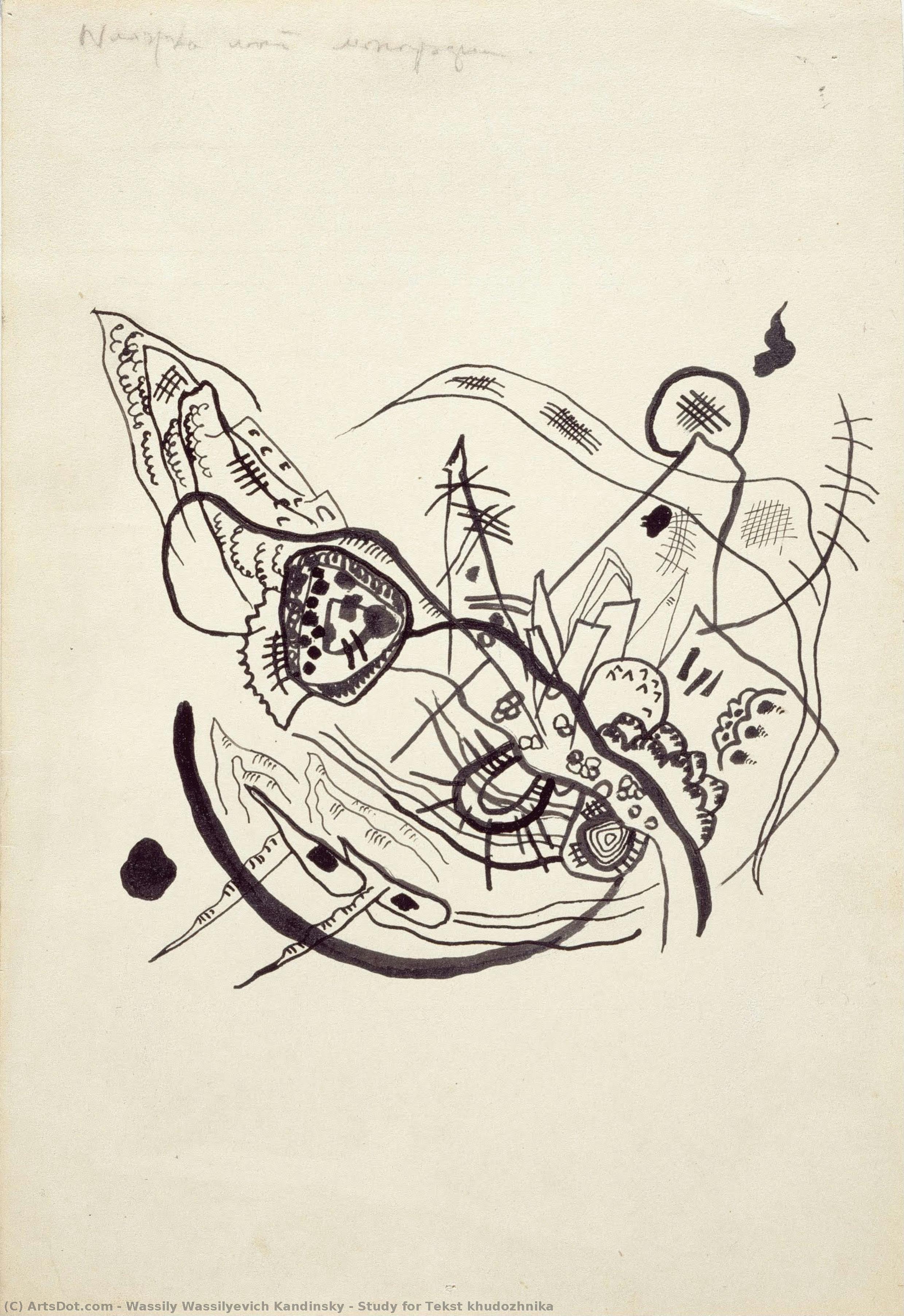
Wassily Kandinsky’s “Study for Tekst Khudozhnika” (1918) isn’t merely a painting; it’s a visual manifesto, a nascent declaration of the radical shift he would bring to modern art. This deceptively simple composition – a carefully orchestrated interplay of circles, triangles, and geometric forms – represents a pivotal moment in Kandinsky's artistic evolution, a stepping stone from representational landscapes towards the pure abstraction that would define his legacy. The work exists as a preparatory study for “Tekst Khudozhnika” (The Artist’s Text), an illustrated book exploring the spiritual potential of color and form, published in 1918. It's a glimpse into the mind of a man wrestling with profound questions about art’s ability to transcend the literal and communicate directly with the soul.

Early Influences and the Quest for Inner Resonance
Kandinsky’s artistic journey wasn't a sudden eruption of abstraction. It was forged over decades, shaped by a confluence of experiences that profoundly altered his perception of art and its purpose. Born in Moscow in 1866, he initially pursued a conventional path – law and economics at the University of Moscow. However, a transformative encounter with Impressionism, specifically Claude Monet’s “Haystacks,” ignited within him an irrepressible desire to explore a different realm. Simultaneously, witnessing Wagner's opera "Lohengrin" unleashed a powerful emotional response, suggesting that art could evoke feelings beyond mere visual representation. These early influences, combined with his fascination with Russian folk art – particularly the vibrant use of color against dark backgrounds – laid the groundwork for his later explorations.
Crucially, Kandinsky’s intellectual and spiritual life was deeply intertwined with Theosophy, a philosophical movement emphasizing esoteric knowledge and the interconnectedness of all things. He believed that colors possessed inherent psychological properties, capable of triggering specific emotions and sensations within the viewer. This conviction fueled his experimentation with abstraction, seeking to create works that resonated with the inner world rather than simply mirroring the external one.
Geometric Harmony: Form and Color in Dialogue
“Study for Tekst Khudozhnika” exemplifies Kandinsky’s developing geometric style. The composition is dominated by circles, triangles, and squares – fundamental shapes that he believed possessed inherent symbolic meaning. These forms aren't arranged randomly; they engage in a dynamic dialogue with each other, creating a sense of movement and tension. Notice the overlapping circles, suggesting layers of experience and emotion. The sharp angles of the triangles inject a counterpoint of energy and structure. The color palette is restrained yet potent – muted blues, greens, and ochres create a harmonious atmosphere, inviting contemplation rather than demanding attention.
It’s important to remember that this isn't cold or sterile geometry. Kandinsky sought to imbue these forms with spiritual significance. He believed that by reducing the image to its essential elements – shape and color – he could bypass the limitations of representation and tap into a deeper, more universal language.
A Window into the Soul: The Emotional Impact
“Study for Tekst Khudozhnika” is not simply an exercise in formal composition; it’s a profound expression of Kandinsky's inner world. It invites viewers to engage with their own emotions and experiences, suggesting that art can be a pathway to spiritual insight. The work’s quiet intensity and carefully balanced forms create a sense of meditative calm, encouraging contemplation and introspection. Reproductions of this piece offer a powerful way to bring this emotional resonance into your space – a subtle yet evocative reminder of the transformative power of art.