A Doorway to Emotion: De Kooning’s “Door to the River”
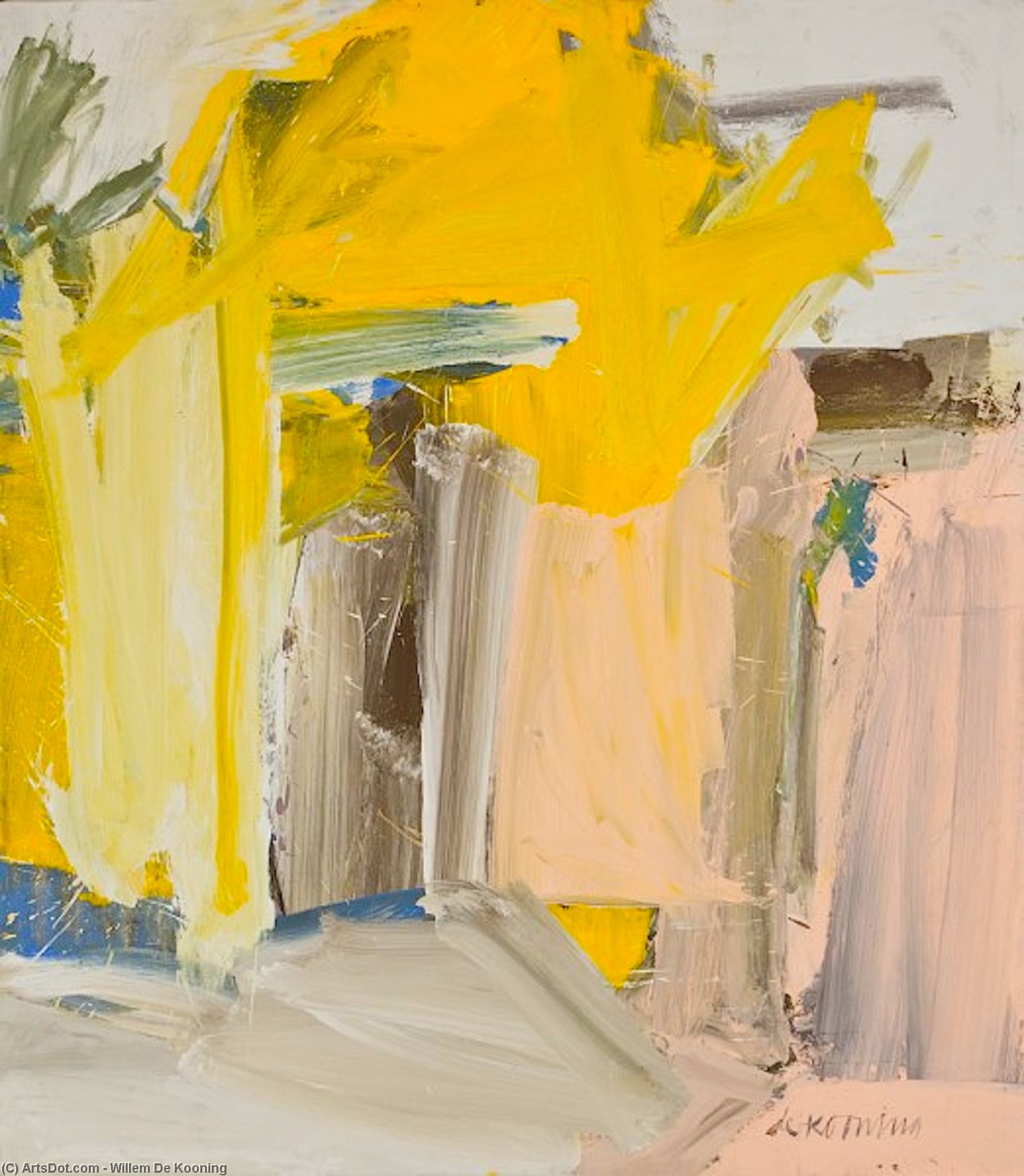
Willem de Kooning, a titan of 20th-century art, possessed an ability to wrestle with form and emotion in ways that continue to resonate profoundly. His work isn't merely representation; it’s a visceral exploration of the human condition, rendered through dynamic brushstrokes and a vibrant, often unsettling palette. “Door to the River,” painted in 1960, stands as a pivotal example of this approach, offering a glimpse into the artist’s evolving vision during a period of intense creative experimentation. The painting isn't simply a depiction of a riverbank; it’s an invitation – a doorway leading to a realm of feeling and memory. Initially conceived as a study for a larger mural project, its scale—a substantial 80 x 70 inches—amplifies the sense of immersion and immediacy that defines de Kooning's style. The composition is deceptively simple: a broad, ochre-toned doorway dominates the center of the canvas, flanked by a swirling expanse of pink, yellow, white, and brown hues that suggest both water and sky. Yet, within this apparent tranquility lies a palpable energy—a sense of movement and disruption that speaks to the complexities of experience.
The Language of Brushstroke: Technique and Style
De Kooning’s technique is instantly recognizable – a furious, almost violent application of paint that belies the painting's underlying emotional depth. He employed house painter’s brushes, deliberately eschewing the smooth, controlled strokes favored by some of his contemporaries. Instead, he layered thick impasto, creating a surface rich with texture and visual interest. The brushwork isn’t precise; it’s raw, spontaneous, and imbued with an almost palpable sense of urgency. Notice how the lines aren't always clean or defined—they bleed into one another, suggesting a constant state of flux and transformation. This technique wasn’t simply about applying paint; it was about channeling emotion directly onto the canvas. The painting exemplifies his move away from the more rigid structures of earlier works, embracing a looser, more expressive approach that mirrored his own restless spirit. The color palette itself is crucial – the warm yellows and browns ground the composition, while the pinks and blues evoke both serenity and unease, mirroring the duality inherent in memory and experience.
Context within Modern Art Movements: Beyond Abstract Expressionism
“Door to the River” resides firmly within the realm of Abstract Expressionism, a movement that sought to liberate art from representational constraints and explore the depths of subjective experience. However, de Kooning’s work transcends simple categorization. He pushed the boundaries of abstraction, incorporating elements of figuration—the suggestion of a doorway, the implied presence of figures—that challenged viewers to engage with the painting on multiple levels. The painting's creation coincided with a period of significant artistic ferment, following the dominance of Abstract Expressionism and preceding the rise of Postmodern art. De Kooning’s work served as a bridge between these movements, embodying the modernist ideals of experimentation and personal expression while simultaneously anticipating the ironic and self-aware approach of postmodernism. His influence can be seen in artists like Richard Clifford Diebenkorn Jr., who similarly explored abstract expressionism with a focus on capturing the essence of place and memory.
Symbolic Layers: The River, the Doorway, and Beyond
The symbolism within “Door to the River” is layered and open to interpretation. The doorway itself can be seen as a metaphor for transition—a passage between states of being, memories and realities. The river below represents fluidity, change, and perhaps even the subconscious mind. The figures glimpsed in the background – often interpreted as fragments of memory or reflections of the artist’s own psyche – add to this sense of ambiguity and invite viewers to project their own experiences onto the canvas. Some art historians suggest that the painting reflects de Kooning's personal struggles with identity and his evolving relationship with New York City, a city he both loved and wrestled with throughout his life. The overall effect is not one of straightforward narrative but rather an evocative exploration of feeling—a reminder that art can be as much about inviting contemplation as it is about depicting the visible world.
For those seeking to experience the power and dynamism of Willem de Kooning’s “Door to the River” firsthand, high-quality reproductions are available through ArtsDot.com and ArtsDot.com. Further exploration of de Kooning’s oeuvre, including his seminal work “Interchange,” can be found on Wikipedia: Wikipedia.