A Portrait of Inner Turmoil
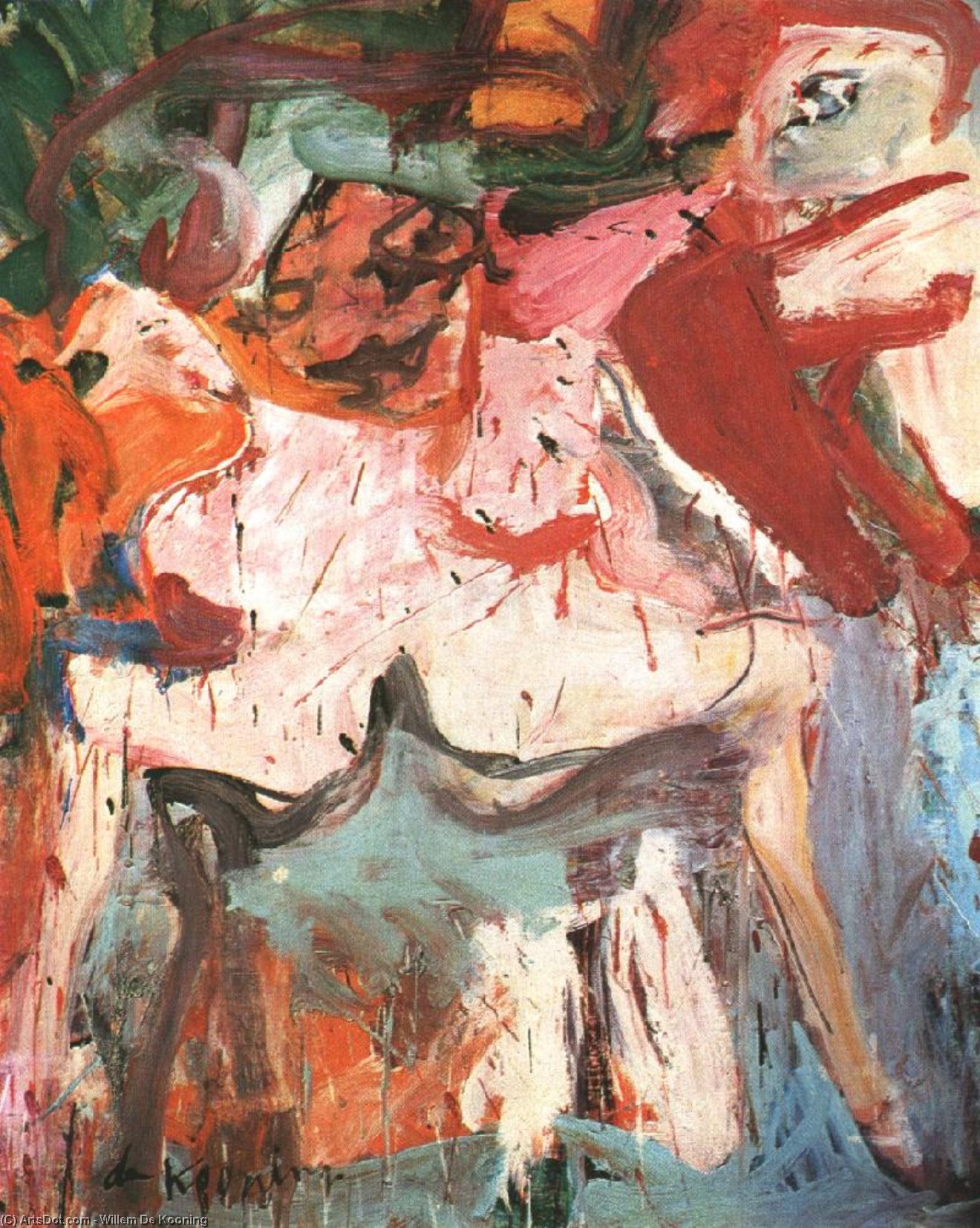
In the pantheon of Abstract Expressionism, few works capture the raw, visceral tension of the human psyche as poignantly as Willem de Kooning’s “Seated Woman 2,” painted in 1940. This striking composition presents a figure seated in a chair, her legs crossed in a posture that masterfully balances vulnerability with an unmistakable sense of defiance. The subject does not merely sit within the frame; she dominates it, drawing the viewer into an intimate yet unsettling encounter. Through de Kooning’s lens, the female form becomes a vessel for profound psychological depth, where every line and color choice serves to articulate a complex internal landscape.
The technique employed in this masterpiece is a testament to the artist's revolutionary approach to the canvas. Utilizing the alla prima method, de Kooning applied paint directly onto the surface without the traditional safety net of underpainting or meticulous blending. This results in a textured, energetic surface where bold, frenetic brushstrokes collide. The palette is vibrant yet heavy with emotion, eschewing representational accuracy to favor a more primal, expressive truth. For the discerning collector or interior designer, this piece offers a dynamic focal point, bringing a sense of movement and sophisticated grit to any curated space.
Echoes of a Turbulent Era
To understand the soul of “Seated Woman 2,” one must look toward the historical shadows cast by 1940. Created during the early, anxious years of World War II, the painting breathes the atmosphere of global upheaval. The fragmentation of the figure and the swirling, almost chaotic application of color mirror the anxieties, fears, and uncertainties that permeated the collective consciousness of the time. It is a work born from a period where the stability of the world felt as fractured as the brushstrokes on de Koonint’s canvas.
Beyond its historical weight, the painting is rich with symbolic resonance. While it avoids explicit narrative, the woman’s posture acts as a metaphor for resilience amidst adversity. The way her form emerges from—and occasionally dissolves into—the background suggests a struggle for identity and presence in a world of chaos. The interplay of light and shadow, combined with the aggressive textures, creates an atmosphere of psychological disturbance, hinting at unresolved emotions and the enduring strength of the human spirit. Owning a high-quality reproduction of this work is not merely about acquiring art; it is about inviting a profound conversation on themes of identity, vulnerability, and the indomitable nature of the human condition into one's home.