A Moment Frozen in Expression
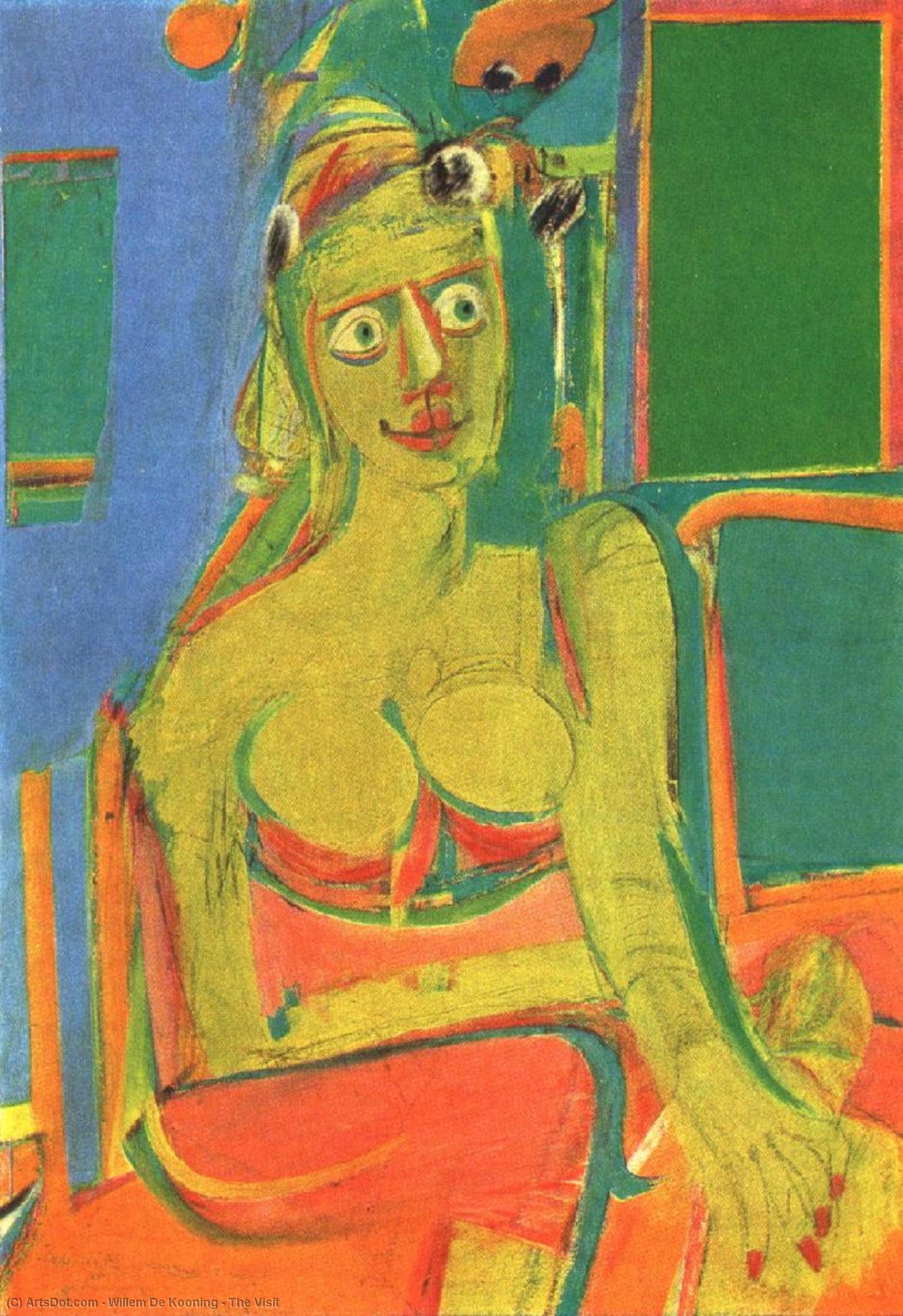
In the evocative masterpiece The Visit, created in 1967, we are invited into a psychological landscape that transcends mere portraiture. The painting presents a central female figure seated in a chair, her presence commanding yet deeply enigmatic. Her expression—a complex tapestry of surprise, perhaps even a touch of displeasure—serves as the emotional anchor of the composition. This is not a passive subject; she exists in a state of heightened awareness, capturing a fleeting second of internal realization. The artist utilizes a vibrant and daring color palette, where lush shades of green dance against warm, energetic oranges, creating a visual tension that mirrors the sitter's unsettled temperament. Through this interplay of light and hue, the canvas breathes with a life that is both visceral and hauntingly beautiful.
Beyond the central figure, the painting unfolds into a dreamlike realm where reality and symbolism intertwine. In the background, two birds are perched atop one another, an element that introduces a layer of delicate, almost surrealist mystery to the scene. Are they symbols of companionship, or perhaps harbingers of the very disruption reflected in the woman's gaze? This sense of temporal weight is further emphasized by the presence of a clock visible in the upper right corner, a subtle reminder of the inexorable passage of time that governs both the subjects and the viewer. These details transform the work from a simple study of a person into a profound meditation on existence, chance, and the unexpected intrusions of life.
The Legacy of Abstract Expressionism
To understand The Visit, one must look to the profound influence of its creator, Willem de Kooning. As a titan of the Abstract Expressionist movement, de Kooning brought a raw, gestural energy to the canvas that redefined the boundaries of modern art. While his work often leaned toward the purely non-representational, this piece showcases his unique ability to marry figurative elements with an explosive, painterly technique. The brushwork feels alive, carrying the weight of the artist's restless searching and his mastery of form. For collectors and interior designers alike, this painting offers a sophisticated bridge between the recognizable human form and the avant-garde spirit of the mid-20th century.
For those seeking to curate a space with depth and intellectual intrigue, a high-quality reproduction of this work provides an unparalleled opportunity. The painting’s bold colors and dramatic subject matter make it a magnificent focal point for contemporary interiors, capable of sparking conversation and evoking deep emotional responses. Whether placed in a minimalist gallery setting or a richly textured living space, The Visit brings with it the historical gravity of the New York School and the timeless allure of a mystery waiting to be unraveled.