Discover Willem de Kooning (1904-1997), a pivotal Abstract Expressionist. Explore his iconic 'Woman' series & dynamic paintings known for bold brushwork, emotional intensity, and influence on the New York School.
A Fragment of Emotion: Willem de Kooning’s Untitled -2 from Quatre Lithographies
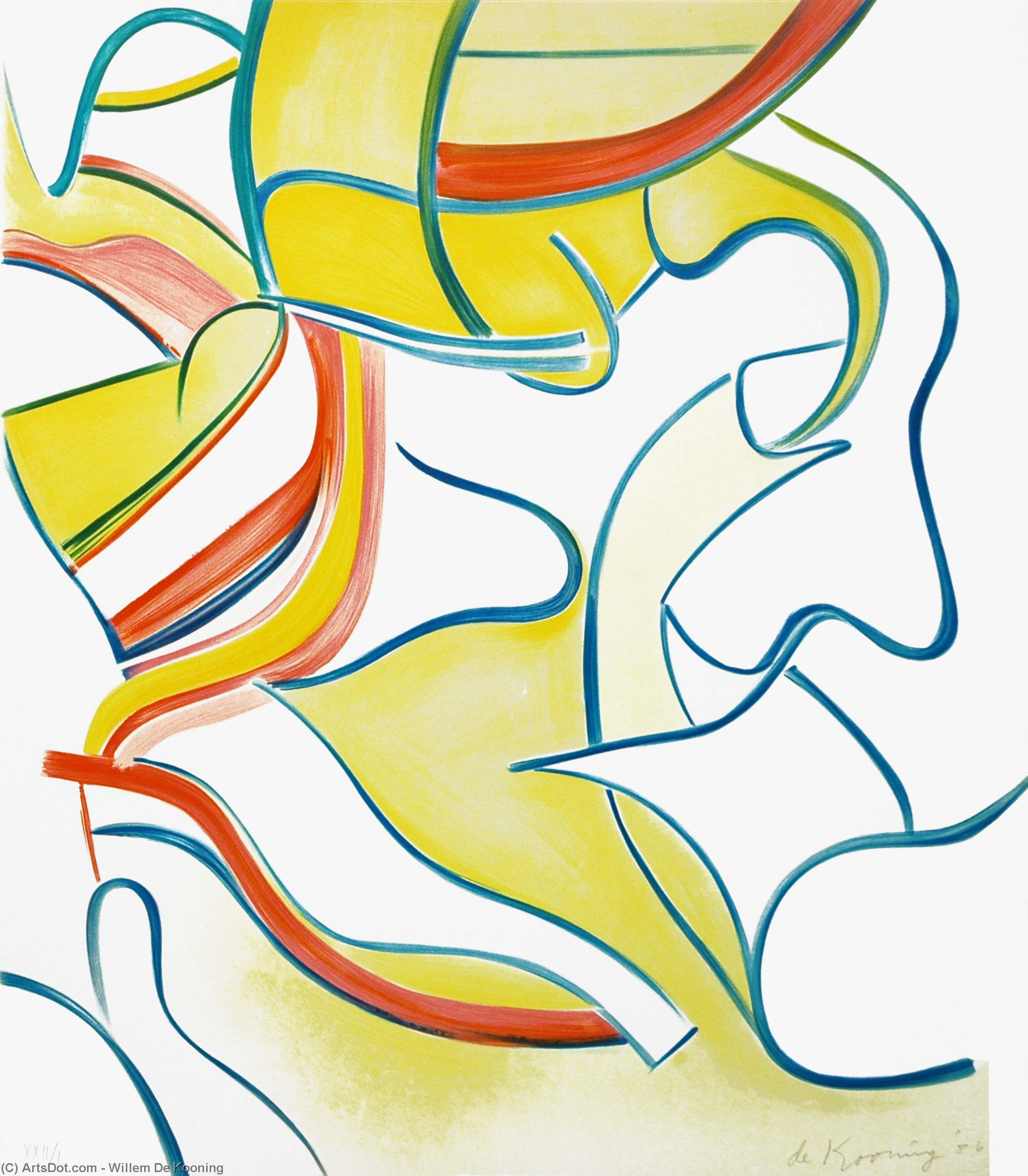
Willem de Kooning, a titan amongst Abstract Expressionists, remains an artist whose work continues to provoke contemplation and inspire awe. “Untitled -2,” part of his influential Quatre Lithographies series, embodies the core tenets of this groundbreaking movement—a visceral confrontation with emotion rendered in bold color and dynamic brushstrokes. Completed in 1986, this painting transcends mere representation; it’s an exploration of psychological depth conveyed through a deceptively simple visual language. The image depicts a stylized portrait of a human face against a luminous yellow background – a palette chosen deliberately to amplify the emotional intensity of the composition.
The Style and Technique: Gesture and Color
De Kooning's approach to painting was fundamentally rooted in gesture—a technique he championed as a rebellion against academic conventions. Unlike meticulous realism, his canvases pulsate with energy, capturing fleeting moments of feeling rather than precise likenesses. Thick impasto layers of paint create palpable texture, mirroring the artist’s physical engagement with the canvas and conveying an immediacy rarely achieved by other painters of his era. The yellow hue isn't merely decorative; it serves as a conduit for emotion—representing optimism alongside unease, illuminating the contours of the face while simultaneously obscuring its identity. This deliberate ambiguity invites viewers to project their own interpretations onto the artwork, fostering a dialogue between artist and audience.
Historical Context: The Legacy of Abstract Expressionism
“Untitled -2” emerged during the height of Abstract Expressionism’s dominance in New York City's art scene—a period marked by profound social and political upheaval following World War II. Artists like Jackson Pollock, Mark Rothko, and Barnett Newman sought to express universal human experience through non-figurative forms, rejecting traditional artistic hierarchies and prioritizing intuition over intellect. De Kooning’s Quatre Lithographies series specifically responded to the influence of Surrealist lithography, pushing the boundaries of printmaking while retaining the expressive power characteristic of his paintings. The series aimed to capture the subconscious mind's anxieties and desires—themes that resonated powerfully with audiences grappling with the complexities of the postwar world.
Symbolism Beyond Representation
Despite its lack of recognizable imagery, “Untitled -2” is laden with symbolic significance. The distorted face itself represents vulnerability and psychological struggle – a reflection of the artist’s own internal landscape. The yellow background symbolizes enlightenment and hope, yet simultaneously hints at hidden darkness—a duality that underscores the inherent contradictions within human emotion. De Kooning's masterful manipulation of color and texture contributes to this overarching symbolism, transforming visual elements into conduits for emotional resonance.
Emotional Impact: A Window Into Inner Turmoil
Ultimately, “Untitled -2” succeeds in conveying a profound sense of unease and introspection. The painting compels viewers to confront uncomfortable truths about the human condition—to acknowledge both beauty and brutality within ourselves. It’s not an artwork designed for passive contemplation; rather, it demands engagement—a willingness to wrestle with its ambiguities and to allow oneself to be moved by its emotional force. Like all great art, it lingers in the mind long after viewing, prompting ongoing reflection on themes of identity, emotion, and the complexities of human experience.