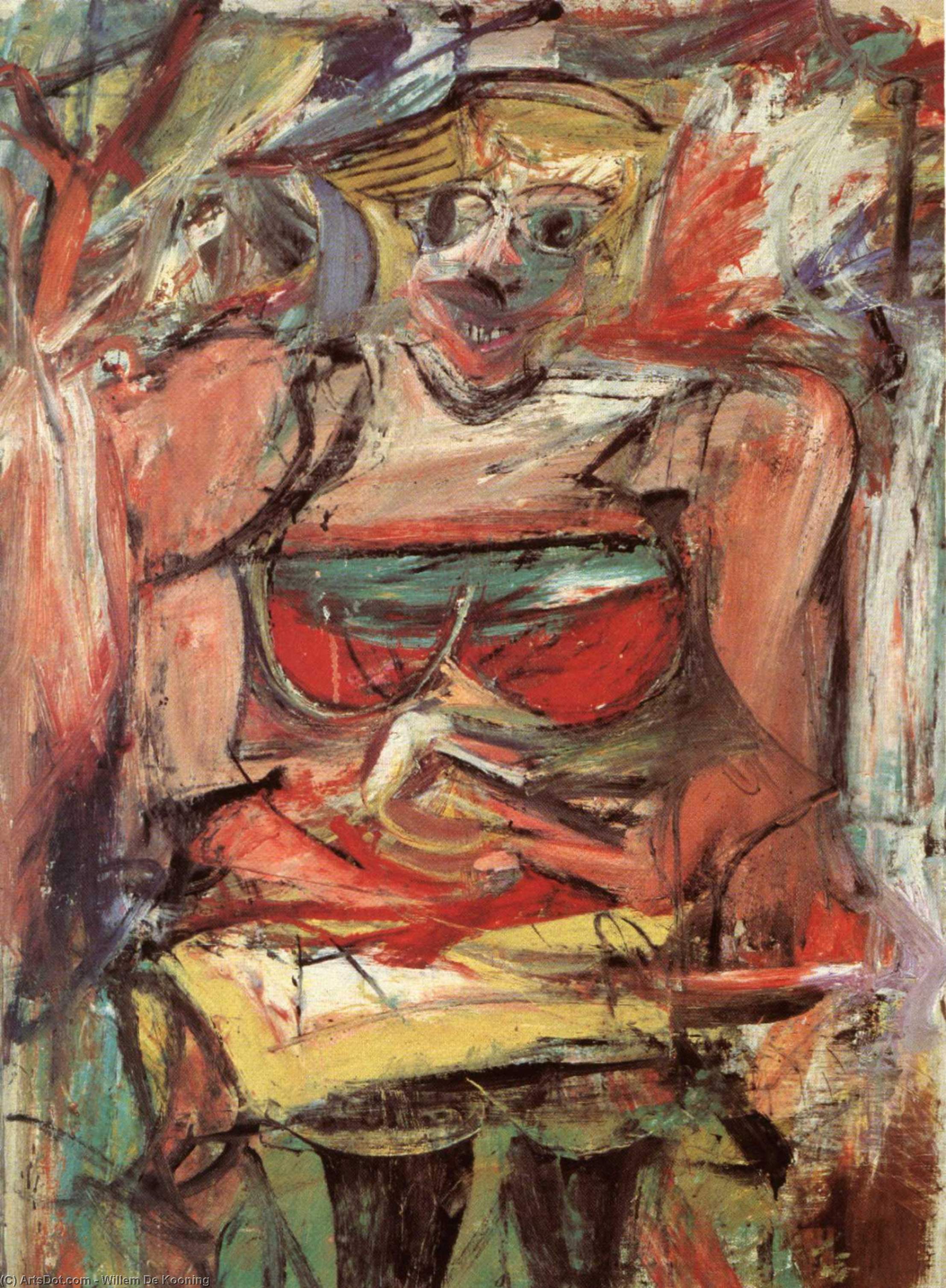
Woman V, 1952-53 (oil ^ charcoal on canvas)
Willem de Kooning’s
Woman V, 1952-53 stands as a cornerstone of abstract expressionism, embodying the rebellious spirit and profound emotional depth that defined this pivotal movement. Created during the immediate postwar period, it’s more than just pigment on canvas; it's a visceral exploration of femininity, anxiety, and the very nature of artistic creation itself. This painting resides within de Kooning’s celebrated “Woman” series—a collection dedicated to confronting and reimagining the female form—and continues to provoke discussion about its unsettling beauty and enduring influence.
Artistic Context: The New York School
De Kooning was a central figure in the New York School, alongside artists like Jackson Pollock and Mark Rothko, who fundamentally challenged traditional artistic conventions. Rejecting representational art’s constraints, these innovators embraced spontaneity, gesture, and color as primary expressive tools.
Woman V exemplifies this ethos perfectly—a deliberate departure from academic tradition that prioritized feeling over meticulous detail. The movement’s impetus stemmed from a desire to grapple with the psychological impact of World War II and its aftermath, reflecting anxieties about societal upheaval and individual vulnerability.
Composition and Technique: Dynamic Gestures
The painting's composition is deliberately jarring—a woman seated on a chair dominates the canvas, her face obscured by her hand. This gesture isn’t merely decorative; it symbolizes concealment, repression, and perhaps even fear. The background explodes with amorphous shapes and figures rendered in charcoal and oil paint, creating a sense of turbulent movement and disrupting any illusion of stability. De Kooning's technique is characterized by bold brushstrokes—thick, impasto marks that convey energy and immediacy. He layered oil paint over charcoal to achieve textural depth and luminosity, capturing the artist’s raw emotion on the surface of the canvas. The interplay between dark charcoal tones and vibrant reds contributes to the painting’s dramatic effect.
Symbolism and Interpretation: Femininity Under Pressure
Woman V is frequently interpreted as representing the complexities of femininity—its vulnerability alongside its strength, its mystery juxtaposed with its physicality. The woman’s hand covering her face speaks to a desire for privacy and protection, but also hints at an inability to confront uncomfortable truths. The red dress symbolizes passion and vitality, yet it's simultaneously framed by chaotic shapes that convey the pressures of modern life—a visual metaphor for navigating uncertainty and striving for self-expression.
Artistic Legacy: Influence on Modern Art
De Kooning’s work irrevocably altered the trajectory of 20th-century art, inspiring generations of artists to explore abstraction as a vehicle for emotional exploration. His retrospective at MoMA in 2011–2012 solidified his position as one of the most important figures in modern art history. For those seeking to understand the broader context of abstract expressionism, exploring works by Clyfford Still and Mark Rothko offers invaluable insight into the movement’s aesthetic principles. ArtsDot provides exceptional reproductions of
Abstract Expressionism, allowing enthusiasts to experience de Kooning's vision firsthand—including
Woman V, 1952-53—bringing a piece of artistic history into your home.
Willem De Kooning at ArtsDot offers detailed information about his life and oeuvre.