A Journey Through Darkness: Bouguereau’s “Dante and Virgil”
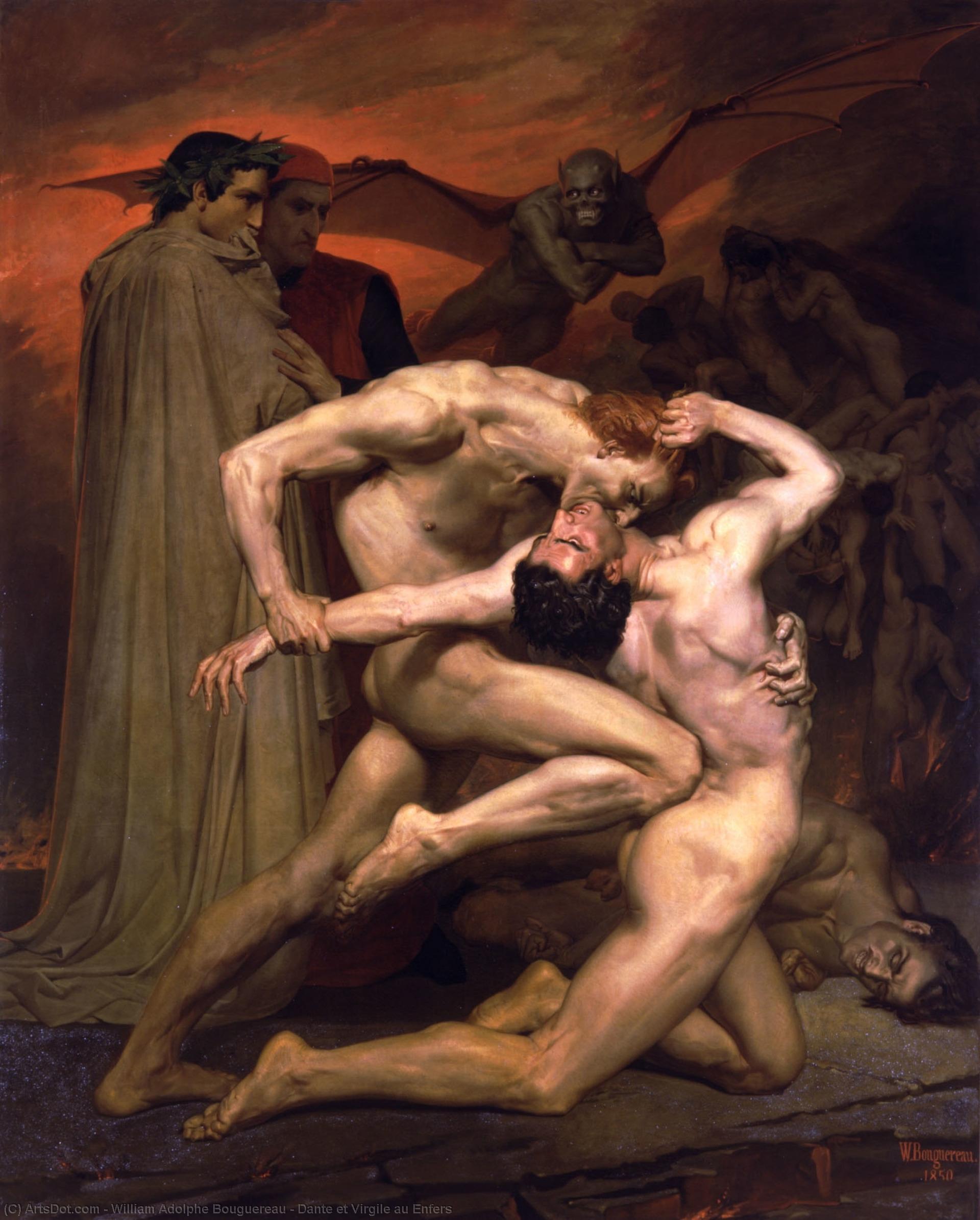
William-Adolphe Bouguereau's "Dante and Virgil" is not merely a depiction of a scene from Dante Alighieri’s *Inferno*; it’s an immersive experience, a descent into the heart of human suffering rendered with breathtaking realism and profound emotional resonance. Painted in 1850, this monumental canvas, currently residing within the Musée d'Orsay in Paris, transcends its literary source material to become a powerful meditation on morality, justice, and the eternal struggle between good and evil. The painting immediately commands attention – not through overt horror, but through an unsettling stillness, a palpable sense of dread that permeates every detail.
At first glance, the composition appears deceptively serene. Dante Alighieri, clad in flowing robes of deep blue, stands with Virgil, his guide through Hell, both figures radiating a quiet authority and contemplation. However, their faces are not those of triumphant explorers; instead, they bear witness to a brutal tableau unfolding before them. In the foreground, two damned souls – Capocchio, an alchemist consumed by heresy, and Gianni Schicchi, a fraudster who usurped another’s identity – engage in a savage, desperate combat. The scene is rendered with meticulous anatomical precision, characteristic of Bouguereau's style; every muscle strain, every bead of sweat, every flicker of emotion is painstakingly captured. The artist doesn’t shy away from the grotesque—the exposed flesh, the contorted limbs, and the raw violence are presented unflinchingly, yet never gratuitously.
Realism Elevated: Technique and Style
Bouguereau's mastery lies in his ability to elevate realism to an almost ethereal level. He was deeply influenced by the Old Masters – Raphael and Titian foremost among them – absorbing their techniques of color, composition, and light. His use of *chiaroscuro* is particularly striking; dramatic contrasts between light and shadow sculpt the figures, lending them a monumental quality and intensifying the sense of drama. The deep blues and purples of the background create an oppressive atmosphere, while the warm tones used to highlight Dante and Virgil suggest their moral superiority amidst the surrounding darkness. Bouguereau’s attention to detail is astonishing – from the intricate folds of the fabric to the texture of the skin—every element contributes to the painting's overwhelming sense of realism.
Furthermore, Bouguereau subtly exaggerates the musculature and poses of the figures, a technique that adds to the painting’s dramatic intensity. This isn’t mere anatomical illustration; it’s an artistic license used to amplify the emotional impact of the scene. The sheer physicality of the combatants underscores the brutal nature of their punishment and the desperate struggle for survival in Hell.
Symbolism and Narrative Depth
Beyond its surface depiction, “Dante and Virgil” is rich with symbolic meaning. Dante’s journey through Hell represents a descent into the depths of human depravity – a confrontation with sin, guilt, and the consequences of moral failure. The two damned souls embody different forms of transgression: Capocchio's heresy reflects intellectual arrogance and defiance against divine authority, while Schicchi’s fraud highlights the corruption of earthly ambition. The painting serves as a cautionary tale, reminding us of the importance of integrity and honesty.
Théophile Gautier, a prominent critic of the time, recognized this depth, praising Bouguereau's ability to capture "bitterness and strength" in the depiction of the combat. The inclusion of angels at the bottom of the painting further reinforces the moral dimension of the scene, suggesting that even in Hell, there is a glimmer of hope—a reminder of divine justice and redemption.
Owning a Masterpiece: Reproductions and Legacy
William-Adolphe Bouguereau’s “Dante and Virgil” remains a powerfully evocative work of art, captivating viewers with its dramatic intensity and profound symbolism. ArtsDot offers meticulously crafted, hand-painted reproductions that faithfully capture the essence of this iconic masterpiece. These reproductions allow you to bring this extraordinary artwork into your home or office, experiencing its beauty and emotional impact firsthand. Beyond its aesthetic appeal, “Dante and Virgil” stands as a testament to Bouguereau’s artistic genius—a timeless exploration of human nature, morality, and the eternal struggle between darkness and light.
To explore more about this artwork and the artist, visit ArtsDot’s page or learn more about the Musée d'Orsay at the museum’s website.