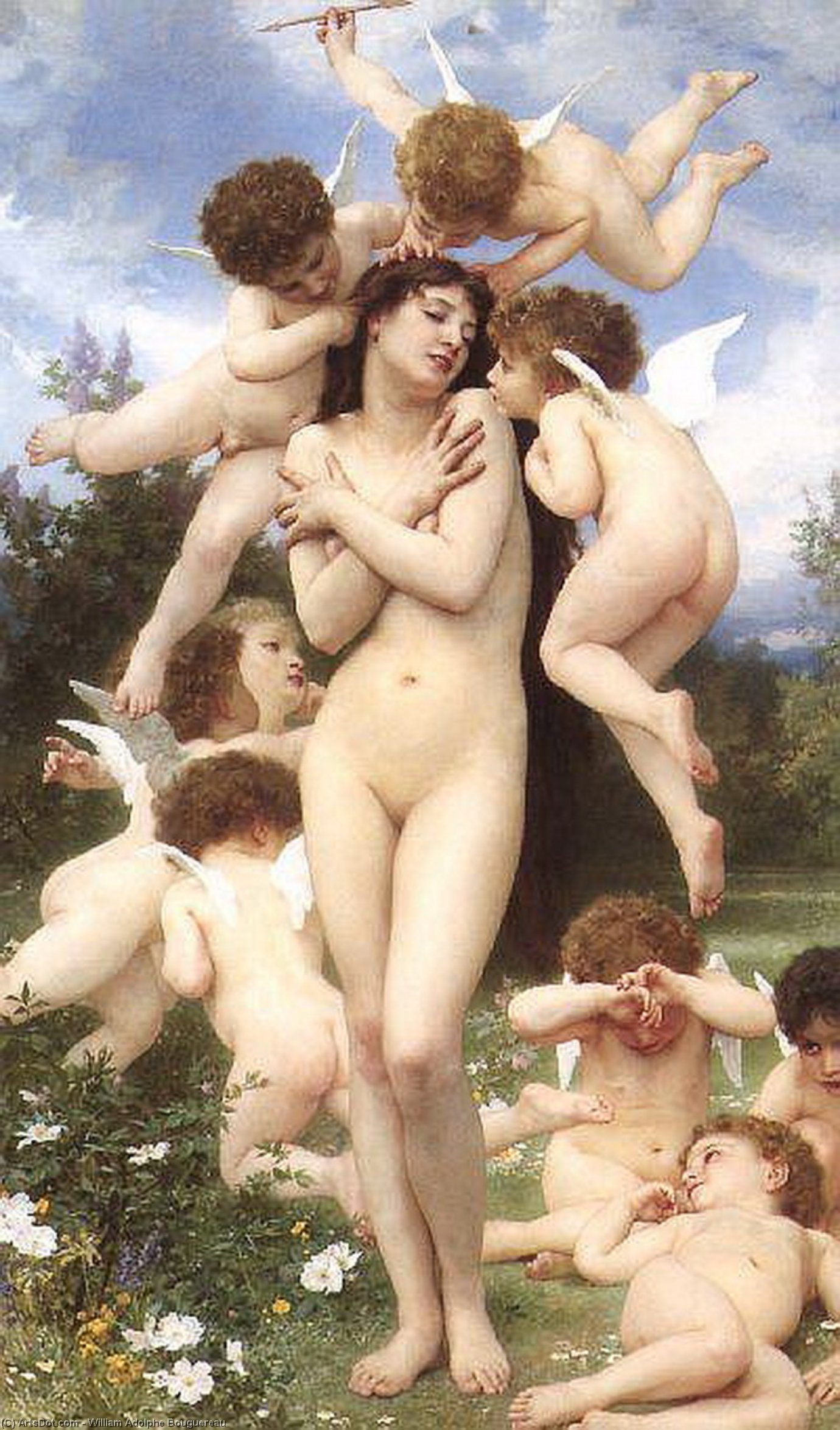
A stunning depiction of Venus surrounded by cherubs in a serene garden setting, executed with Bouguereau’s signature meticulous detail and luminous color palette – a masterpiece of classical beauty.
Discover William-Adolphe Bouguereau (1825-1905), the master of academic realism! Admire his beautiful depictions of mythology, genre scenes & the female form. Explore his legacy today.
Joslyn Art Museum
(Omaha, Estados Unidos de América)
Descubre el Museo de Arte Joslyn en Omaha: una colección impresionante de arte europeo, americano y asiático en un edificio Art Déco emblemático. ¡Gratis para todos!
A Celebration of Venus: Exploring Bouguereau’s “Le Printemps”
The painting "Le Printemps," or The Return of Spring, by William-Adolphe Bouguereau remains an enduring emblem of Romantic idealism blended with meticulous Realism. Completed in 1886 and currently residing at the Joslyn Art Museum in Omaha, Nebraska, this monumental oil on canvas transcends mere depiction; it embodies a profound meditation on beauty, fertility, and rebirth—themes central to Greek mythology and deeply resonant with the artistic sensibilities of its era.
The Mythological Narrative: Venus Amidst Cherubs
At its core lies the retelling of the myth surrounding Venus, goddess of love and beauty, emerging from the sea foam after Uranus’s castration by Cronus. Bouguereau skillfully captures this pivotal moment, presenting Venus as a serene figure at the center of a vibrant garden scene populated by nine cherubs—angels representing divine grace and innocence. These cherubs aren't merely decorative elements; they are integral to conveying the painting’s overarching message. Their varying sizes and positions contribute to a palpable sense of depth and dynamism, mirroring the blossoming life force symbolized by the springtime landscape. The artist deliberately chose Venus as his subject, aligning with the prevailing artistic preoccupation with classical mythology during the Belle Époque—a period marked by renewed interest in Greco-Roman culture and aesthetics.
Bouguereau’s Technique: Luminosity and Detail
Bouguereau's mastery of technique is immediately apparent upon observation. He employed a masterful glazing method, layering thin washes of color over thicker underpaintings to achieve an unparalleled luminosity—a characteristic hallmark of his style. This painstaking process allowed him to capture the subtle nuances of light and shadow, imbuing the garden foliage with breathtaking realism. Furthermore, Bouguereau’s meticulous attention to detail extended beyond mere botanical accuracy; he painstakingly rendered every cherub's facial expression and gesture, conveying a wealth of emotion without resorting to overt theatricality. The artist’s dedication to capturing the essence of form—particularly the idealized human figure—is evident in Venus’s posture and drapery, reflecting Bouguereau’s unwavering belief in the transformative power of beauty.
Symbolism: Springtime as Metaphor for Renewal
The garden itself serves as a potent symbol of springtime—representing regeneration, fertility, and the cyclical renewal inherent in nature. The blossoming trees and vibrant flowers underscore Venus's triumphant return from obscurity, mirroring the mythological narrative’s core theme. Bouguereau skillfully utilizes color to amplify this symbolic significance; warm hues dominate the palette, evoking feelings of warmth, joy, and optimism—a deliberate choice designed to inspire contemplation and admiration for the sublime beauty captured on canvas. The cherubs' presence reinforces the idea that divine grace nurtures and sustains earthly life, emphasizing the painting’s spiritual dimension.
Emotional Impact: A Vision of Perfection
“Le Printemps” transcends its formal elements to elicit a profound emotional response from viewers. Its serene atmosphere invites contemplation—encouraging audiences to immerse themselves in the painting's idealized vision of beauty and harmony. Bouguereau’s masterful composition directs the eye towards Venus, establishing her as the focal point of attention while simultaneously conveying a sense of grandeur and majesty. Ultimately, this artwork speaks to our deepest desires for transcendence—reminding us that art possesses the capacity to elevate consciousness and inspire awe at the magnificence of creation. It stands as a testament to Bouguereau’s enduring legacy as one of Romanticism's most celebrated artists—a figure whose unwavering pursuit of perfection continues to captivate audiences worldwide.