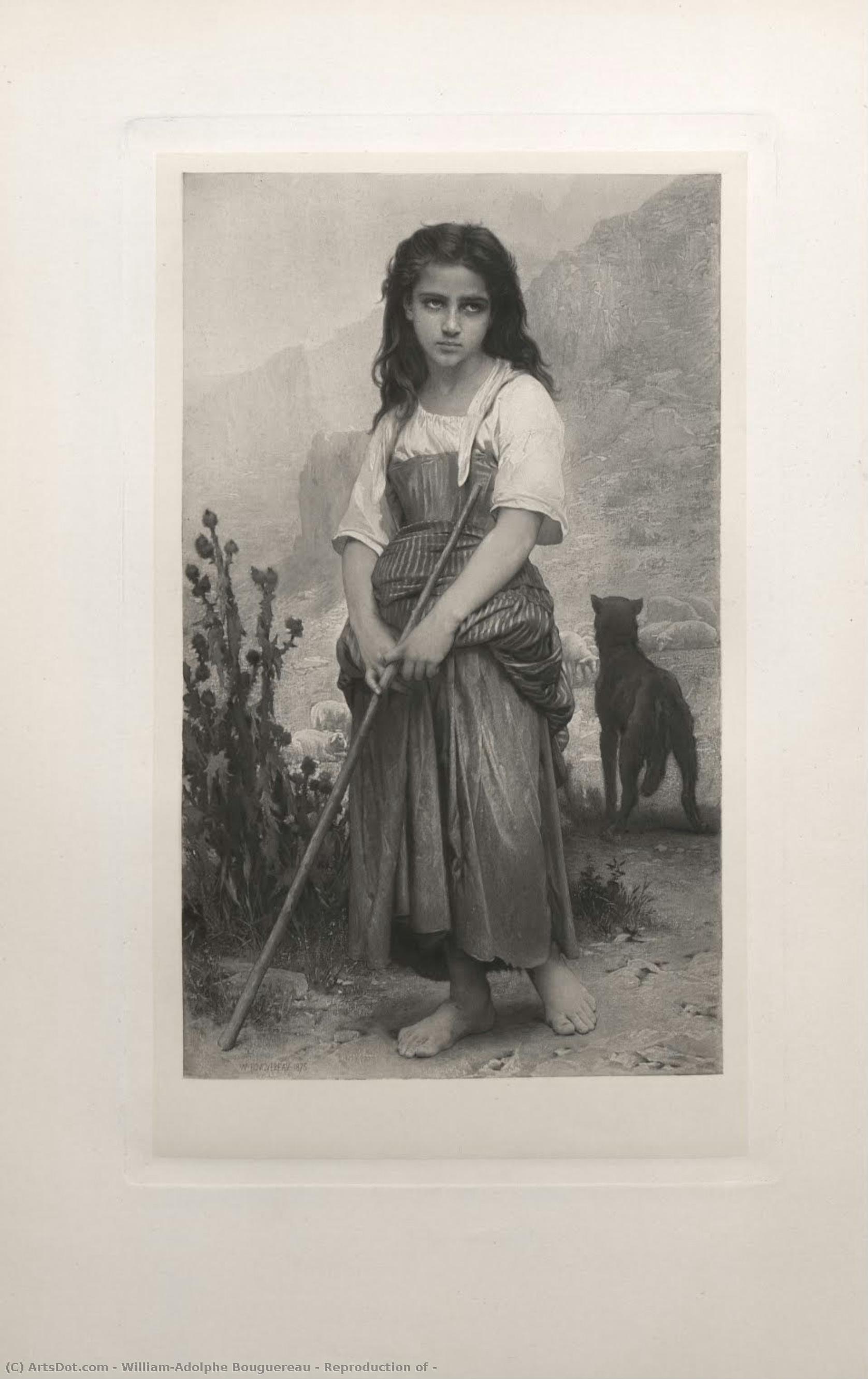
Experience the serene beauty of William-Adolphe Bouguereau’s "Reproduction of", a captivating 1880 painting featuring a woman and her dog on a hillside, rendered in meticulous realism and luminous detail – discover this timeless masterpiece and bring it into your home.
A Moment of Pastoral Tranquility: Bouguereau's "Reproduction"
William-Adolphe Bouguereau’s “Reproduction,” painted in 1880, offers a serene glimpse into the idyllic landscapes favored by the artist and emblematic of the Second Empire aesthetic. This captivating scene depicts a woman, rendered with Bouguereau's signature meticulous detail, standing before a loyal dog on a gently sloping hillside. The composition immediately evokes a sense of quiet contemplation – a moment suspended in time where human companionship and the natural world converge. The painting’s power lies not just in its technical brilliance but also in its ability to transport the viewer to a realm of idealized beauty, reflecting Bouguereau's profound admiration for classical art and his unwavering pursuit of perfection.
The Artist's Vision: Bouguereau and the Idealized Figure
Born in La Rochelle in 1825, Bouguereau’s artistic journey was profoundly shaped by a deep respect for the Old Masters. Influenced heavily by Raphael and Titian, he adopted their techniques of precise modeling, luminous color palettes, and an emphasis on idealized forms. Unlike many of his contemporaries who sought to capture contemporary life with gritty realism, Bouguereau deliberately chose subjects that allowed him to explore these classical principles. His figures are often presented in poses reminiscent of Renaissance sculpture – graceful, balanced, and imbued with a sense of timeless beauty. “Reproduction” exemplifies this approach; the woman’s posture, her attire, and even the dog's stance all contribute to an overall impression of serene dignity and refined elegance.
Technique and Materiality: A Masterclass in Detail
Bouguereau was renowned for his painstaking technique. He employed a layering method – *glacis* – applying thin washes of paint, building up color gradually through countless translucent layers. This process created an extraordinary sense of depth and luminosity, particularly evident in the rendering of the woman’s skin, which possesses a remarkable softness and sheen. The artist's use of white pigment was crucial to achieving this effect, allowing him to create subtle gradations of tone and texture. The meticulous detail extends beyond the figures themselves; observe the careful depiction of the hillside vegetation, the textures of the dog’s fur, and the subtle play of light and shadow across the scene – all hallmarks of Bouguereau's unparalleled skill.
Symbolism and Context: A Reflection of Victorian Ideals
"Reproduction," painted during the height of the Second Empire in France, reflects the prevailing Victorian fascination with pastoral themes and idealized domesticity. The woman’s presence suggests a return to traditional values – loyalty, companionship, and connection to nature. The dog, often interpreted as a symbol of fidelity and protection, reinforces this message. The painting's placement within the Frick Art Reference Library underscores its significance as an exemplar of academic art, a style that prioritized beauty, harmony, and moral instruction. This reproduction offers a tangible link to a pivotal moment in artistic history, allowing us to appreciate Bouguereau’s enduring legacy.