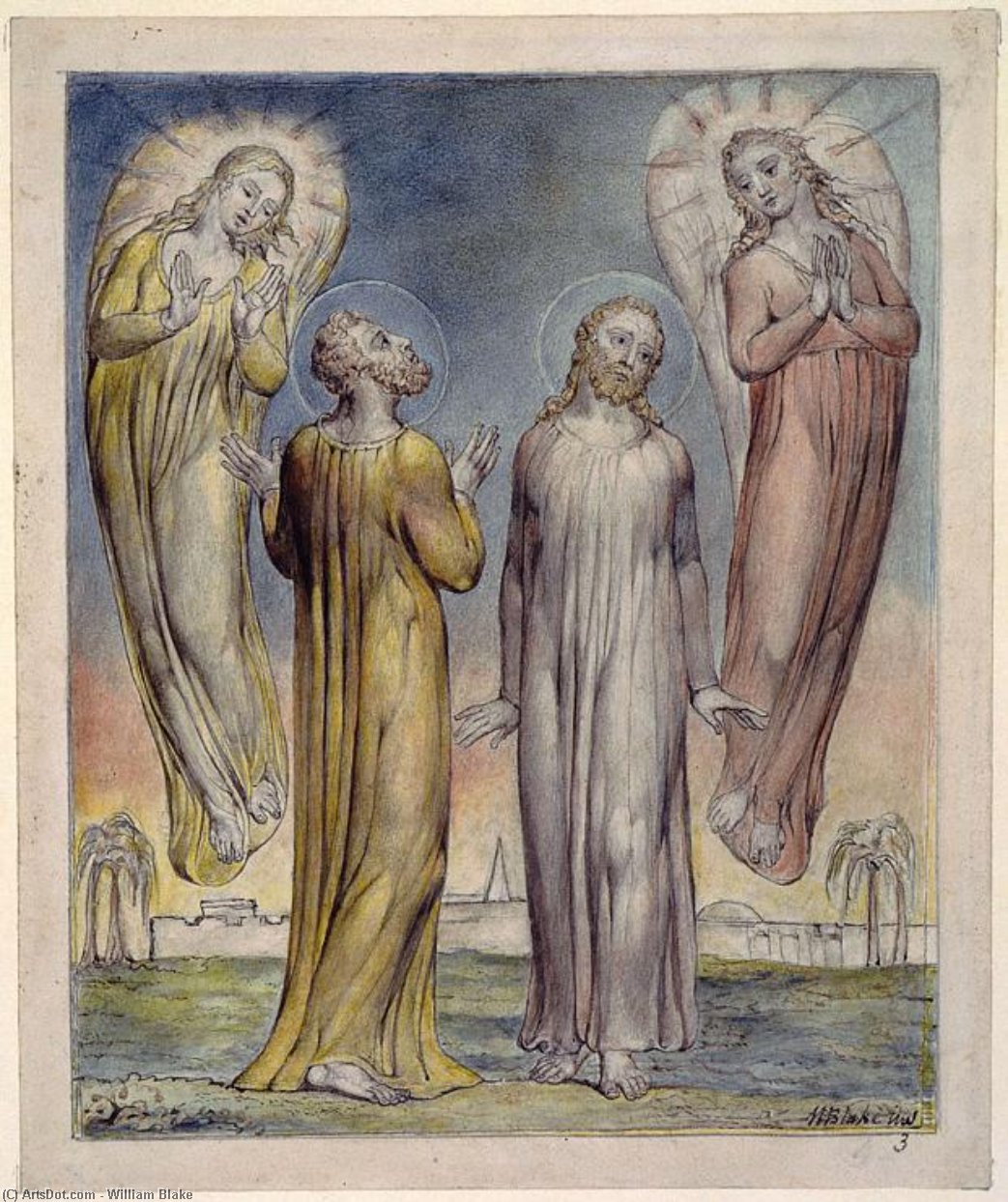
Witness Blake’s visionary "Andrew, Simon Peter Searching for Christ." A powerful pen drawing capturing spiritual yearning and divine encounter. Explore symbolism, technique & the Romantic era's most iconic art.
Explore William Blake's visionary art & poetry (1757-1827). A Romantic icon known for mystical themes, illuminated printing, & works like 'The Tyger'. Discover his legacy!
Andrew, Simon Peter Searching for Christ – A Vision of Spiritual Ascent
William Blake’s “Andrew, Simon Peter Searching for Christ,” created in 1816-1819, stands as a cornerstone of Romantic art and literature. More than just an illustration to Milton's epic poem "Paradise Regained," it embodies the movement’s core tenets: fervent emotion, imaginative vision, and profound contemplation of faith—qualities that continue to resonate powerfully with audiences today. This meticulously crafted pen drawing, measuring 13 x 17 cm, exemplifies Blake’s distinctive artistic style and offers a glimpse into his deeply held spiritual convictions.
Composition and Technique – The Language of Line
Blake's masterful use of pen and wash is immediately striking. The artist eschewed the polished surfaces favored by neoclassical painters, opting instead for expressive lines that convey palpable energy and movement. These delicate strokes capture not merely the physical form of the figures but also their inner turmoil—the yearning for divine communion. Notice how Blake employs hatching to delineate shadows and contours, creating a sense of depth and luminosity that defies conventional realism. The subtle blending of washes adds textural richness, enhancing the ethereal quality of the scene and reinforcing its symbolic significance. This technique reflects Blake’s belief in art as a vehicle for conveying spiritual truths beyond mere visual representation.
Symbolism: Angels, Boats, and the Quest for Redemption
The artwork is laden with symbolism reflecting Blake's preoccupation with biblical narratives and Christian theology. The three figures—Andrew, Simon Peter, and another disciple—represent individuals grappling with existential questions – specifically, their pursuit of spiritual enlightenment and reconciliation with God. Their outstretched hands symbolize supplication and aspiration, mirroring the posture of worshippers seeking divine grace. Above them hover two angels, representing divine guidance and protection; their wings suggest transcendence and heavenly influence. The inclusion of a boat in the background harkens back to the biblical account of Jesus’ journey to Jerusalem, symbolizing pilgrimage and deliverance from earthly constraints. Blake's deliberate choices of imagery underscore his conviction that art could illuminate spiritual realities inaccessible to rational thought alone.
Context Within Romantic Art History – A Pioneer Spirit
William Blake was undeniably a trailblazer within the Romantic movement, preceding many of its prominent figures by several years. Unlike his contemporaries who often focused on idealized beauty and classical forms, Blake sought inspiration in folklore, mythology, and visionary experiences—drawing heavily from Hebrew scripture and Christian mysticism. His work challenged prevailing societal norms and questioned established religious dogma, reflecting a broader intellectual ferment that characterized the era. “Andrew, Simon Peter Searching for Christ” aligns perfectly with this spirit of rebellion against convention, asserting the primacy of imagination and emotion as pathways to spiritual understanding – a legacy that continues to inspire artists and collectors alike.
Emotional Resonance: A Timeless Expression of Faith
Ultimately, "Andrew, Simon Peter Searching for Christ" transcends its formal elements to convey an enduring emotional impact. The drawing’s serene yet urgent atmosphere captures the profound vulnerability inherent in human desire for spiritual connection. Blake's masterful rendering of emotion—expressed through gesture and posture—invites viewers to contemplate their own beliefs and aspirations. It serves as a poignant reminder that true beauty resides not merely in visual perfection but also in the capacity to evoke contemplation and inspire reverence – qualities that solidify its place as an iconic masterpiece of Romantic art.